The Water We Want 2025 - Drawings
Identifier: #335
 Winner
SLOVENIA
Posavje Museum Brežice
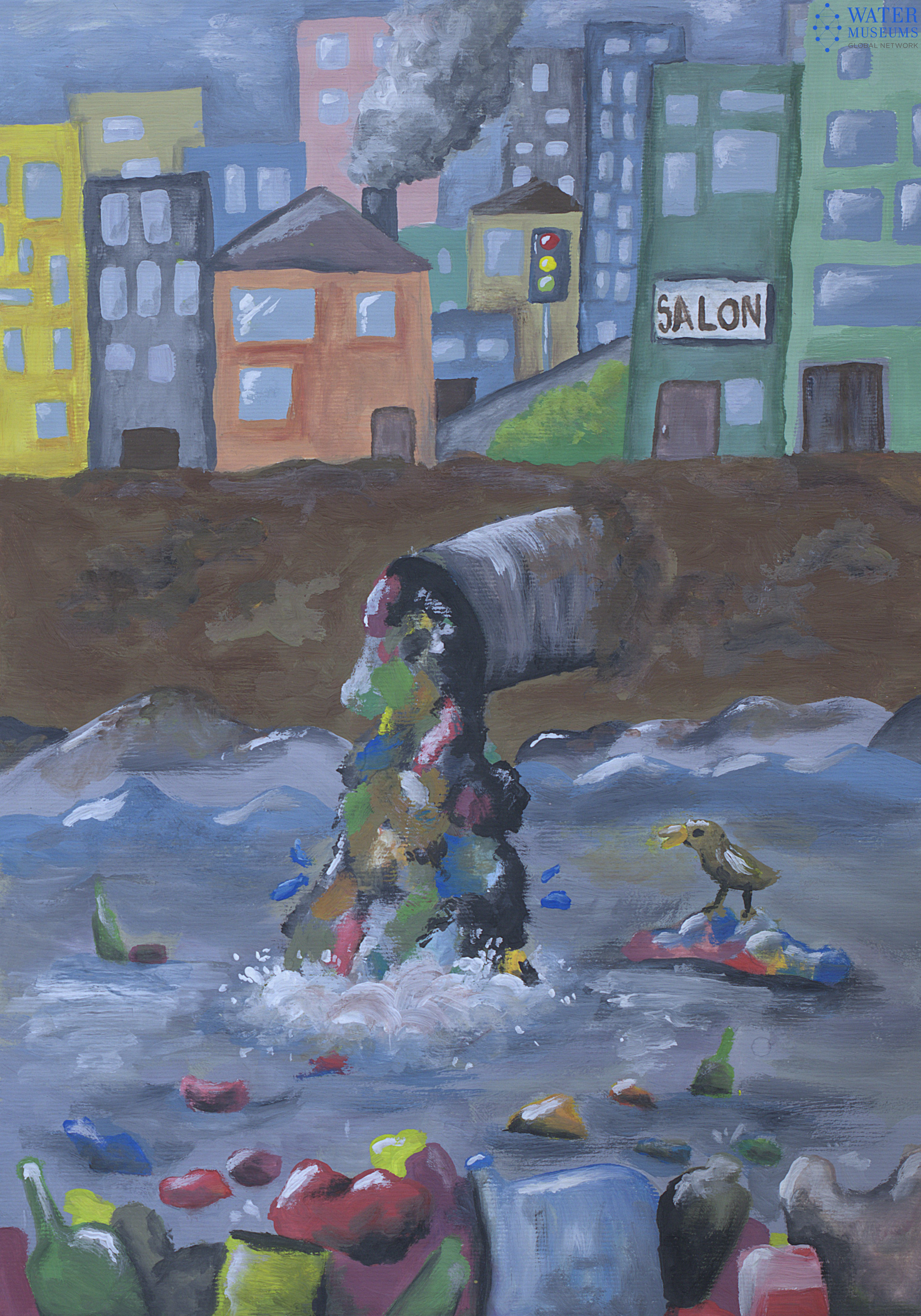
What have we done?!
Posavje Museum Brežice, Slovenia. JZ. OŠ Marjana Nemca Radeče, Brežice. Žarja Gros.
The drawing presents how our waters are becoming more and more dirty, and how much trash we throw in it. I made it with tempera/guash.
Identifier: #370
 Special Mention
ROMANIA
Aquatim, Water Museum Timisoara
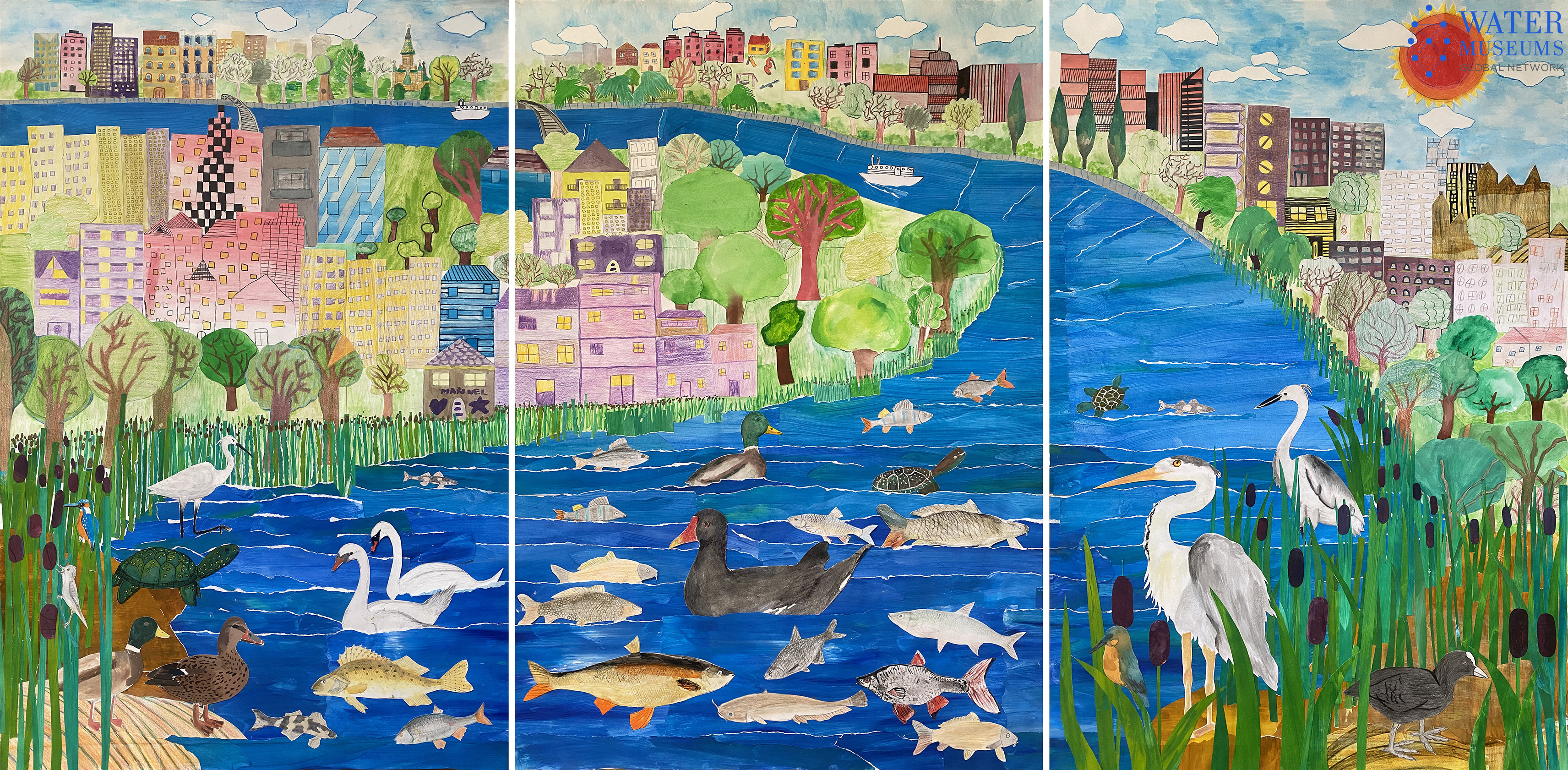
The River Bega
Aquatim, Water Museum, Romania. Secondary School No. 24, Timisoara. 6th Grade.
The River BEGA is a collective work that highlights the importance of water for humans and other living things alike.
Bega crosses our city, Timișoara, and it is the main source of drinking water. Even though the river is deeply rooted in our collective consciousness, we often forget that its waters and banks are home to a rich variety of plants and wildlife. Rediscovering this diversity can help us see the river not just as a waterway, but as a living space — one that is worthy of our respect and protection.
Identifier: #310
Special Mention
BRAZIL
Brazilian Water Museum
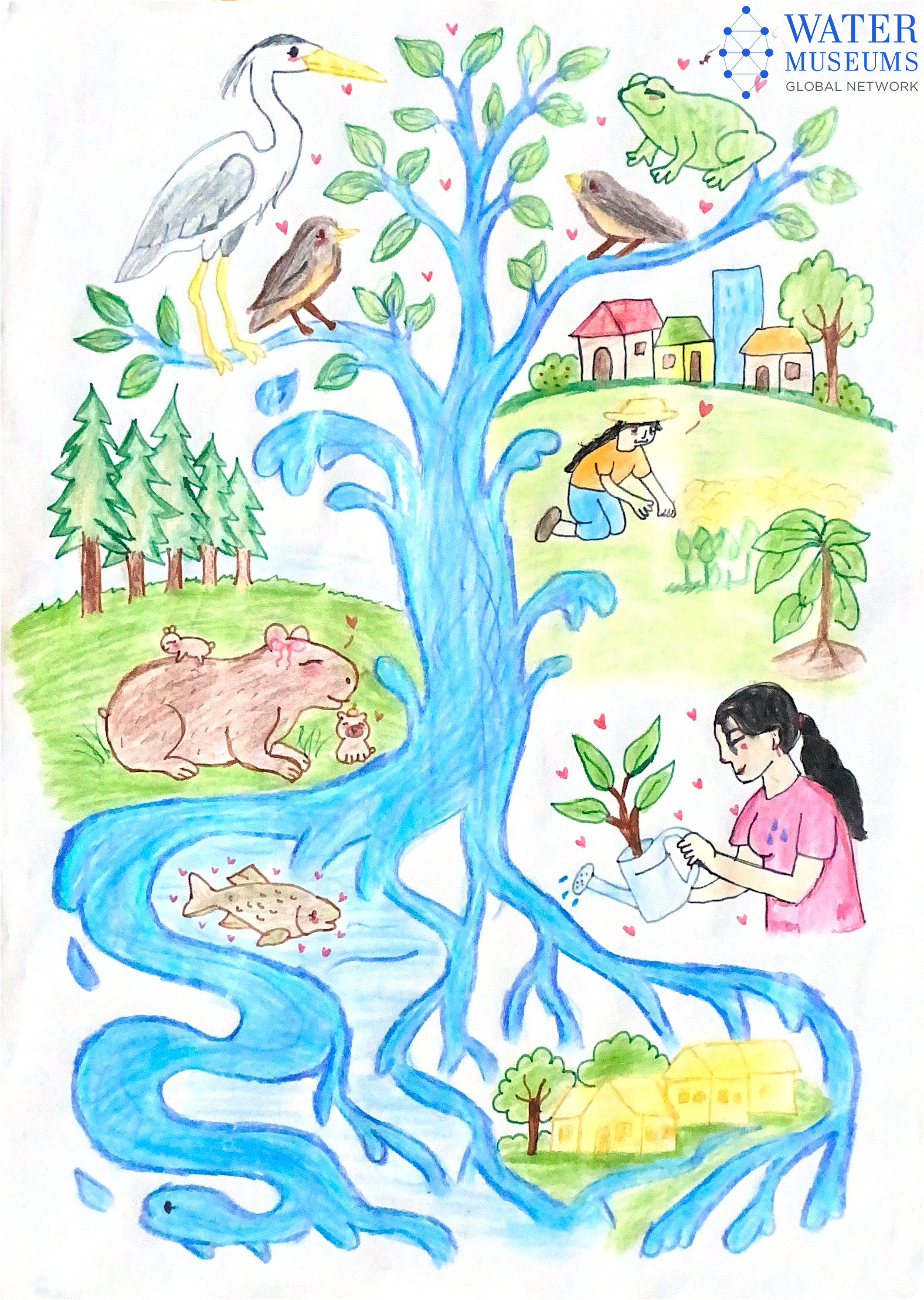
Tree of waters: Roots of life and hope
Brazilian Water Museum, Brazil. Integral School Padre Josino Morais Tavares, Palmas. Sophia Costa Oliveira.
The drawing depicts a tree made of fresh water, from which animals such as herons, frogs, capybaras, and fish emerge. It also nourishes forests, crops, and human communities, symbolizing the essential role of water in sustaining life. Each branch and root of the tree connects biodiversity with culture, illustrating that water is both a tangible and intangible cultural legacy.
Identifier: #289
Special Mention
ITALY
Water Museum of Venice
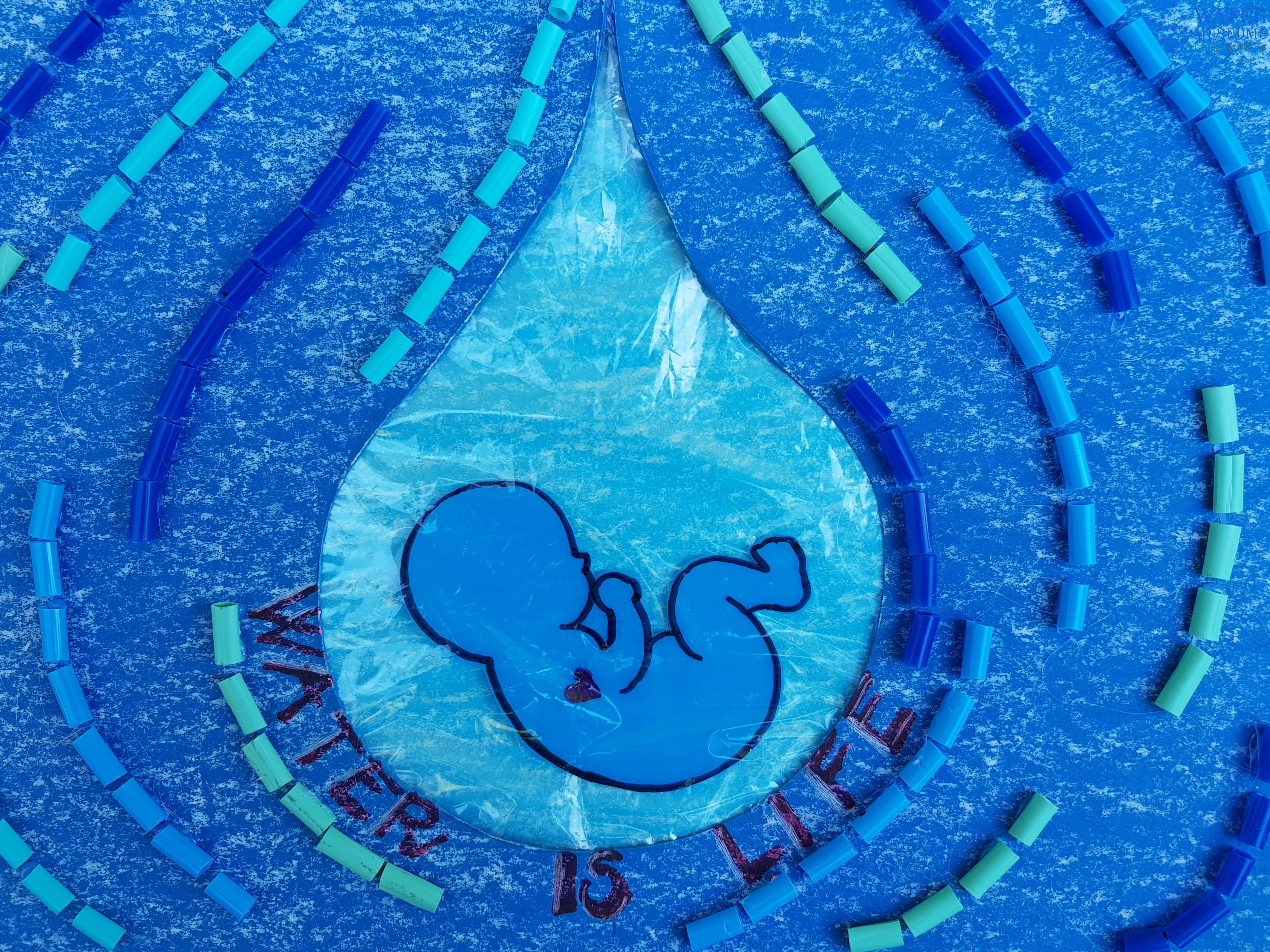
Water is life
Water Museum of Venice, Italy. Secondary school “A. Martini” of Peseggia di Scorzè, Venice. Teresa Polese / 1^ G
Every form of life on our planet depends on water.
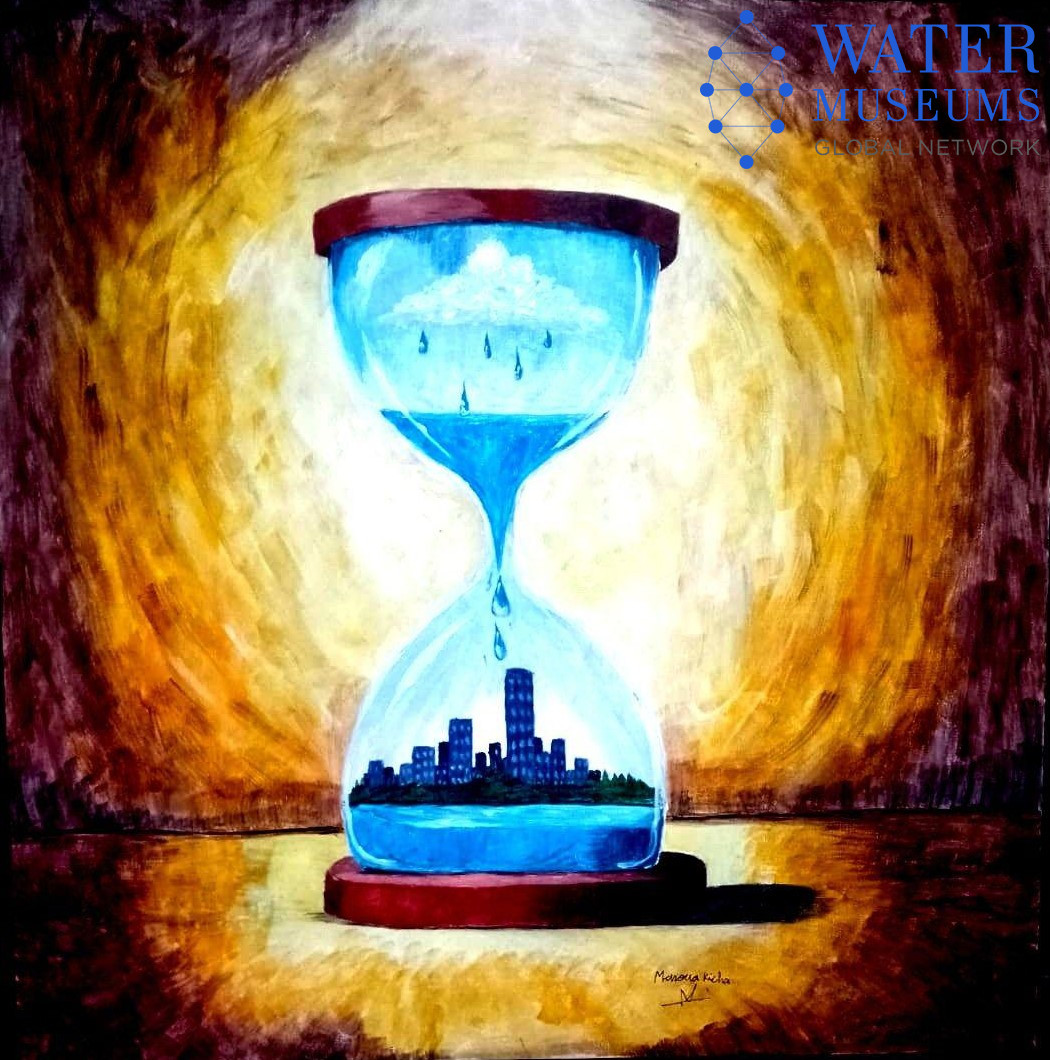
Identifier: #373
Morocco
Museum of Water Civilization, Morocco.
The Water Clock
Rahali Al Farouk Preparatory High School, Mohammadi City. Maroua Kicha.
A painting depicts a large hourglass, but instead of sand, water droplets flow through it. In the lower part of the hourglass, a thriving city forms as the droplets accumulate, while at the top, a cloud gradually evaporates, as if time is consuming the water.
Message: Every passing moment wastes water, and every drop shapes our future.
The model of the Essaouira Skala represents part of the historical defensive architecture of the city. The model features a solid stone wall with watchtowers at the corners and large arches topped with fortified walls resembling traditional fortifications. There is also a fortified pathway leading to the castle gate, all set on a green base representing land or sea. The design reflects authentic Moroccan architecture and demonstrates careful attention to detail.
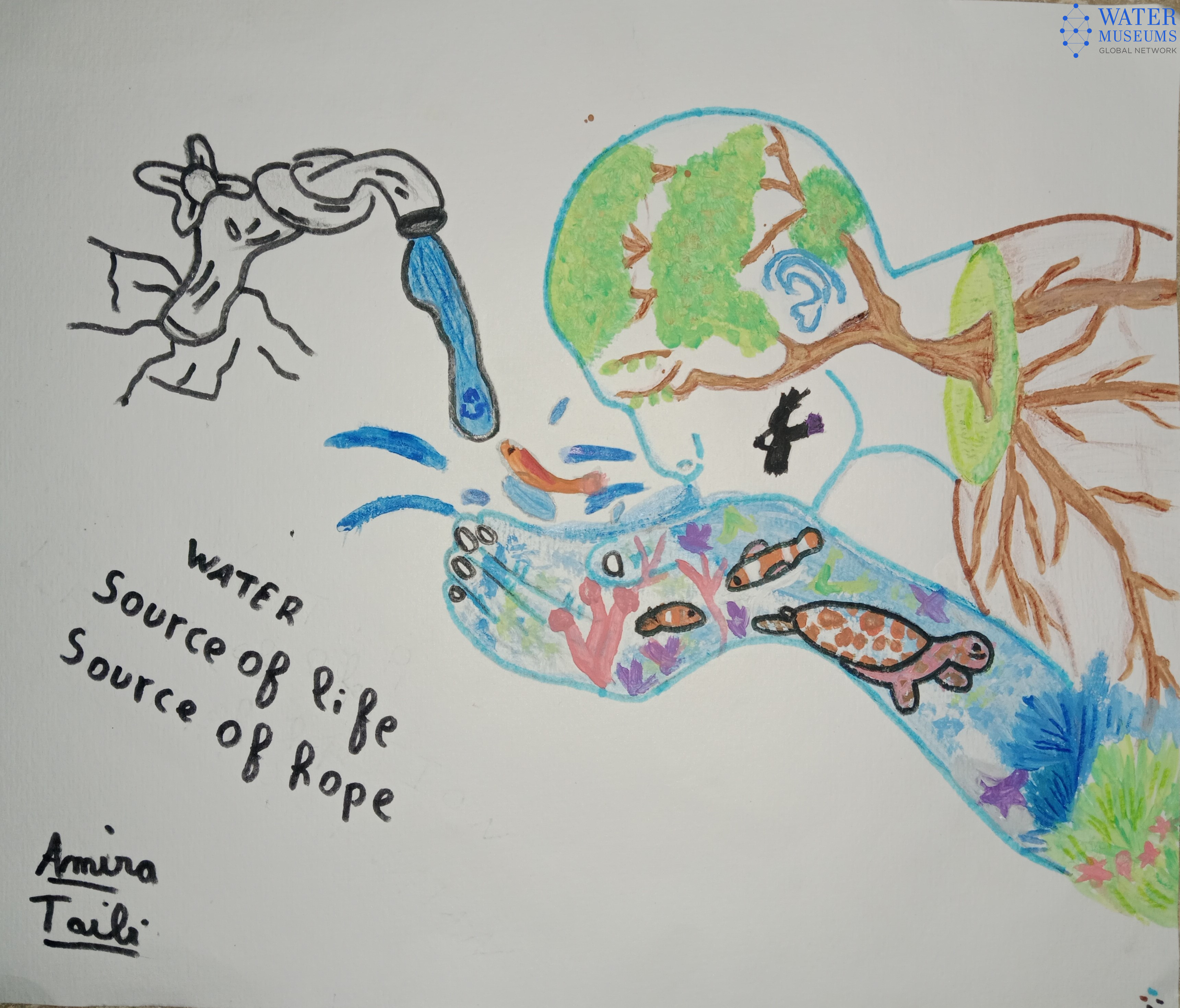
Identifier: #372
Morocco
Museum of Water Civilization, Morocco.
Water, Source of Life, Source of Hope
Hilali Targa International School, Marrakech. Amira Taibi.
Water is the source of life for living beings on earth and man is the only one responsible for preserving this source and seeing how important water is in our daily life.
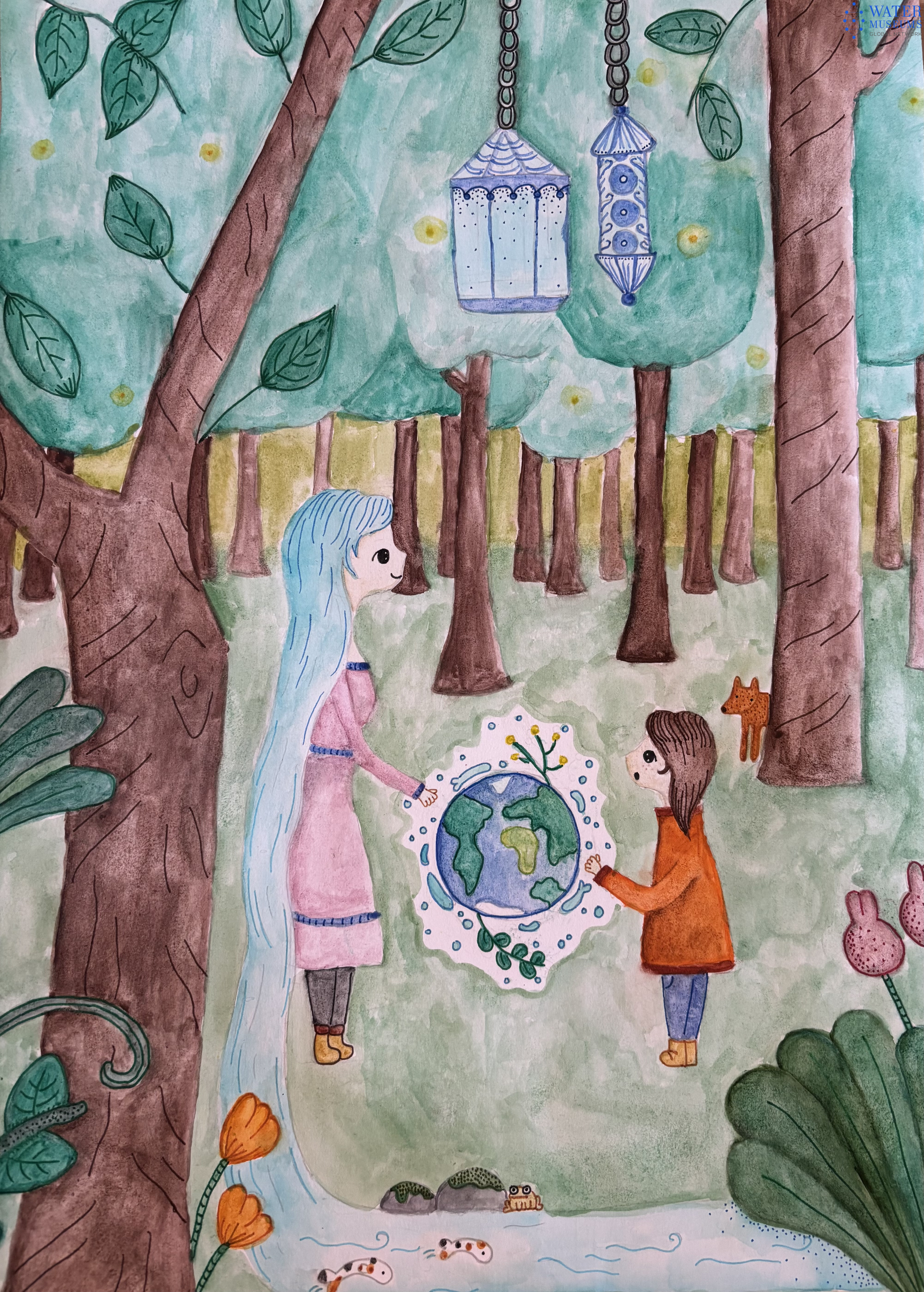
Identifier: #369
ROMANIA
Aquatim, Water Museum Timisoara
The gift of water
Aquatim, Water Museum, Romania. Babel School, Timisoara. Sara Csordas.
Through my drawing I wanted to illustrate that fresh water is the source of all living things. The hair
of this beautiful woman is more than a source of water; it is the lifeblood of our community, showing, transformation, hope and continuity.
My work shows how a mother gives her daughter the most precious gift: a planet filled with the
purest fresh water, that will sustain all future life. Water is a heritage, we all need to cherish it
and share it, as it sustains life on Earth for all beings. If we continue using it irresponsibly, there will be anything left to give to the future generations. Or maybe there won't be any future generations, because water pollution makes not only nature, but also human sick.
In my drawing, fresh water became a symbol of the connection between the forest, animals,
insects and humans. It reminds us of our role in making life better on our planet. The forest shows
what fresh water can create and what we want for the future. It shows the potential of fresh water
as we all want it.
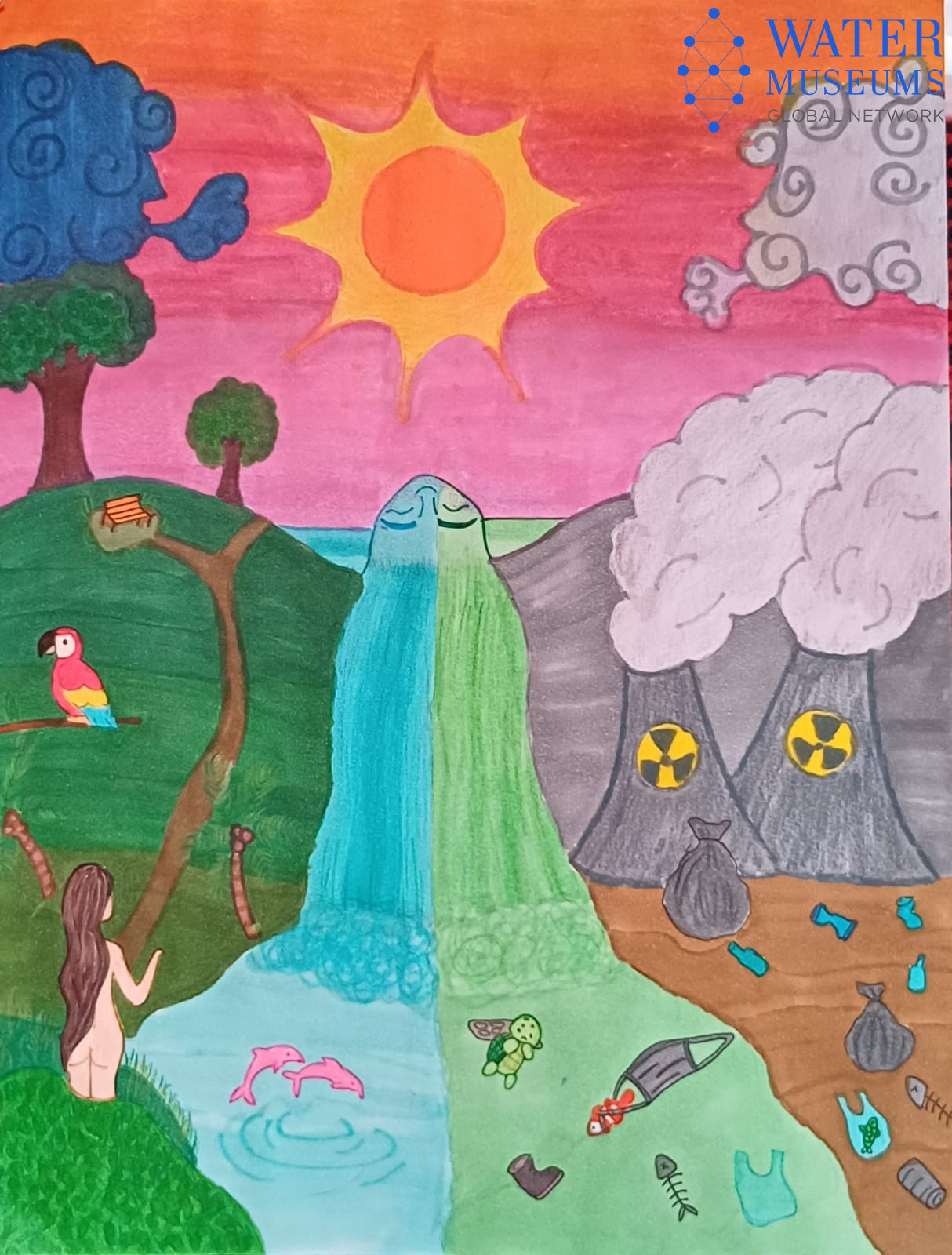
Identifier: #368
BOLIVIA
SAGUAPAC Cultural Center
Mother water: source of life and sacred link with biodiversity
SAGUAPAC Cultural Center, Bolivia. MARISTA, Santa Cruz de la Sierra. 4to high school.
There are two possibilities: to become aware or to sink into pollution and the slow extermination of nature, and therefore of ourselves as human beings.
Identifier: #367
BOLIVIA
SAGUAPAC Cultural Center
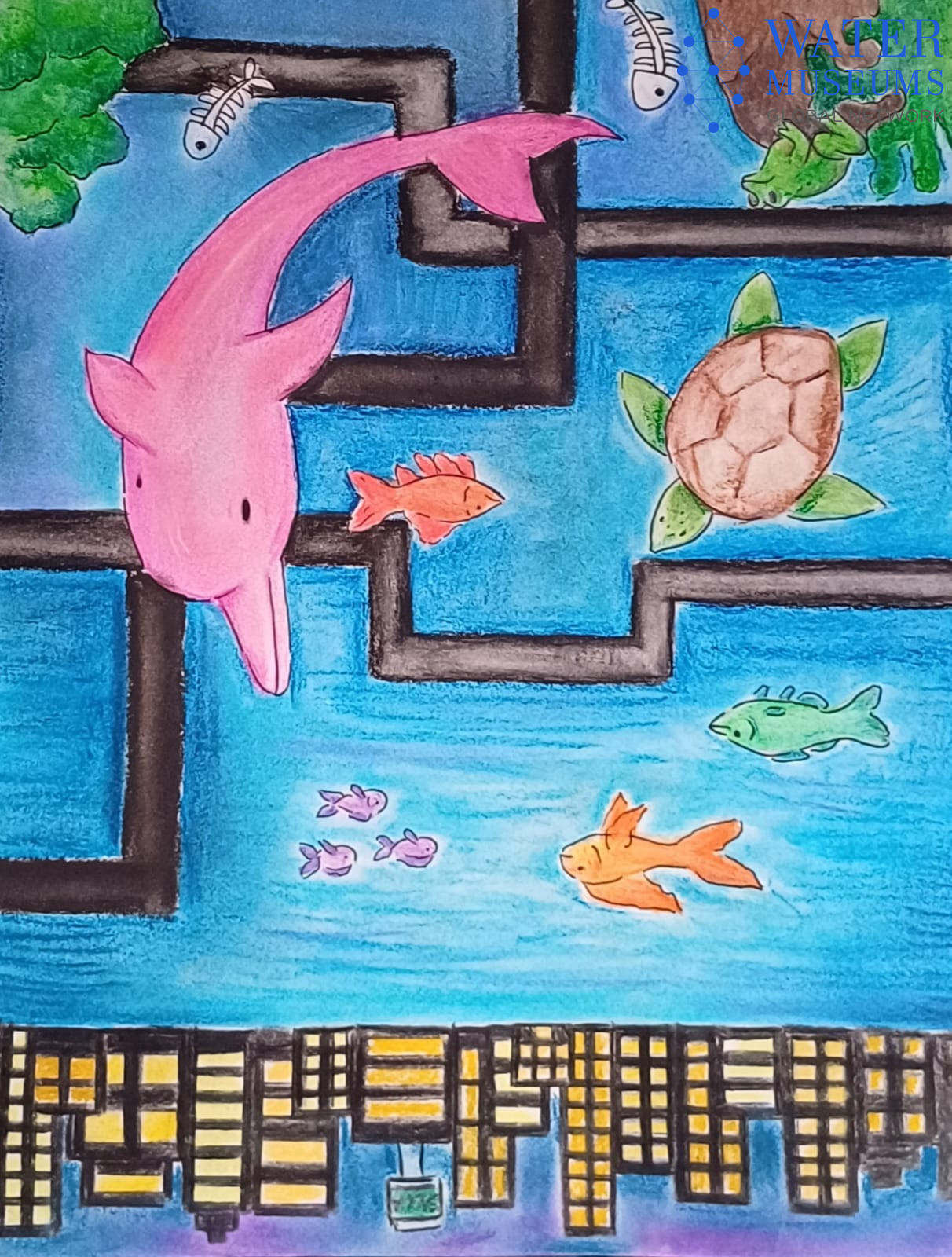
Care for ecosystems underlie the health of the city
SAGUAPAC Cultural Center, Bolivia. Colegio Marista. Olivia Medrano y Lucca Ciancaglini.
A planned city will allow us to continue taking advantage of the aquifers from which we extract water. We can coexist peacefully with nature and protect biodiversity, as long as we plan responsibly.
Identifier: #366
BOLIVIA
SAGUAPAC Cultural Center
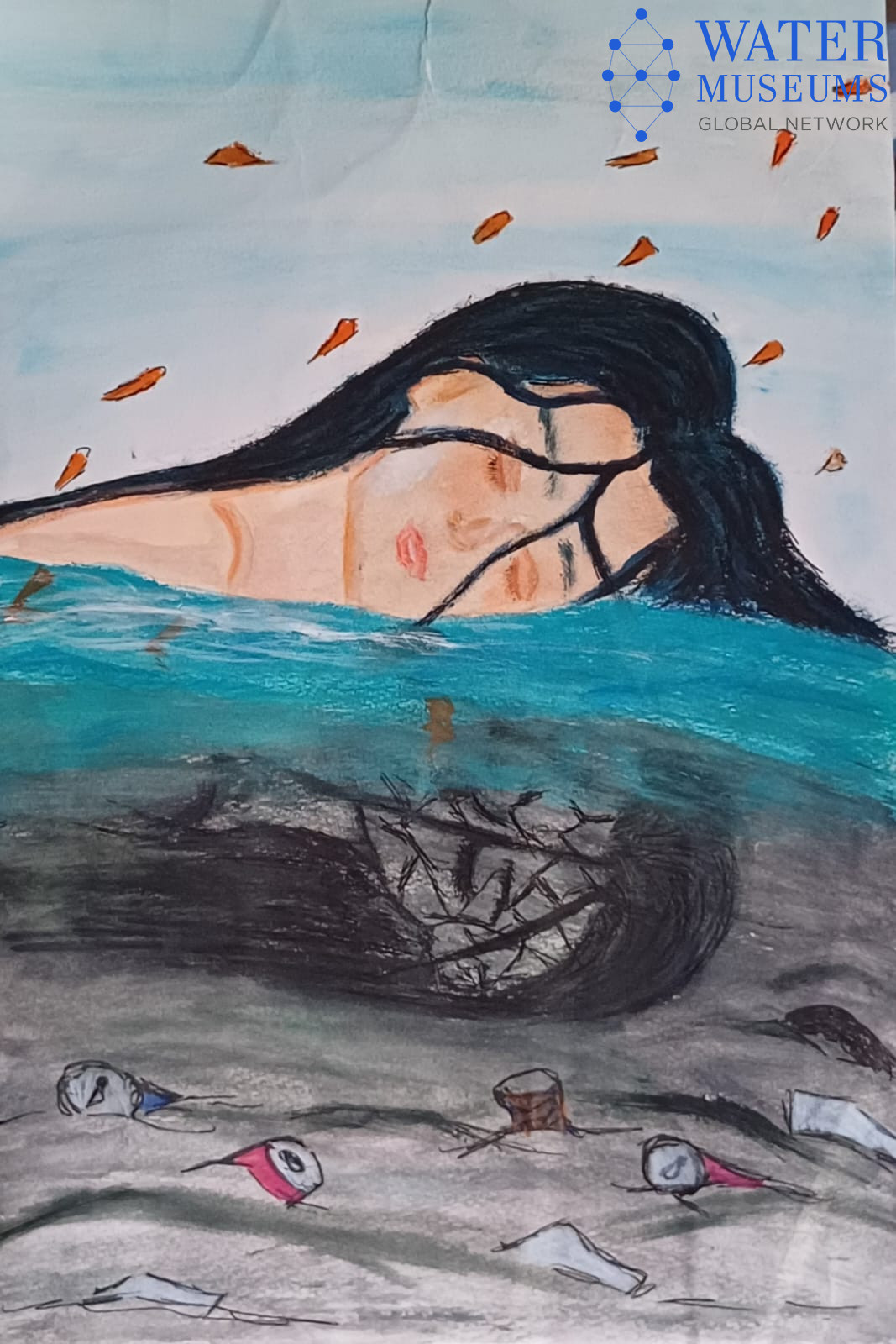
Mother water
SAGUAPAC Cultural Center, Bolivia. Colegio Marista. Hany Yoshimi Sakihama Abrego.
Mother Water needs us; she is present in everything that exists. Let's take care of her so that life continues to exist on the planet and doesn't appear as a shadow in the future. Filled with pain.
Identifier: #362
MEXICO
Iurhekua Interactive Water Museum
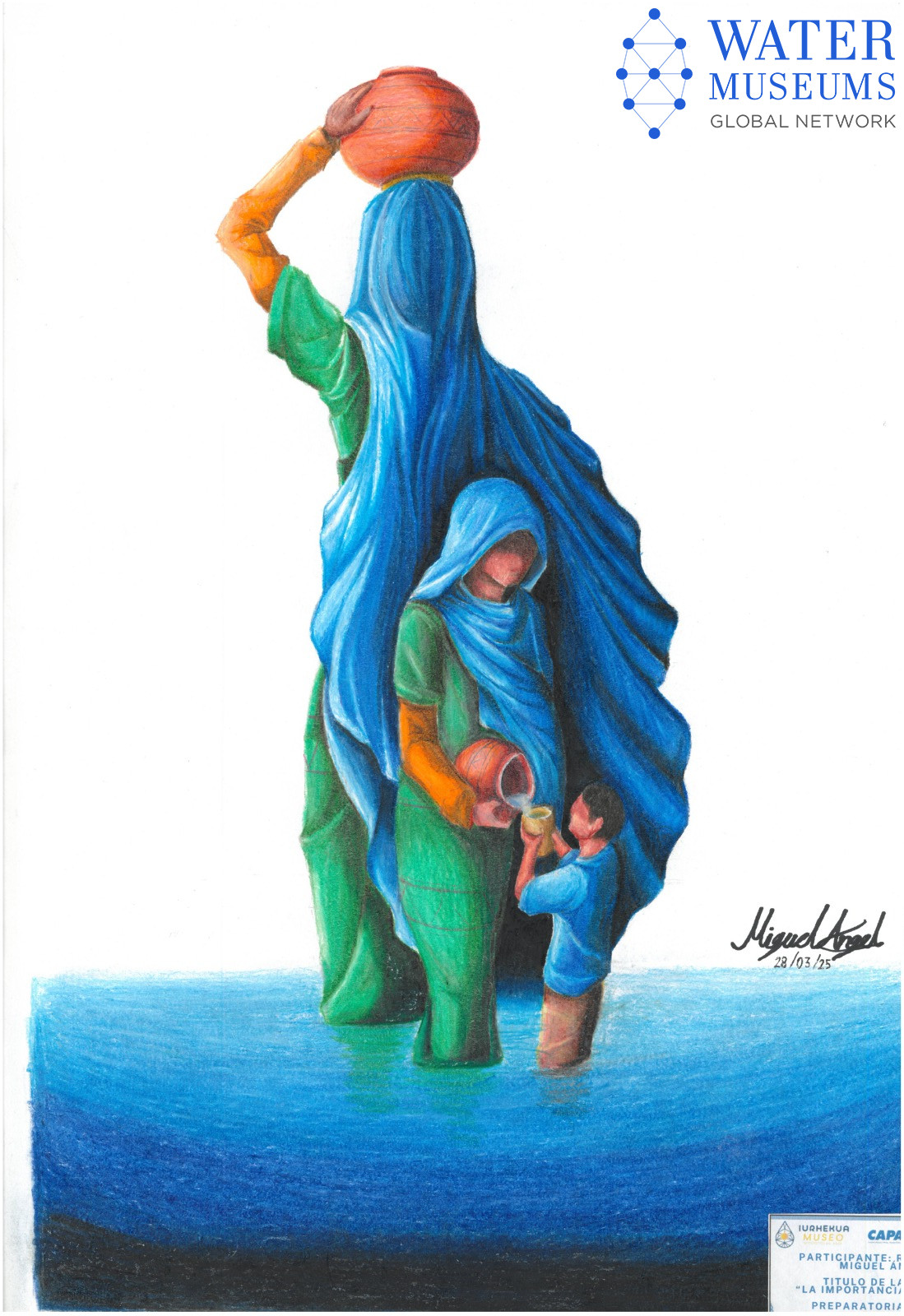
The importance of water
Iurhekua Interactive Water Museum, Mexico. EPLER., URUAPAN MICHOACAN. Miguel Angel Raya Bucio.
My drawing is inspired by the importance of water to us, as we need it every day to do everything, and a world without water is unimaginable. But even if we don’t want to admit it, water is runnong out, so we must take care of it. I was inspired by the women who carry water in jugs, cans, buckets, etc. To their homes, to satisfy their needs and also for their own consumption. They bring the wáter from far away, from the nearest well or river to their homes. The meaning of my drawing is the importance of the water to us, as we do everything possible to have it, since not all water is drinkable, only fresh water. The drawing shows that, even if they are standing in the water, the child only wants the water in the jug, and thats no reason to not take care of the other types of water, as it’s still water, and water must be cared for and treated, because it’s important for other species and the enviroment. That’s why they don’t contaminate it and treat it with respect to do not dirty it or distub it.
Identifier: #360
MEXICO
Iurhekua Interactive Water Museum

Save the water
Iurhekua Interactive Water Museum, Mexico. INSTITUTE BORZONY, URUAPAN MICHOACAN. Ainara Valentina Alcazar Snchez.
The Paint is about “You can be a water superhero” which means that you can take care of the water and not wasting, polluting or littering it, don’t take long showers, etc. It’s not only about using a cape, you need to be a real hero.
Identifier: #358
USA
Fairmount Water Works Interpretive Center
The water falls
Fairmount Water Works Interpretive Center, USA. Philadelphia, PA. Suhana Gambhir 5th grade class of Germantown Friends School.
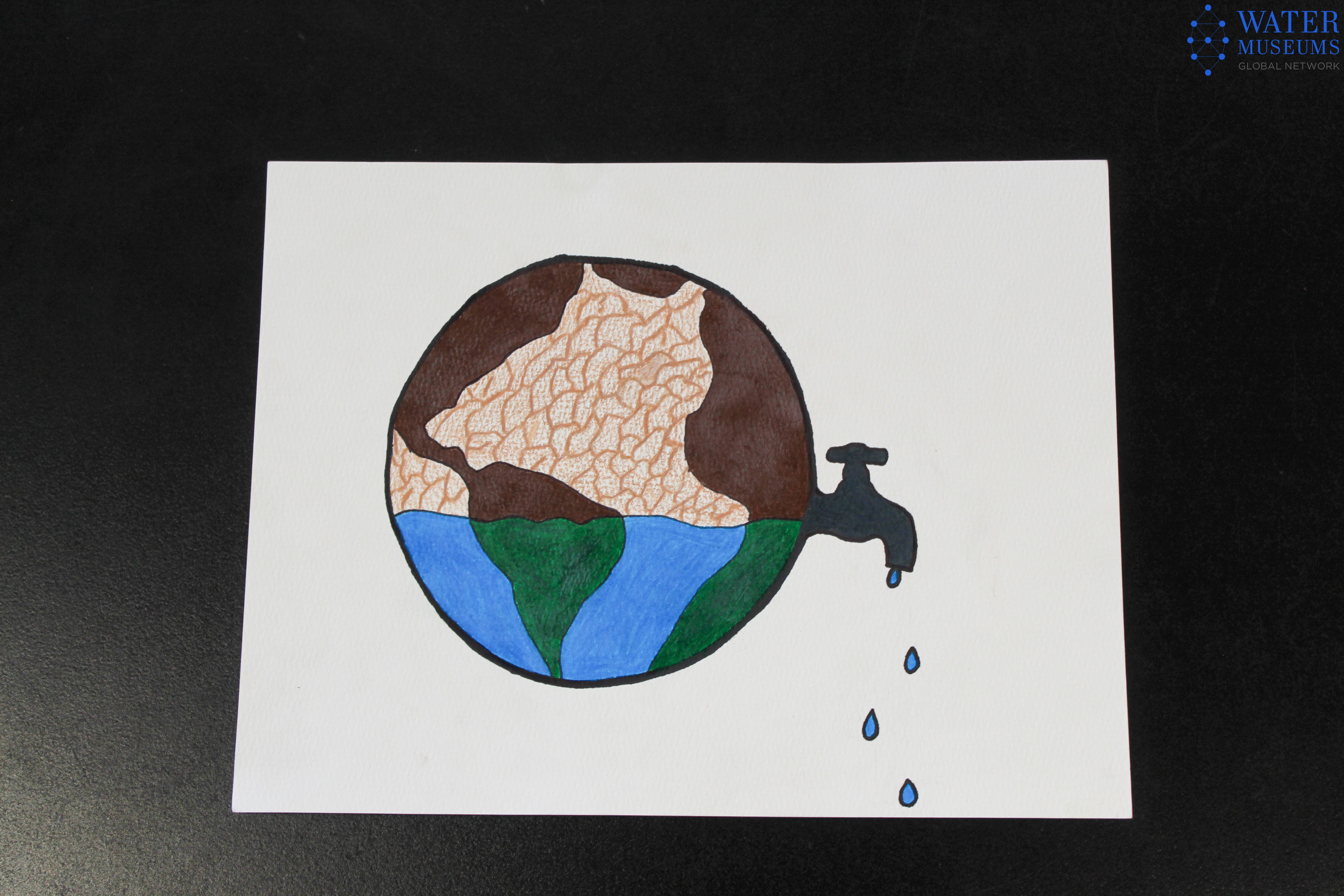
My art shows the Earth with a faucet attached to it, which is dripping water. It describes how the Earth could be versus how we are making it to be. I chose it because I felt that the Earth is like this; some not caring about it, and some finding all the ways to save water. Each person has a choice.
Identifier: #351
CHINA
LingquCanalMuseum
To protect water resources
Lingqu Canal Museum, China. Xing'an County Gaoshang Town Junior High School, Guilin. Zhao Xuehui.
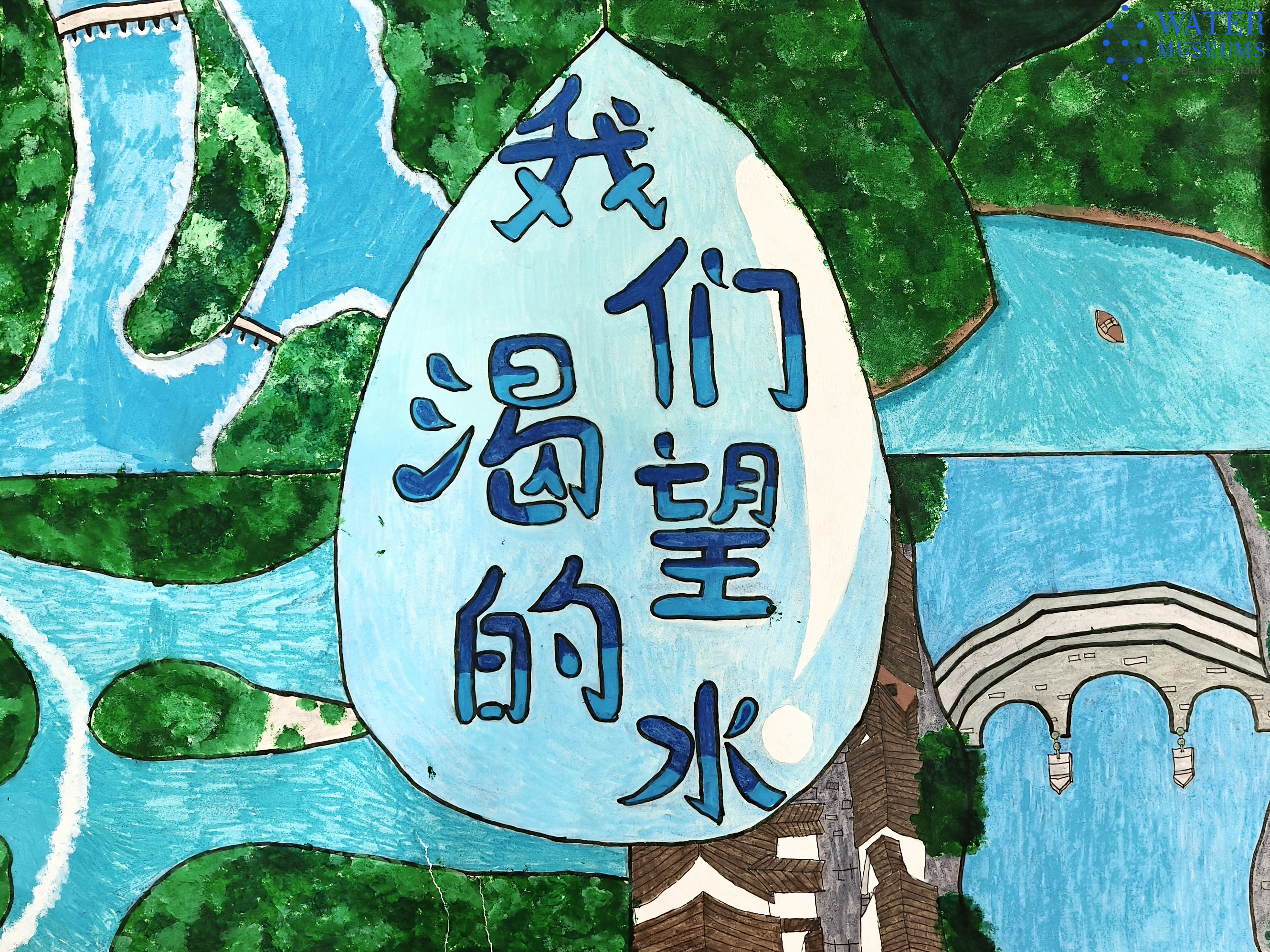
The image is divided into four sections: the top left corner features the Doujiang Weir in Sichuan, the lower right corner shows the Canal Head Complex of the Lingqu Canal, the top right corner depicts the Three Gorges on the Yangtze, and the lower right corner displays the Grand Canal from Beijing to Hangzhou. These are all invaluable hydraulic heritage sites in China, representing the water we cherish. They advocate for us to protect water resources, preserve the environment, and achieve comprehensive ecological coverage of water resources along with natural beauty.
Identifier: #345
CHINA
National Water Museum of China
Eye of life
National Water Museum of China, China. Hangzhou Xiaoshan No.2 Vocational School, Hangzhou. Li Yinan.
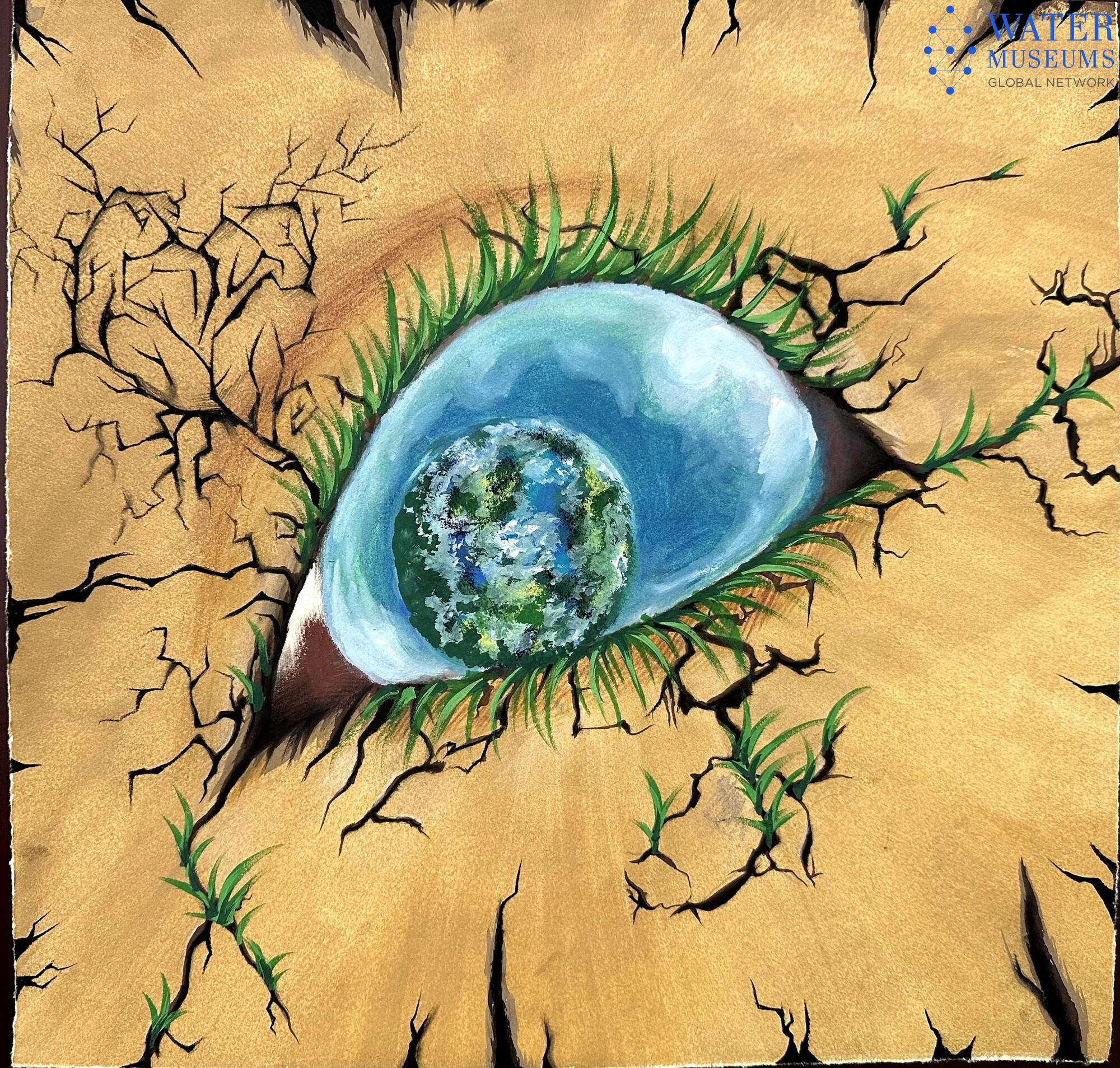
In the center of the picture, a huge eye slowly opens, with a deep and clear blue light shining in its pupil, as if it were an endless stream of clear water. It is both mysterious and full of vitality. This eye is not only a symbol of life but also an intuitive expression of our longing for water. In the context, the interweave dry land and the live plants form fresh comparisons. It emphasizes the importance of water for life and the disastrous results caused by water shortage.
Identifier: #344
CHINA
National Water Museum of China
Auction of future water resources
National Water Museum of China, China. Hangzhou Yungu School, Hangzhou. Peng Yiran.
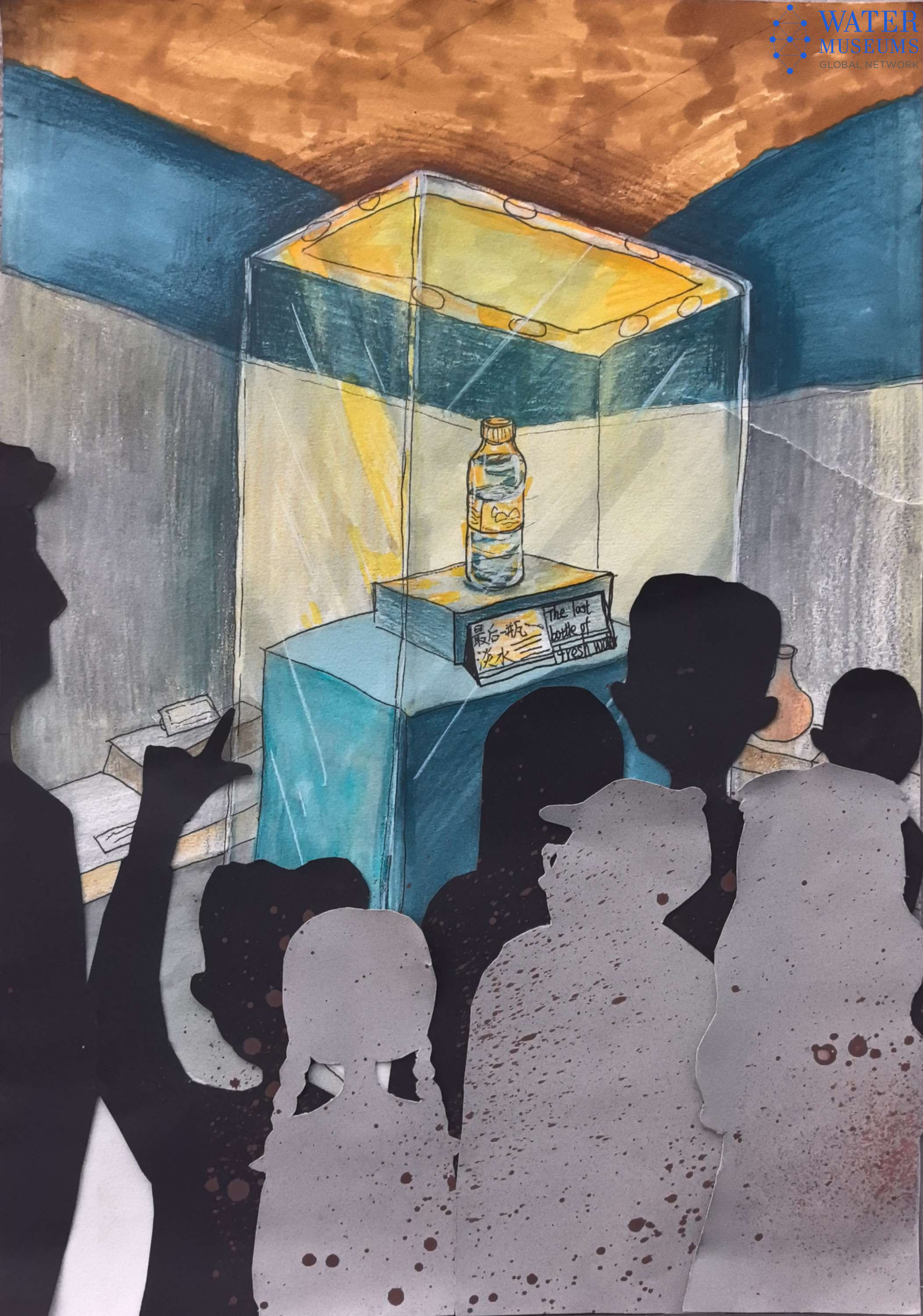
The protection of water resources is urgent, especially freshwater. If humans continue to waste water as recklessly as before, the future may look just like my painting—where even a bottle of water could become priceless and unattainable. So let's take actions now! Start with ourselves, start today. Cherish and protect every drop of water.
Identifier: #342
CHINA
Yellow River Museum
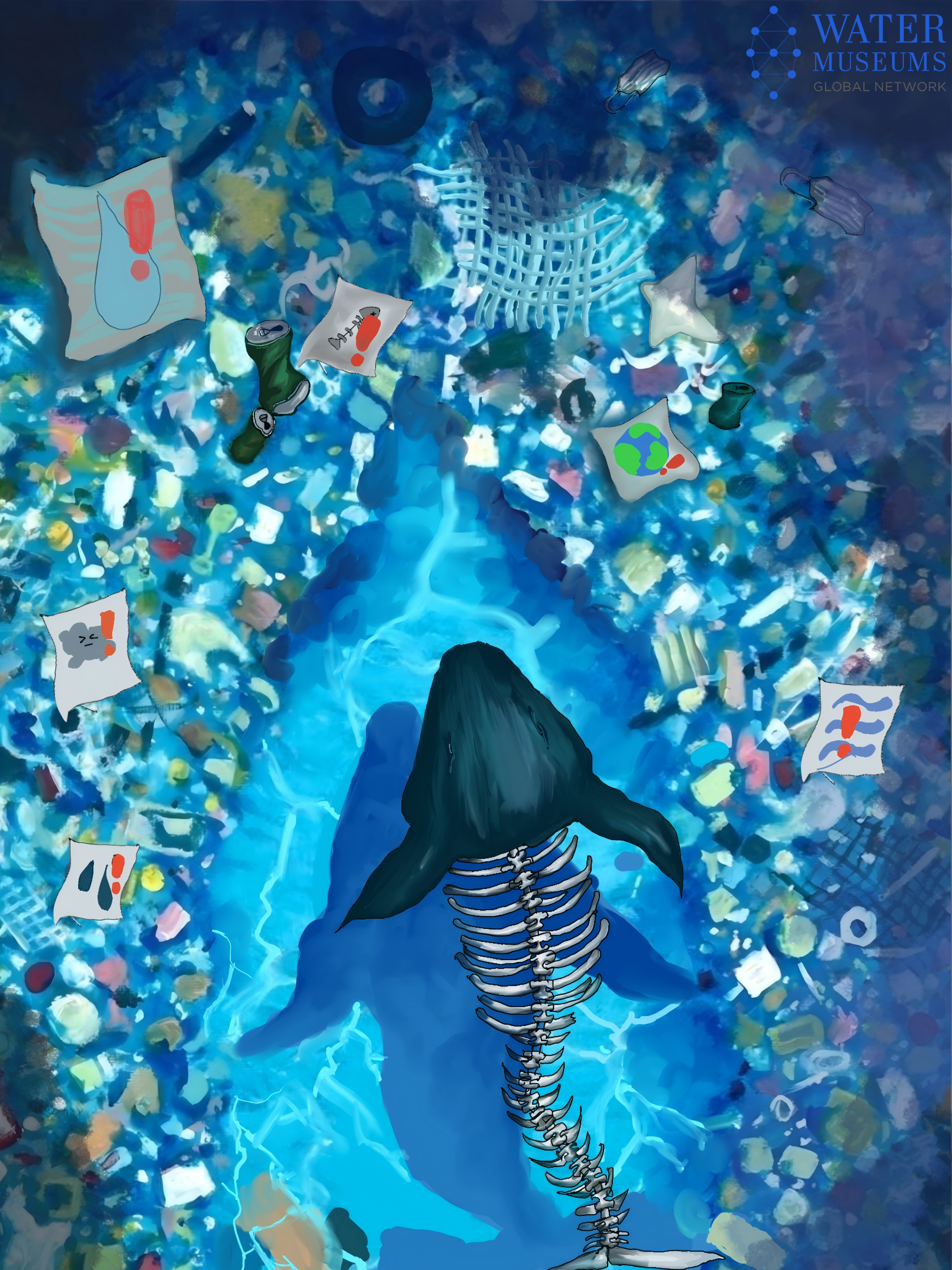
Melody for endangered freshwater
Yellow River Museum, China. Zhengzhou University, Zhengzhou. Liao Jifang.
This work depicts the reality that freshwater is being polluted and biodiversity is destroyed due to it. An aquatic organism with exposed bones surrounded by plastic bottles, fishing nets and other floating garbage presents the current situation of freshwater pollution and lives lost because of it straightforwardly. Freshwater is the foundation for the survival of humans and other countless living beings. However pollution and over-exploitation caused by human activities have put freshwater ecosystem at risk. In the picture, the white papers on the surface of water are warning us to pay attention to freshwater protection. Guarding freshwater means protecting biodiversity, maintaining ecological balance, and building a sustainable and beautiful future for both humans and other creatures.
Identifier: #337
CHINA
Yellow River Museum
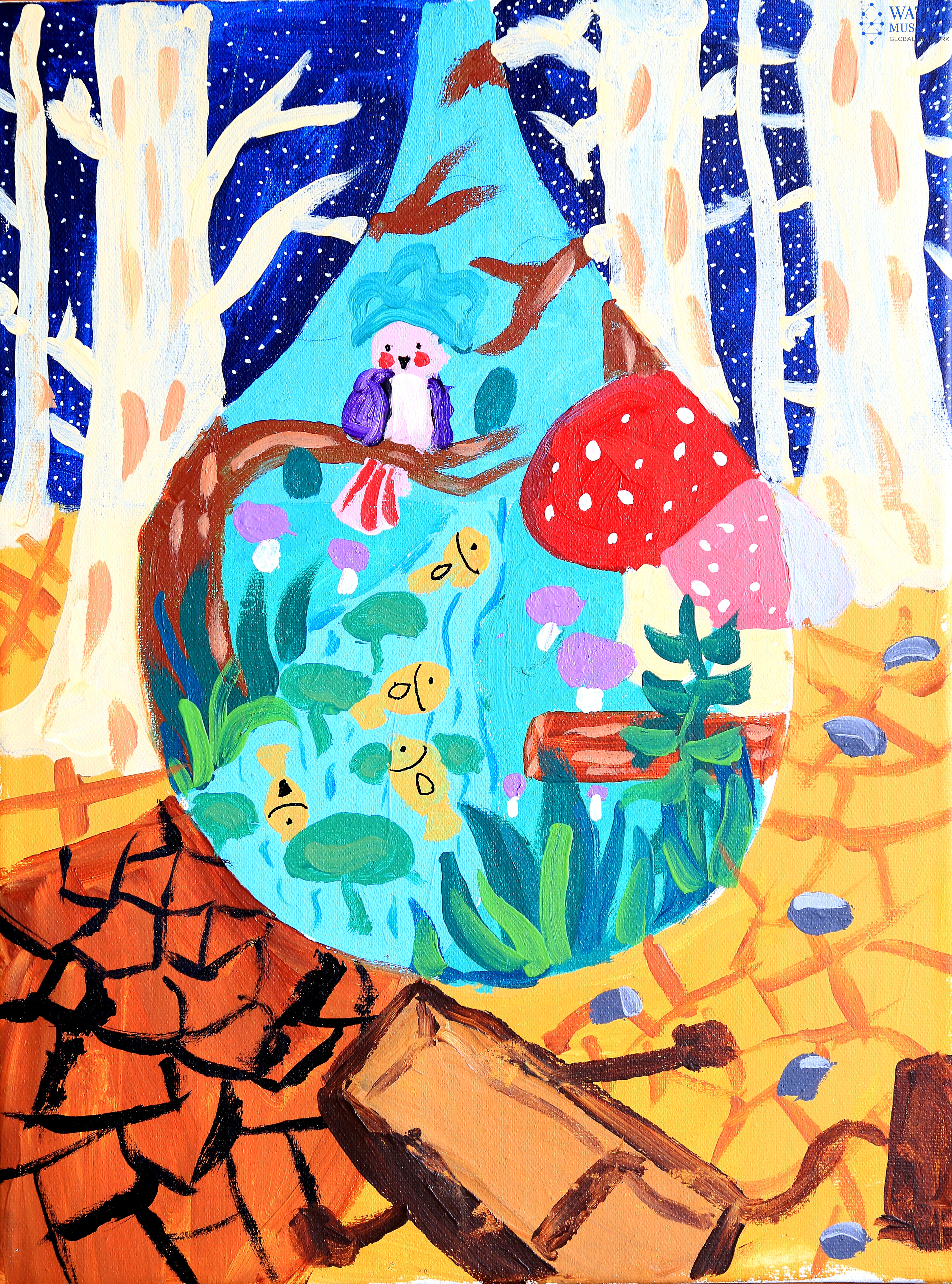
Guarding the source of life
Yellow River Museum, China. Best Bilingual Primary School, Zhengzhou. Jiang Xi.
Water, the source of life, the foundation of all living things. However, climate change, the spread of pollution and excessive human exploitation are threatening precious freshwater and endangering innumerable beings that rely on freshwater for survival. Let us live a sustainable life, saving water, reducing pollution, cherishing freshwater and safeguarding the source of life on this blue planet together.
Identifier: #336
SLOVENIA
Posavje Museum Brežice
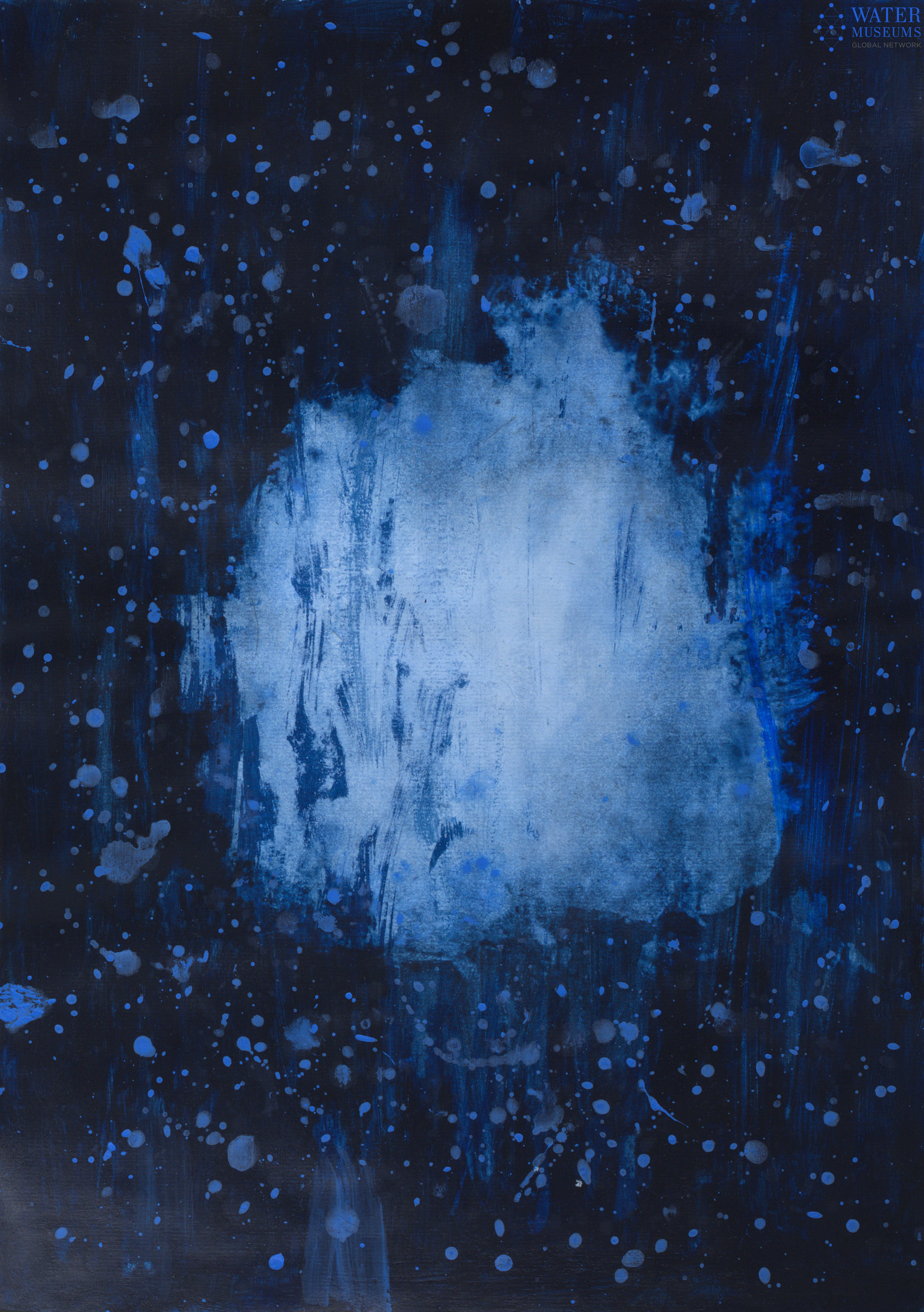
Dripping symphony of water that we want
Posavje Museum Brežice, Slovenia. OŠ dr. Jožeta Toporišiča Dobova, Dobova. Larisa Slovenec.
By exploring artistic approaches, the young artist has recreated the feelings evoked by water – calmness, mystery, playfulness and power that leads us to an underwater fairy tale, an imaginary landscape or a dripping symphony of water that we want.
Identifier: #324
ROMANIA
House of Water Museum
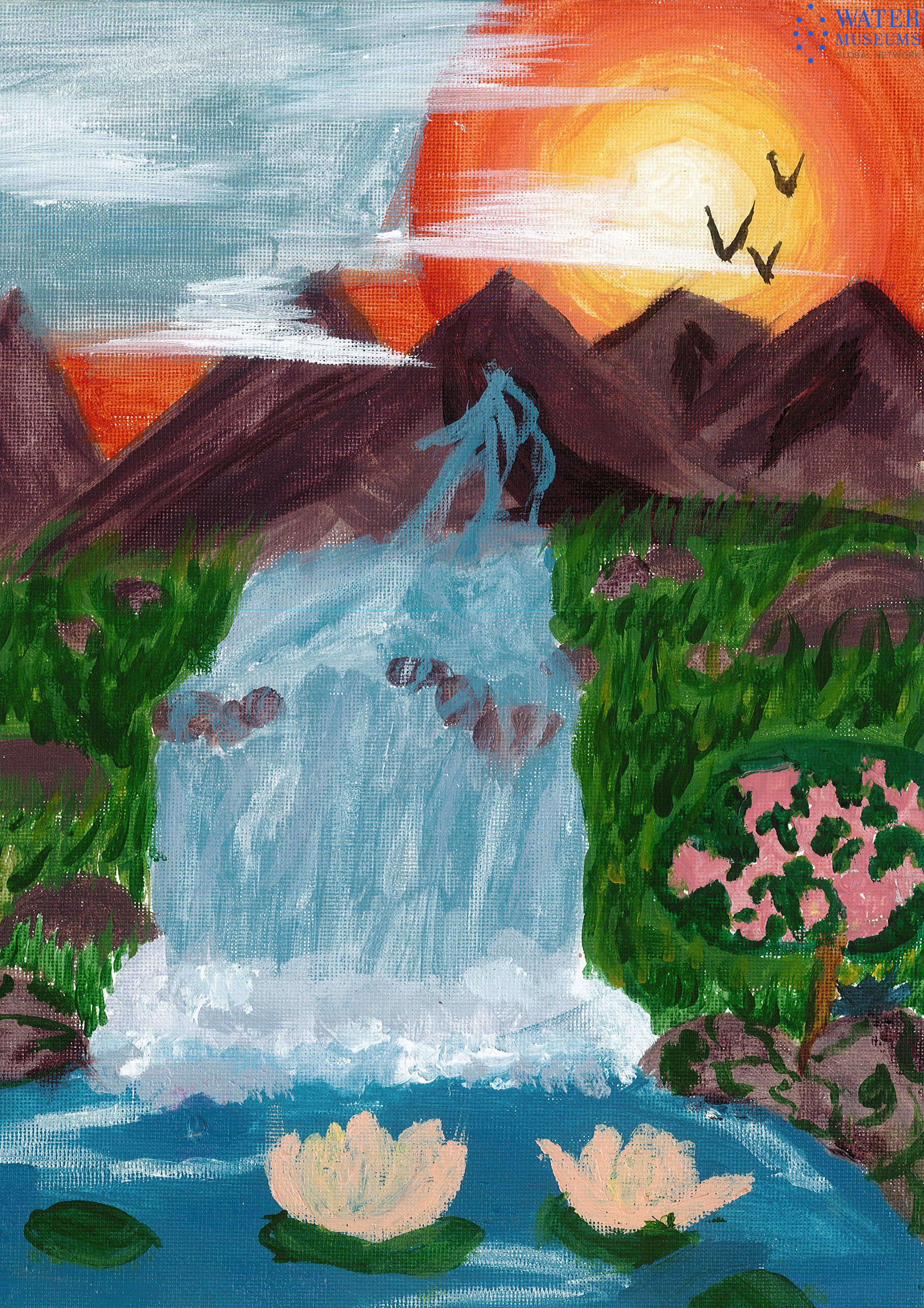
Whispers of nature
House of Water Museum, Romania. Iernut Primary School, Iernut. Mădălina Maria Burciu.
This painting tells a quiet story, one that only nature can whisper. At its heart, a waterfall tumbles gracefully from the mountains, its crystal waters dancing over rocks and rushing into a gentle pond below. There, soft lotus flowers bloom like secrets kept by the earth, floating in peaceful silence. Above, the sky is set ablaze with hues of orange and red, as the sun rises or falls—caught in that magical in-between moment. Dark mountains stand tall and proud, guarding the horizon like ancient giants. Three birds soar across the sky, their wings cutting through clouds as if chasing dreams. To the side, a tree dressed in pink blossoms watches over the scene like a guardian of spring. This painting is more than a picture. It is a feeling. A breath. A moment suspended.
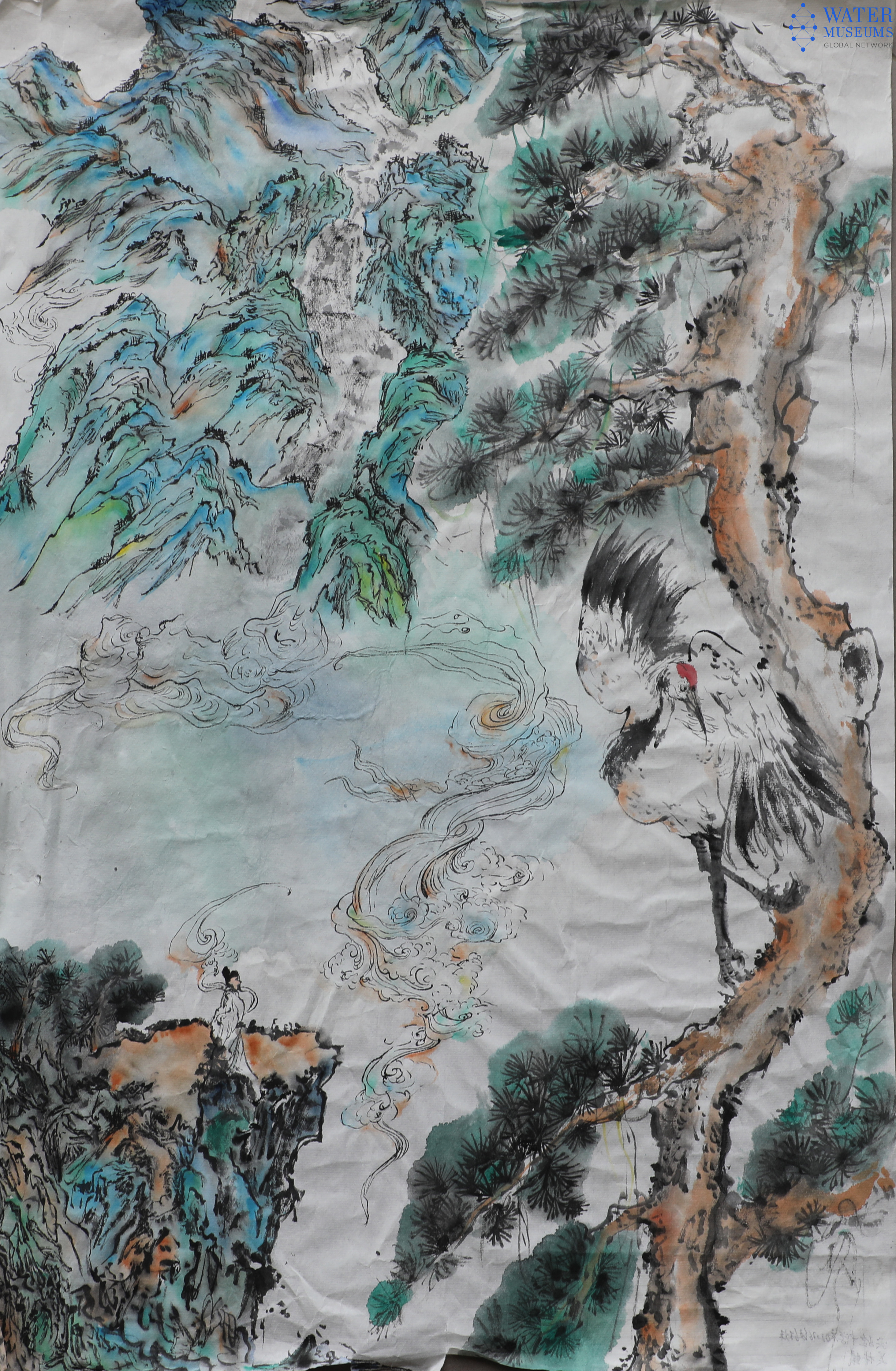
Identifier: #320
CHINA
Baiheliang Underwater Museum, Chongqing
Viewing the waterfall on Mount Lu
Chongqing Baiheliang Underwater Museum, China. Fuling Experimental Middle School, Chongqing. Wu Linxi.
This painting uses ink and wash to depict the beauty of the mountains and waters. A white crane on the right symbolizes the White Crane Ridge.
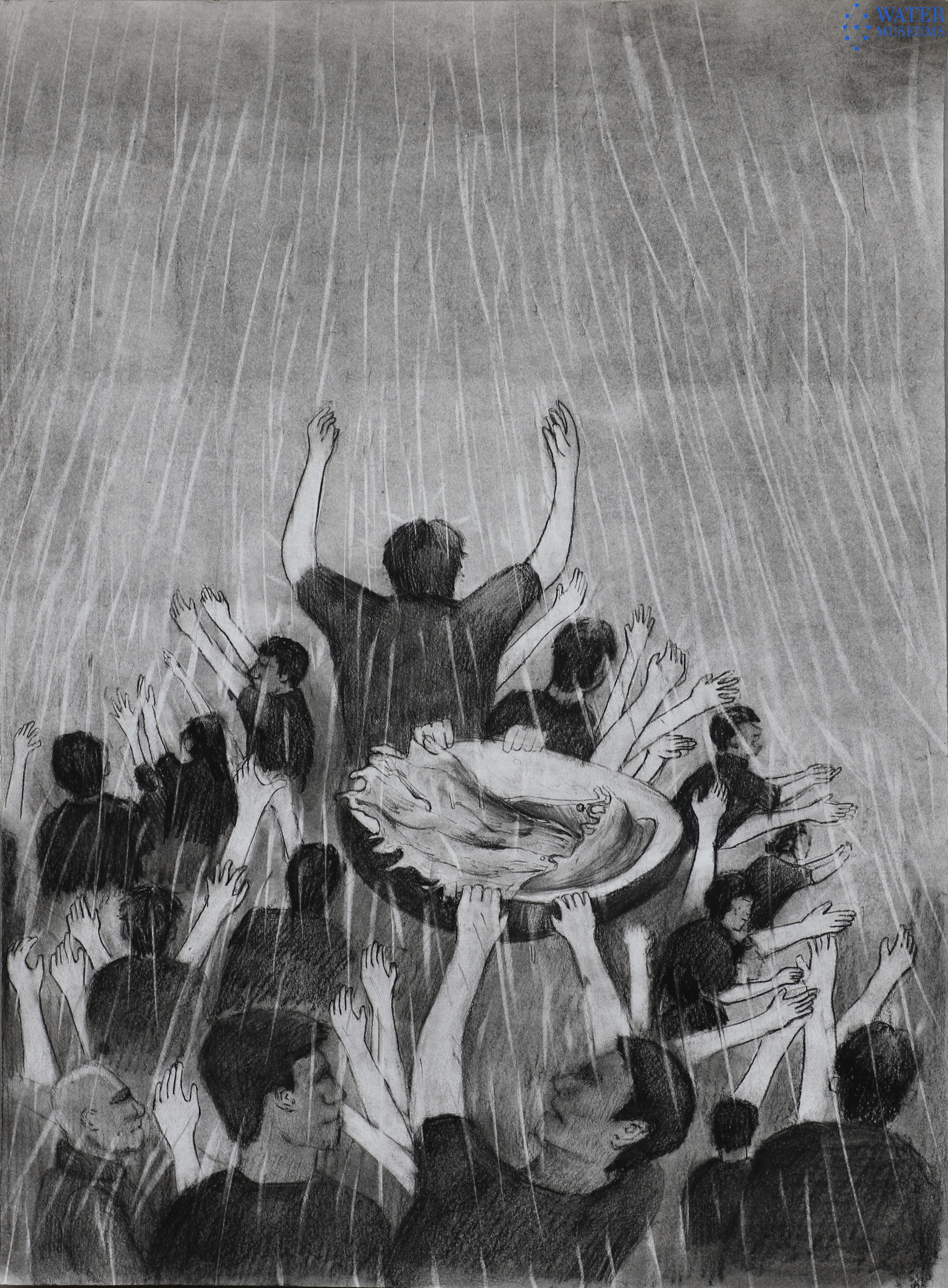
Identifier: #319
CHINA
Baiheliang Underwater Museum, Chongqing
A feast in the rain
Chongqing Baiheliang Underwater Museum, China. Fuling District No.1 Middle School, Chongqing. Ren Xuanyang.
Depict the joyous scene of people in the rain in an abstract form, where water symbolizes all hope.
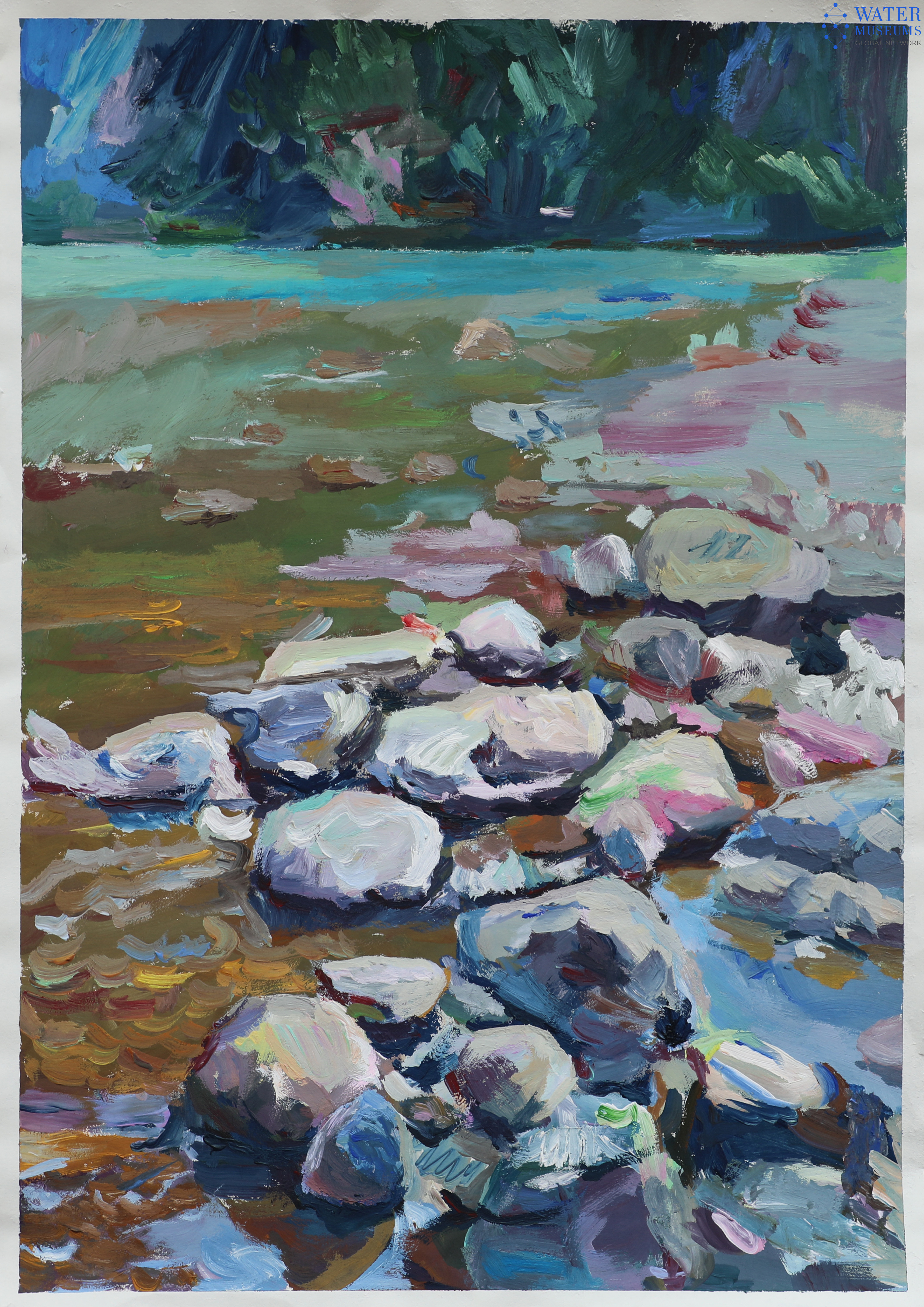
Identifier: #318
CHINA
Baiheliang Underwater Museum, Chongqing
The water and the stone splash against each other
Chongqing Baiheliang Underwater Museum, China. Fuling District No.1 Middle School, Chongqing. Li Yuting.
Depict a scene of water and stones in harmony and contentment through painting.
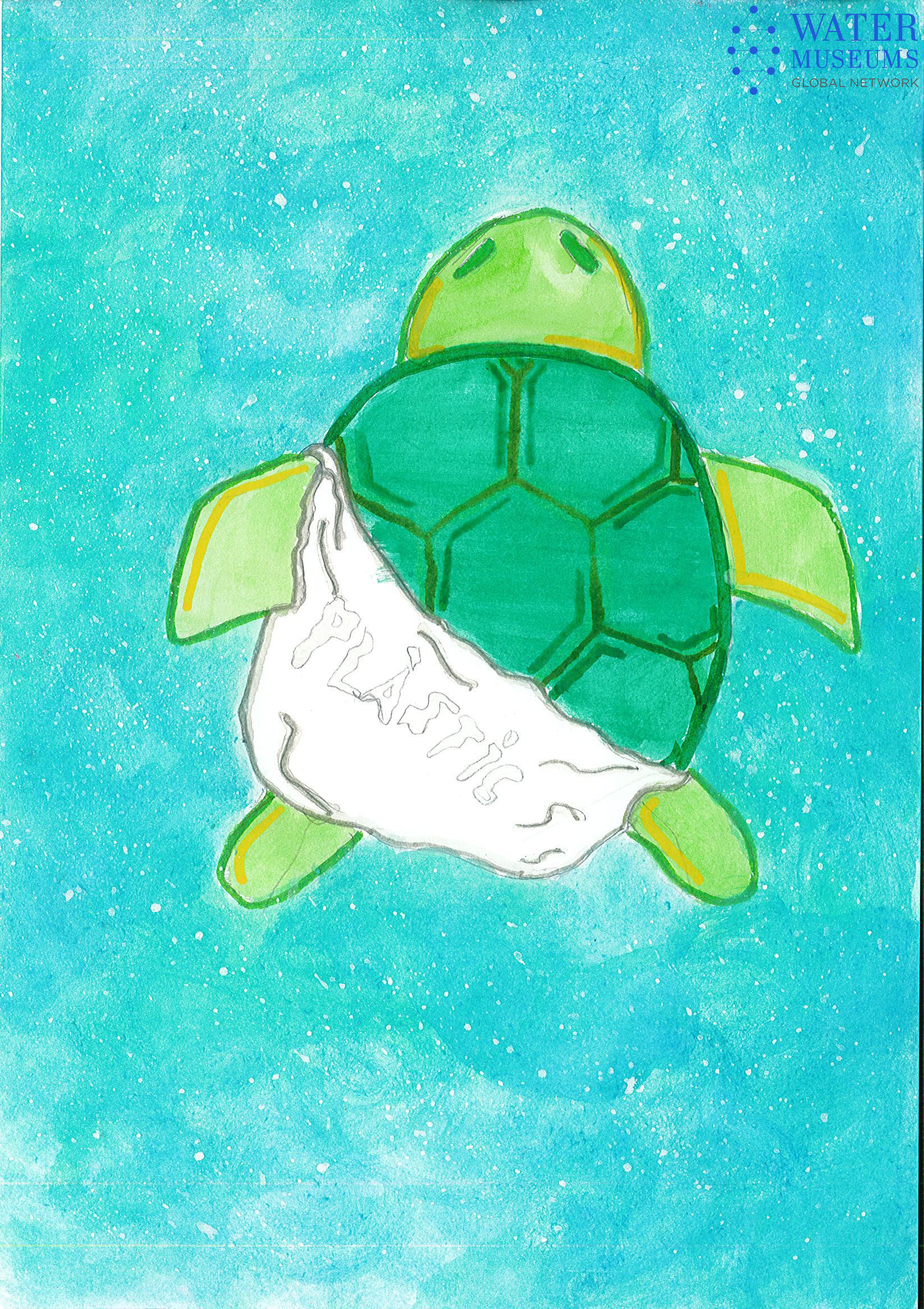
Identifier: #307
SPAIN
Museu de l’Aigua i el Tèxtil de Manresa
This is not her shell
Museu de l’Aigua i el Tèxtil de Manresa, Spain. Col·legi La Bressola Pompeu Fabra, El Soler, France. Lluna Bendicho.
This drawing shows a sea turtle trapped in a plastic bag that clings to her body as if it were part of her. The title, « This Is Not Her Shell », reminds us that this strange and artificial object does not belong in the natural world, even if it blends in. It is a visual statement on how human waste merges with marine life, silently threatening it. The artwork was created using a soft, watercolour-inspired technique, with turquoise and green tones to evoke a serene underwater atmosphere, contrasted by the intrusive presence of the white plastic. The Catalan word « PLÀSTIC » is embedded within the shape of the bag as part of an artistic exercise in merging text with image, creating a dialogue between form, meaning, and emotion. This piece was made by 14-yearold students as part of an educational project that combines science, ecology, and art. With simple yet expressive lines, the drawing calls for collective responsibility, showing how an everyday object can become a threat to the most vulnerable creatures of our blue planet.
Identifier: #306
INDIA
Living Waters Museum, India
Fresh water
Living Waters Museum, India. Bidya Bharati Girls' High School, Kolkata. Kathakata Naskar
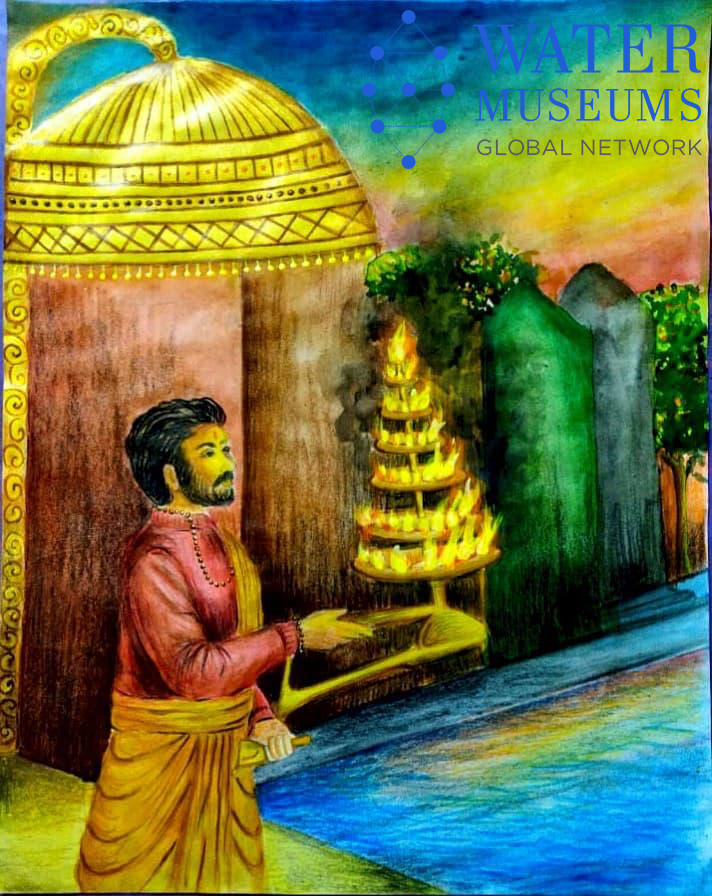
The River Ganga is regarded as a goddess throughout India. The river symbolizes spirituality and purity for all people. It is believed that taking a dip in the river cleanses one's sins and negativity, bringing positivity and peace into life. The ceremony of Ganga Aarti is a nightly ritual held to honor, pray for, and express gratitude toward the holiest river, Maa Ganga. The aarti is performed to dispel darkness, and every evening at sunset, the ritual takes place in cities like Varanasi, Allahabad, Haridwar, and others. The ghats of Varanasi are particularly beautiful and captivating. Priests in Varanasi worship the Ganga in such a synchronized and mesmerizing manner that it creates a spellbinding sight. They perform an elaborate and visually stunning aarti on the ghats of the river. The purity and freshness of the Ganga must be preserved so that it continues to spread positivity across the world. Pollutants and garbage should never be dumped into the river. By maintaining its cleanliness, we can ensure the Ganga remains a source of fresh water. The dredging and navigation of the Ganga should be properly managed by the government to maintain the river’s cleanliness and sustainability.
Identifier: #305
INDIA
Living Waters Museum, India
AI for saving water
Living Waters Museum, India. Indus Valley World School, Kolkata. Aratreeeka Mohanty
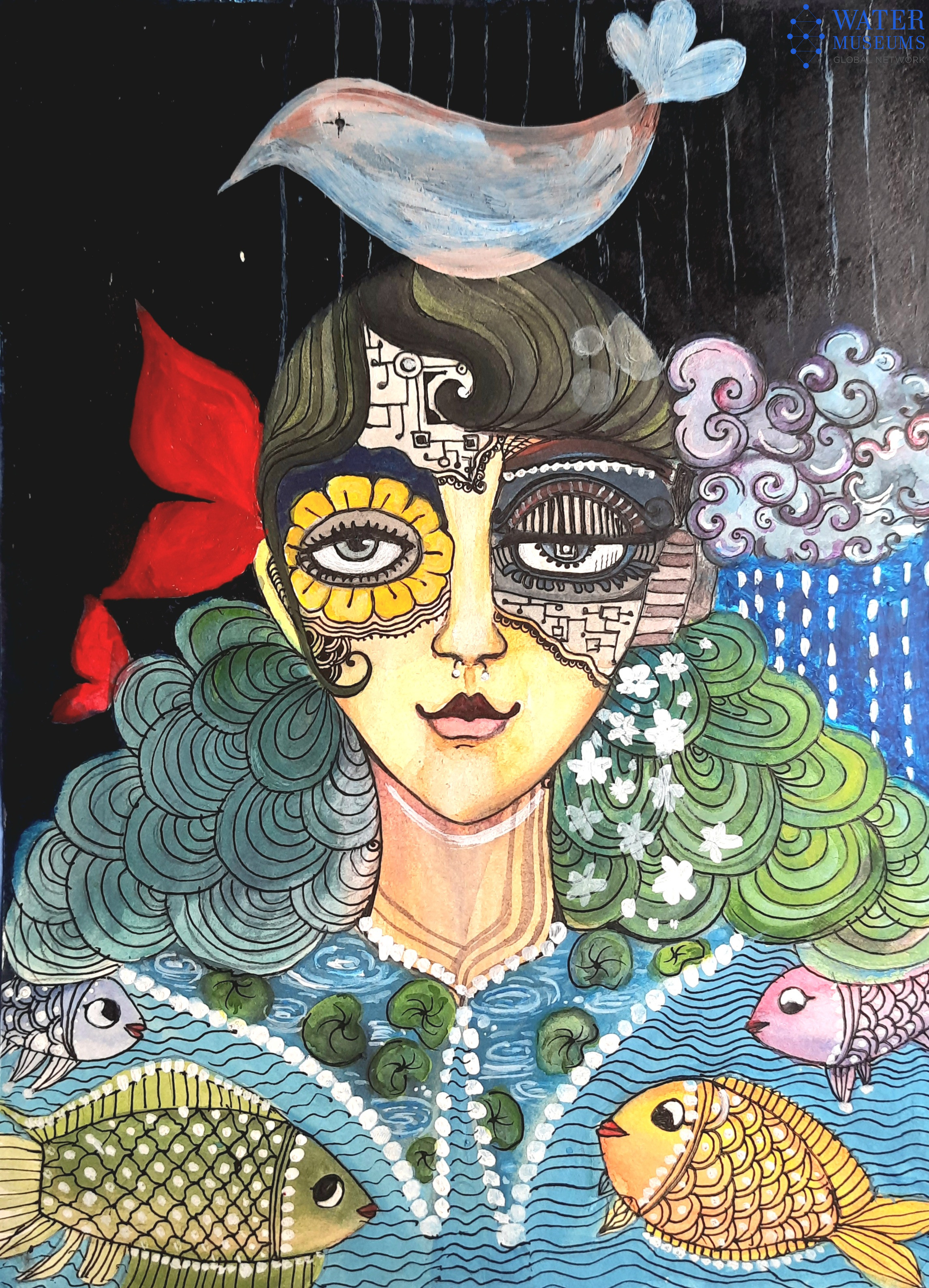
We must balance our need for water with our responsibility to protect nature. Water, along with other natural resources, is at risk of exhaustion. To ensure sustainability, we must come together and apply Artificial Intelligence to conserve natural resources responsibly.
Identifier: #304
INDIA
Living Waters Museum, India
Caught in the storm of change
Living Waters Museum, India. Modern High School for Girls, Kolkata. Dravee Sanghvi
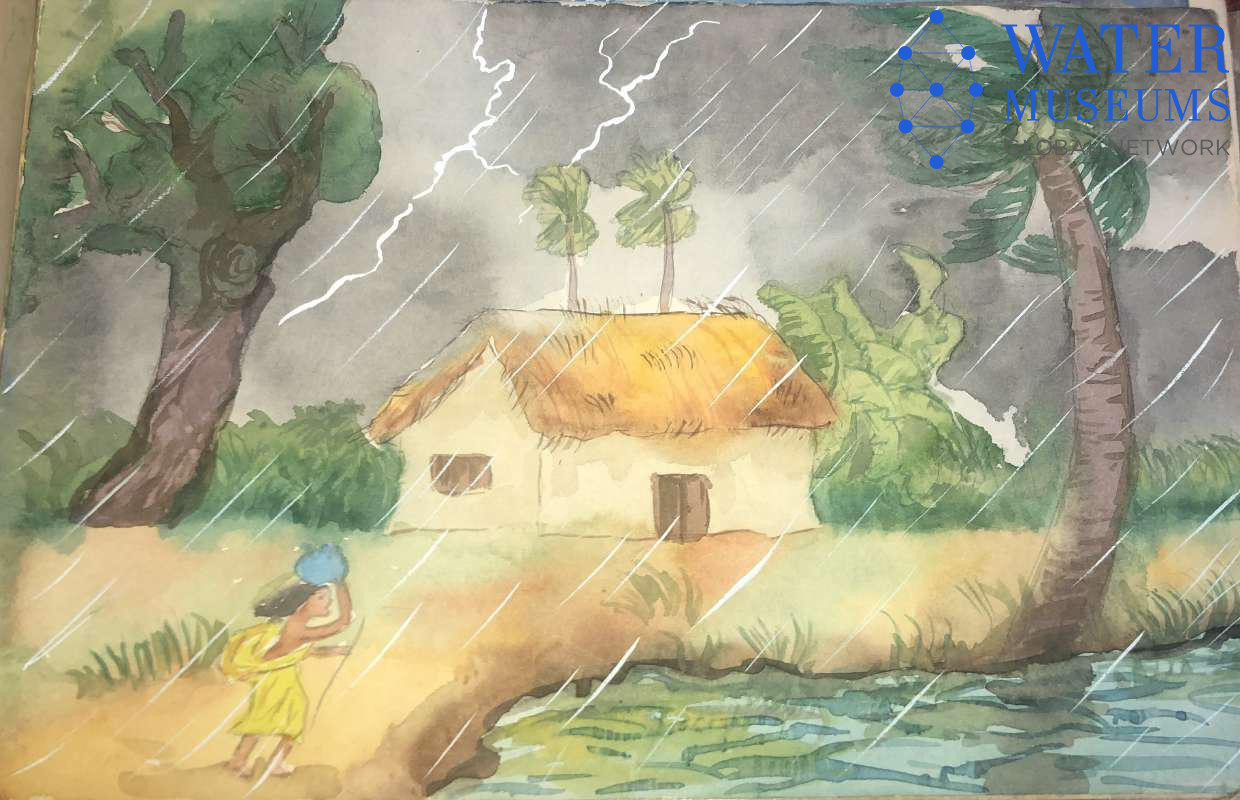
The image depicts a small, fragile hut struggling against a fierce storm with a pot of drinking water. The dark sky is filled with heavy clouds, and strong winds bend the trees. Heavy rain pours down as a woman fights her way through the storm. This scene highlights the impact of climate change, showcasing how extreme weather events like heavy storms and unpredictable rainfall are becoming more common. It illustrates the vulnerability of people and their homes to nature’s growing fury.
Identifier: #286
ITALY
MUSE - Science Museum, Trento
What If we were the frogs?
MUSE, Italy. Primary School 'La Fonte', Pergine Valsugana. Class 3.
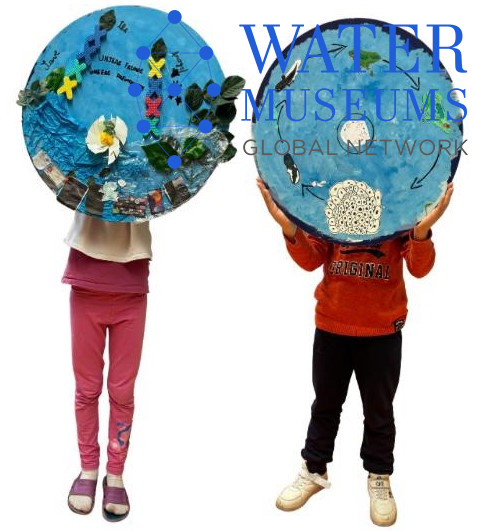
This project stems from an exploration of the life of frogs. After observing and studying their life cycle, we
realized how essential ponds and lakes are for their reproduction. This led us to reflect on pollution and our
"ecological footprint" in the world. From this, the concept of a pond made entirely of plastic emerged. In
such a contaminated and altered environment, we found ourselves asking: what if we were the frogs?
MAIN PARTNER YEAR 2025