The Water We Want 2026 - Drawings
Identifier: #450
 Winner
ECUADOR
Yaku Parque Museo del Agua
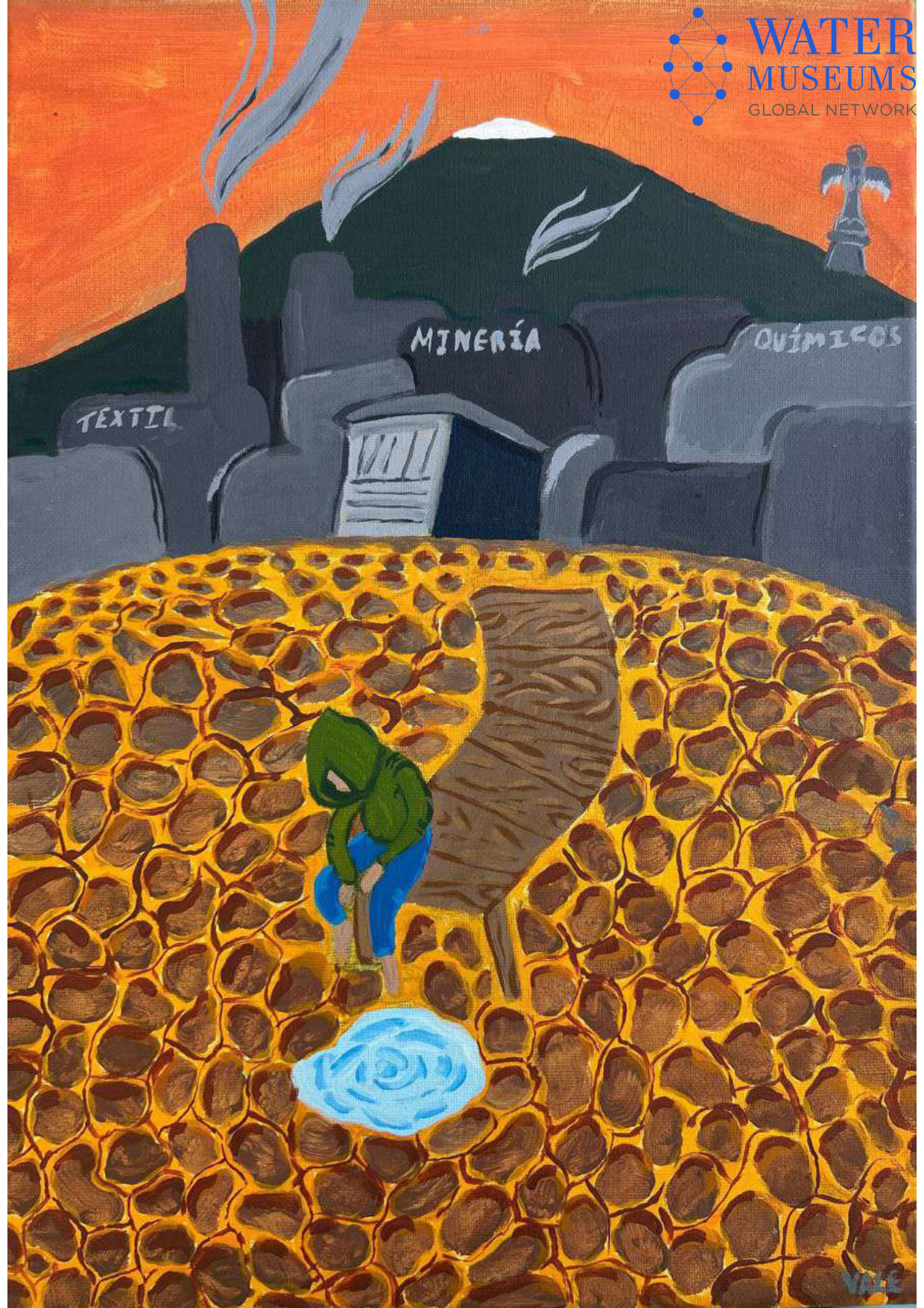
Quito's Last Drop
Yaku Parque Museo del Agua, Quito. Amaru Learning, Quito. Valentina López.
My drawing is about what could happen if we do not take care of water in our city. In Quito, there are still many underground water sources, rivers, waterfalls, and it is surrounded by a vast páramo that collects water. However, many companies and factories take this resource and then dispose of what they do not need, including chemicals and heavy metals. The industries that pollute the most include textile, mining, construction, and metallurgy. From the mountains, wonderful water flows down, as clean as the water we drink; however, along its path, people contaminate it until it finally reaches the sea. In this process, thousands of aquatic animals die because of pollution. It is very important that we all become aware of the need to protect water, that companies implement better processes to manage their waste, and that people learn to love and respect nature more.
Identifier: #420
Winner
PORTUGAL
Lisbon Water Museum
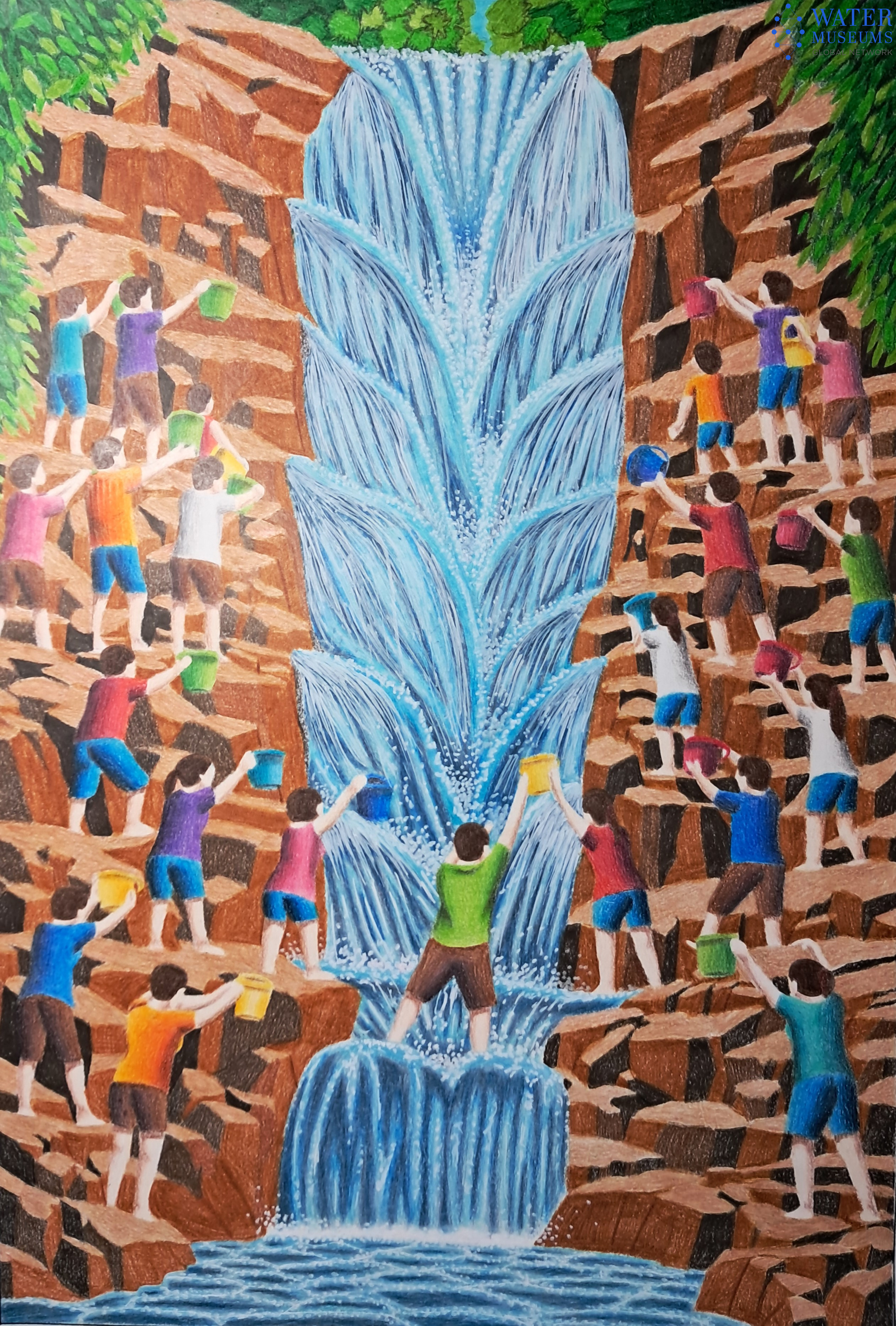
The Collective Desire
Lisbon Water Museum, Portugal. Escola Secundária da Amadora. Leonor Torres (17 Y).
The Collective Desire depicts a group of people standing on the rocks surrounding a waterfall, trying to reach it and catch some water from it, surrounding by nature landscape. This work was created this way in coloured pencil and a white pen to clearly convey the idea of “The water we want”.
Identifier: #403
Winner
MEXICO
Iurhekua Interactive Water Museum
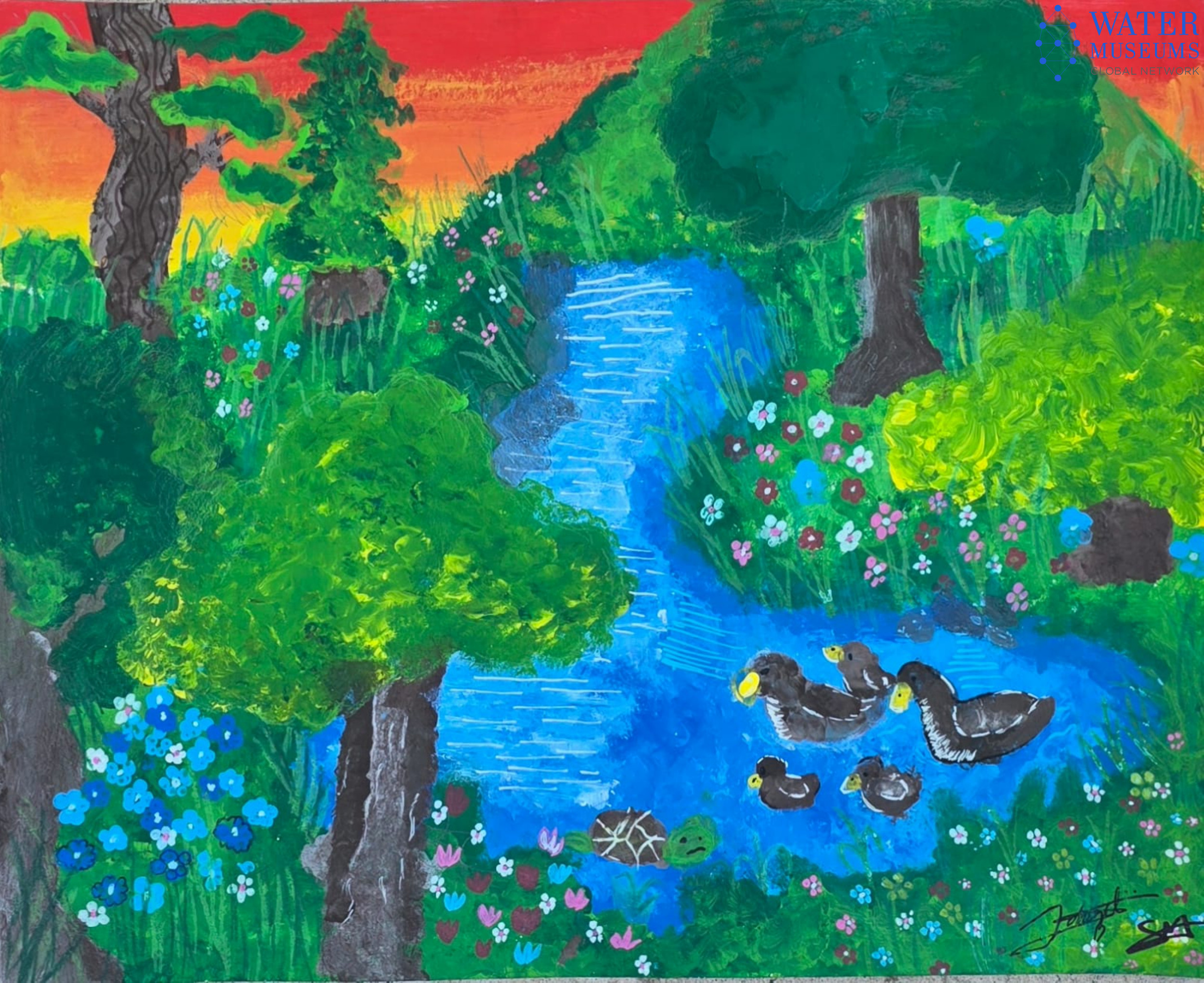
The whisper of the rivers
Iurhekua Interactive Water Museum, Mexico. Educare, Uruapan. Sofia Macias Ortiz.
This piece captures the harmony and peace that we feel when the river flow and tell us his secrets
Identifier: #452
 Special Mention
COLOMBIA
Parque de la Biodiversidad COP16, Cali
Our blue gold, fresh water and the base of life
Parque de la Biodiversidad COP16, Cali. Evaristo García Educational Institution, Cali. Mariana Zúñiga Zamorano.
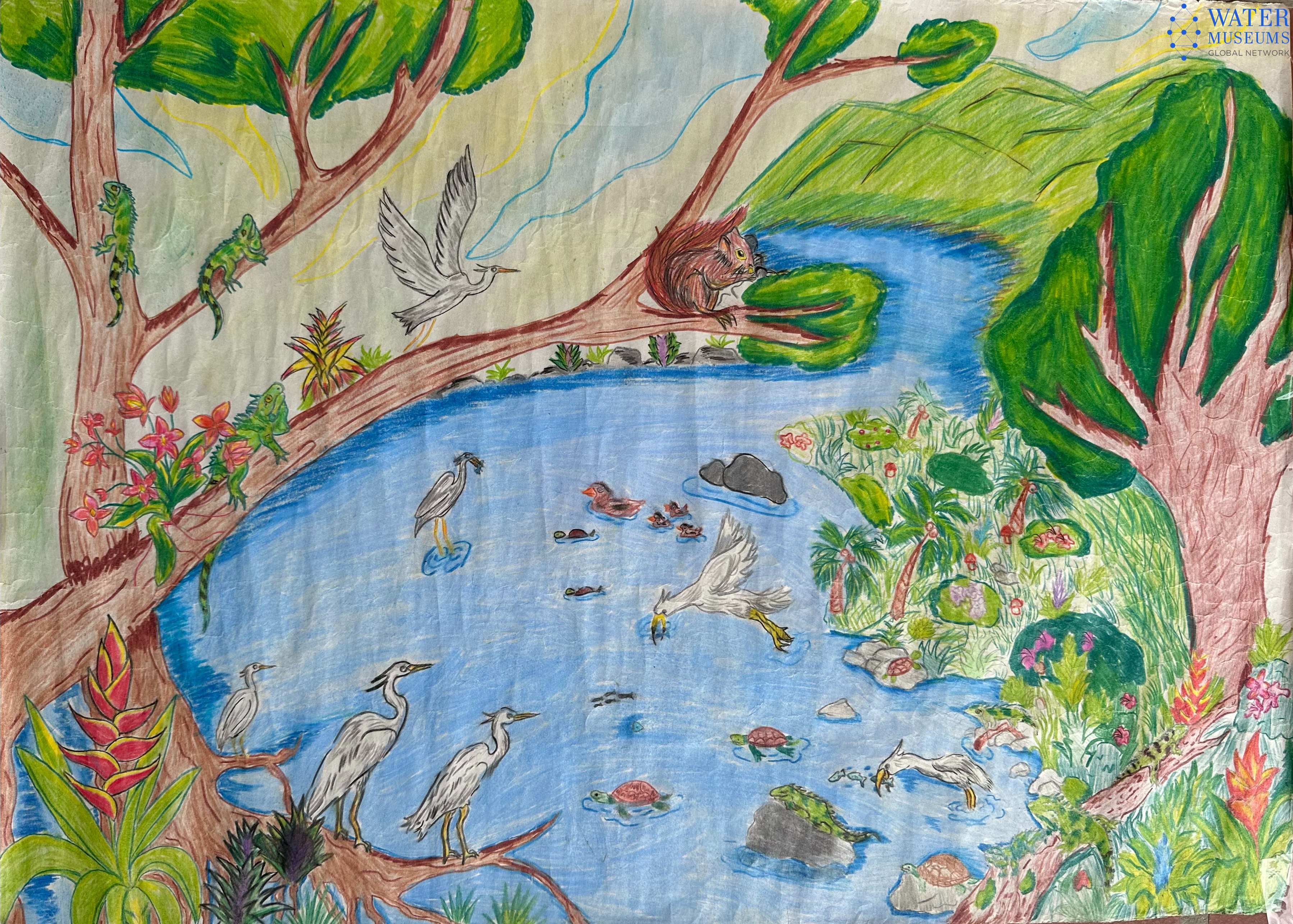
This colorful drawing represents the Heron Ecopark in my hometown Cali, where you'll also find iguanas and turtles. It's a diverse ecosystem with a beautiful lake surrounded by vegetation. If you look closely, you'll see the iguanas camouflaged among the branches, and there are mountains shrouded by clouds in the sky. The squirrel enjoys the beautiful, brightly colored landscape that highlights the value of nature, the importance of water, and the biodiversity of this beautiful place.
Identifier: #441
Special Mention
ROMANIA
“Leonida Truta” Water Museum
Symbiosis
“Leonida Truță” Water Museum, Cluj-Napoca, Romania. Liceul Teoretic “Ana Ipătescu”, Gherla. Mărginean Alexia-Florina.
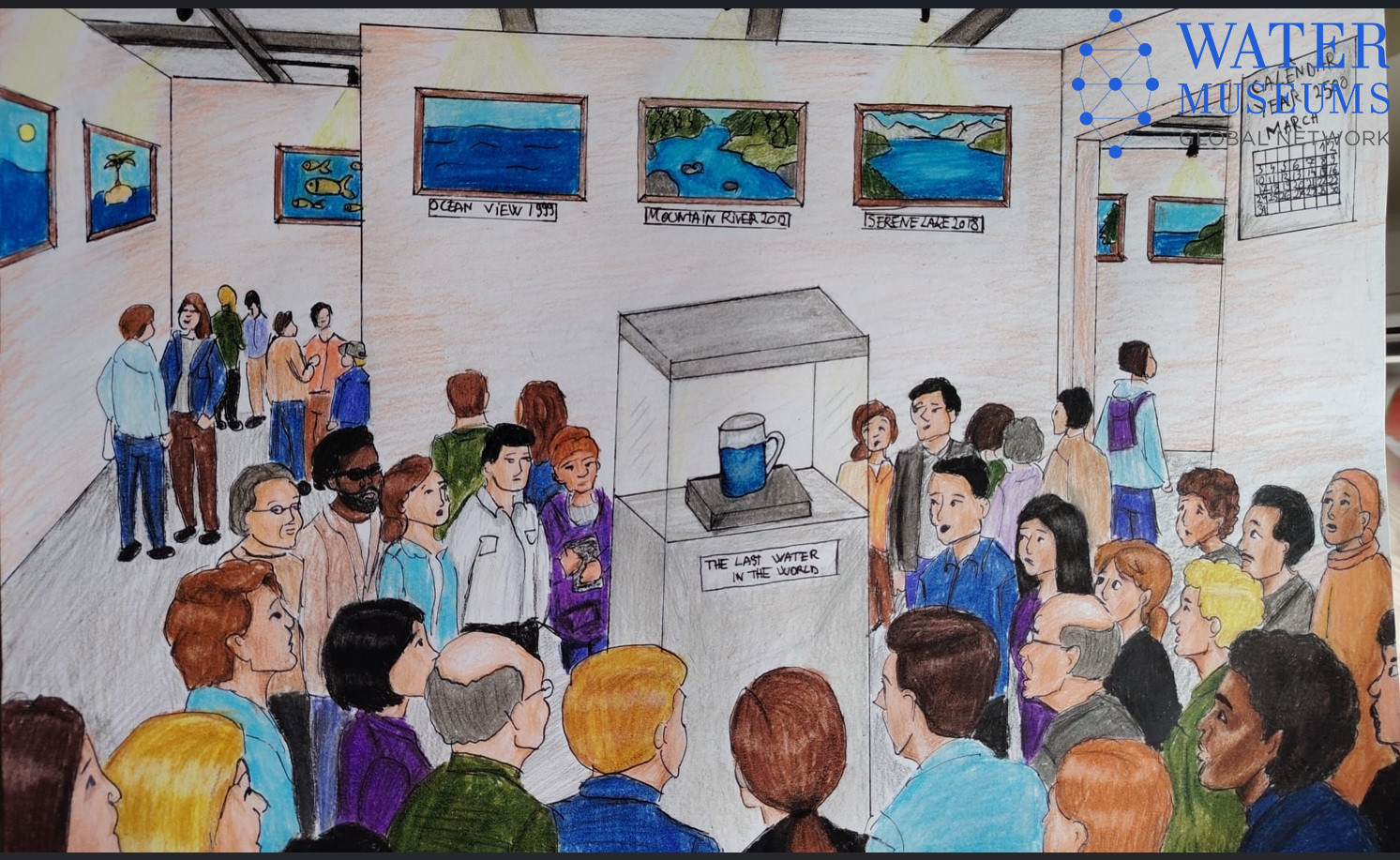
This artwork shows a possible future where water becomes extremely rare because of pollution and human carelessness. The last drop of water is treated like a museum object, symbolizing how people may only realize its true value when it is almost gone.
Identifier: #437
Special Mention
CHINA
National Water Museum of China
Porter of water
National Water Museum of China, China. Lishui Youth Palace, Lishui. YU ziai.
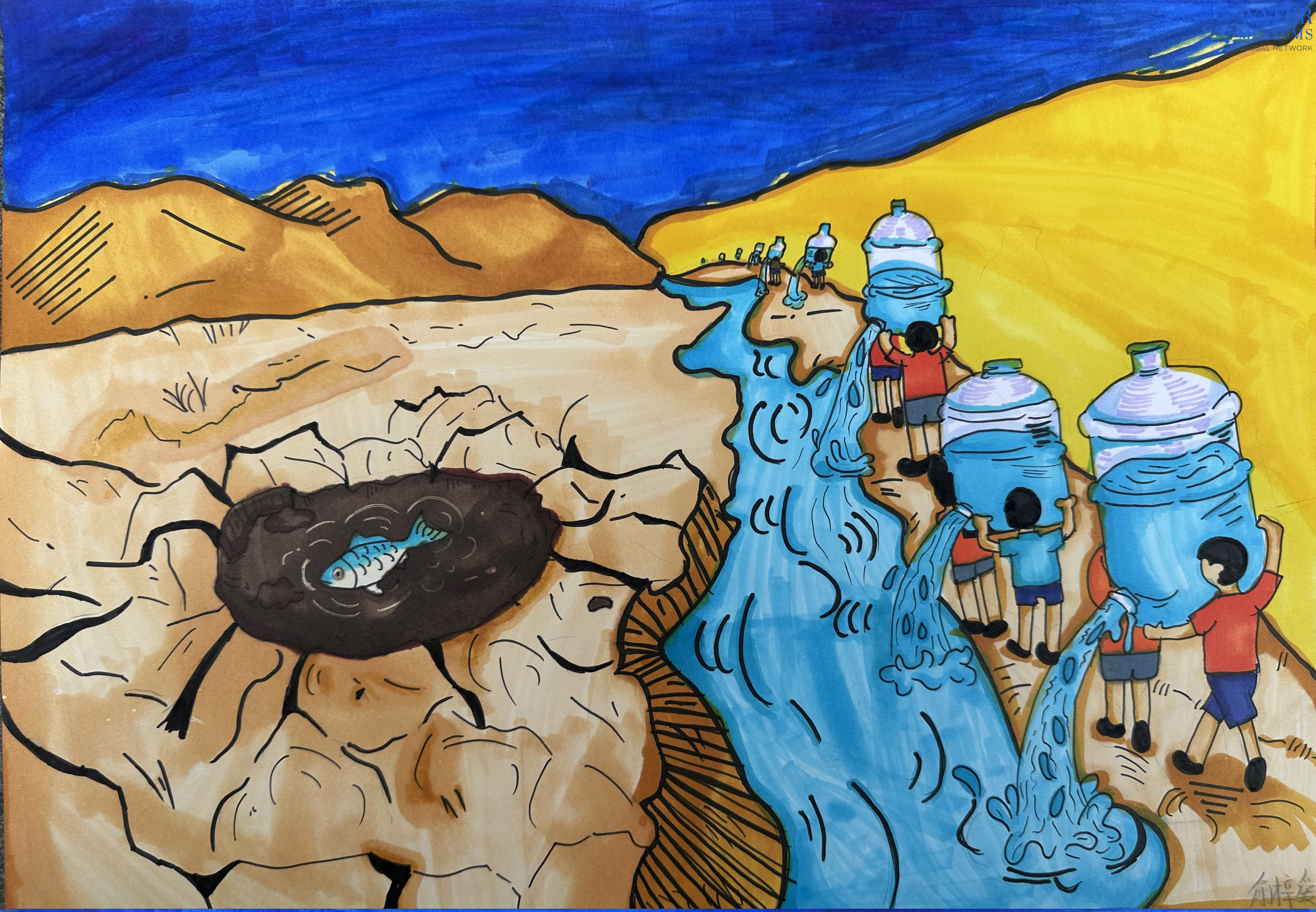
This work presents the theme of water resource protection through strong contrasts: on the left, cracked land and dying fish directly show the severe crisis of water depletion; on the right, children use buckets to collect water "merge into a river", conveying the determination to protect water sources with hopeful actions. The collision of cold and warm colors and exaggerated visual impact warn of the water crisis, calling on people to cherish every drop of water and protect the source of life. The theme is clear and highly infectious.
Identifier: #436
Special Mention
CHINA
National Water Museum of China
Come Quick, Little Rain!
National Water Museum of China, China. Hangzhou Qiantang Experimental Primary School, Caihong Campus, Hangzhou. Tan Shiyue.
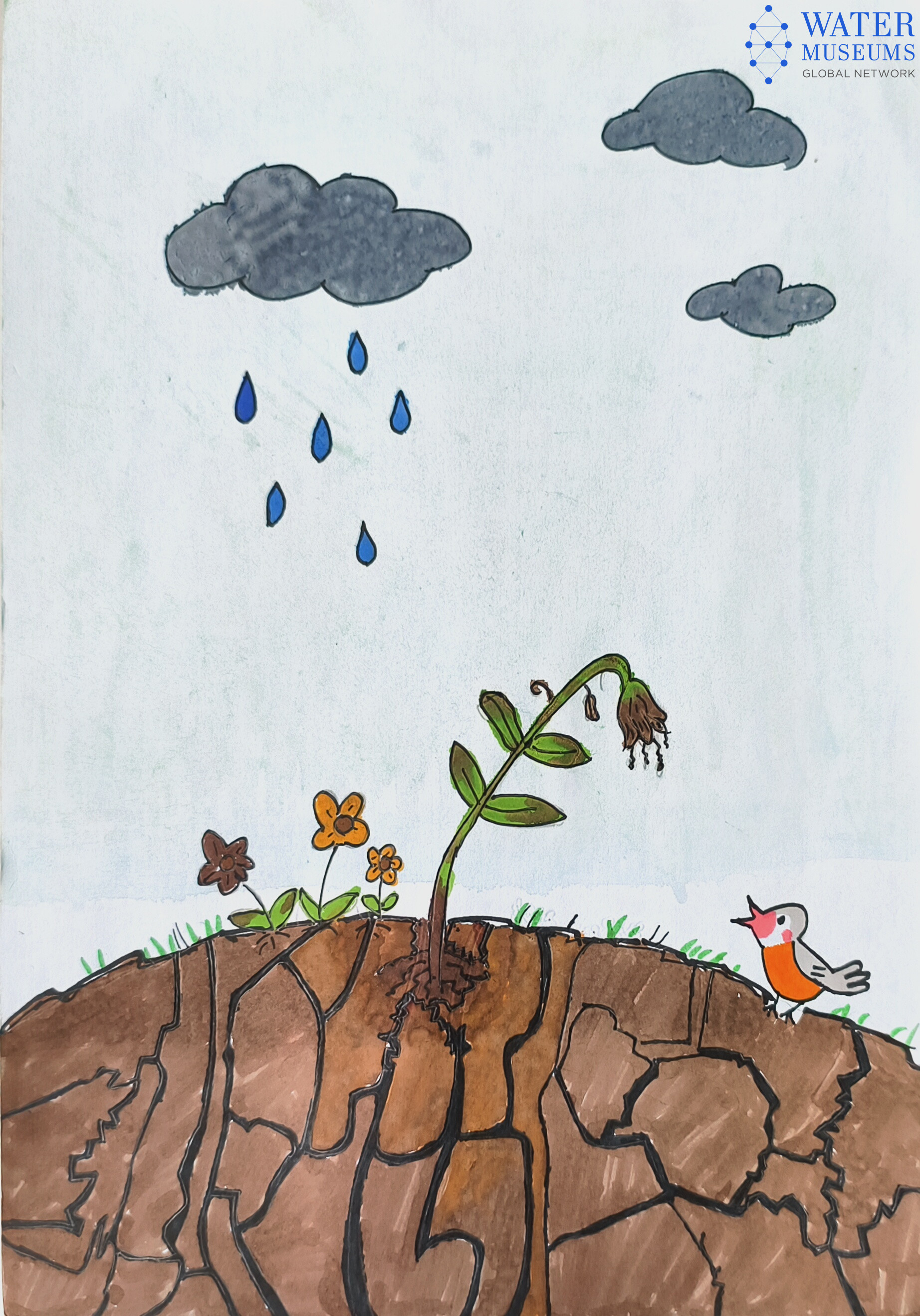
On the dry, cracked brown earth, the little flowers are trying so hard to grow. One poor seedling is so thirsty that it hangs its head, almost withered. Just then, dark clouds bring precious raindrops to wake the world up! A thirsty little bird tilts its head up, opens its tiny beak, and waits eagerly for the first sweet rain.
A little rain can turn the dry land into a warm cradle for new life. Let’s cherish every drop of water, protect our blue planet, and keep the earth full of life forever!
Identifier: #406
Special Mention
USA
Fairmount Water Works Interpretive Center
The Last Drop
Fairmount Water Works Interpretive Center, USA. Duarte, California. Royal Oaks Steam Academy.
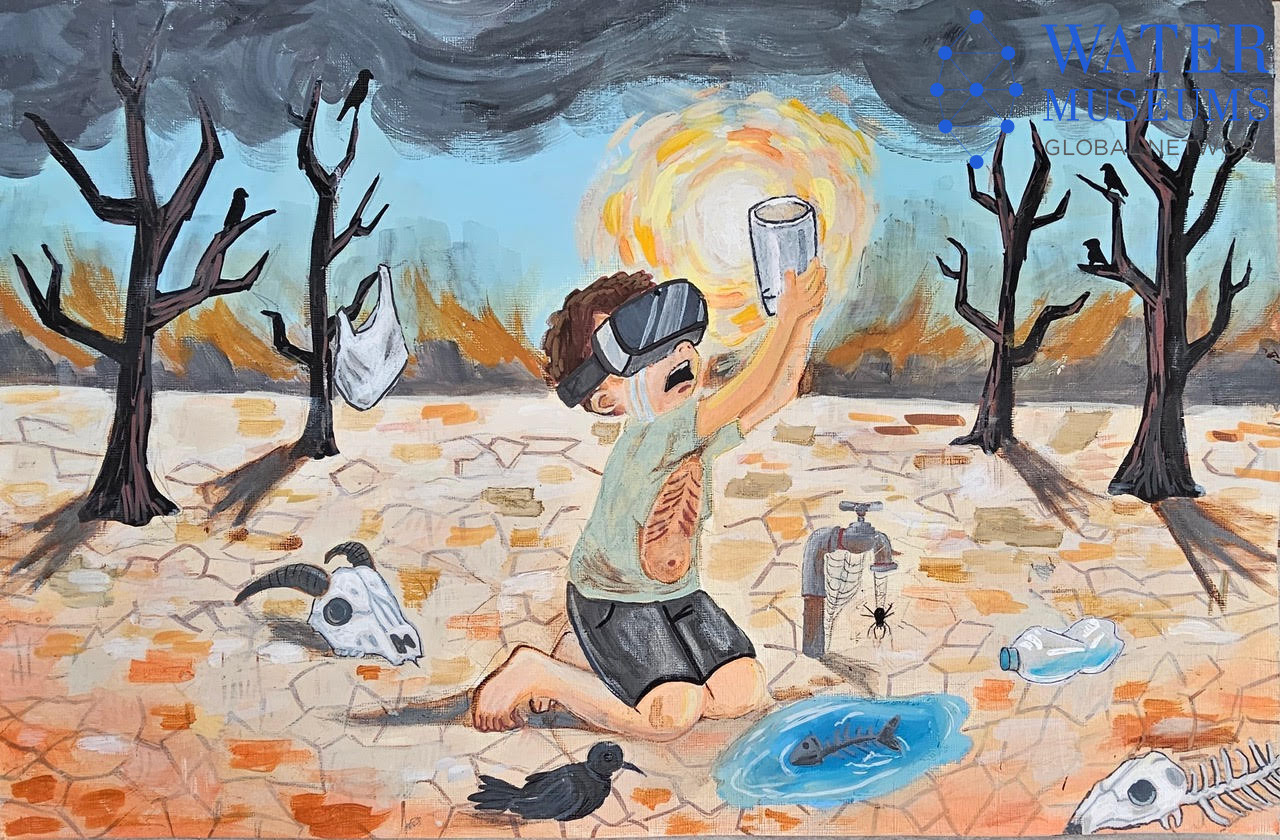
My art shows a future that is super sad and scary. In my piece, a boy is kneeling in a total wasteland. I made the ground look all cracked. I added animal skulls and a fish skeleton in a tiny, dried up puddle to show that the animals are already gone. I wanted to show that without water, there is no life. I also drew a dry water faucet with a web to show that the water has vanished. I hung a white plastic bag from a dead tree to show the leaves are gone but pollution stays behind. Lastly, I drew a boy wearing a VR headset. He’s reaching for a glass of water, but it’s just a digital image. I want to show that we must take care of our planet. If the water runs out, everything else ends too.
Identifier: #394
Special Mention
CHINA
Baiheliang Underwater Museum, Chongqing
Thirsting for Sweet Rain
Chongqing Baiheliang Underwater Museum, China. Chongqing Fuling Chengqu No.6 Primary School (Wujiang Campus). Hu Guoran.
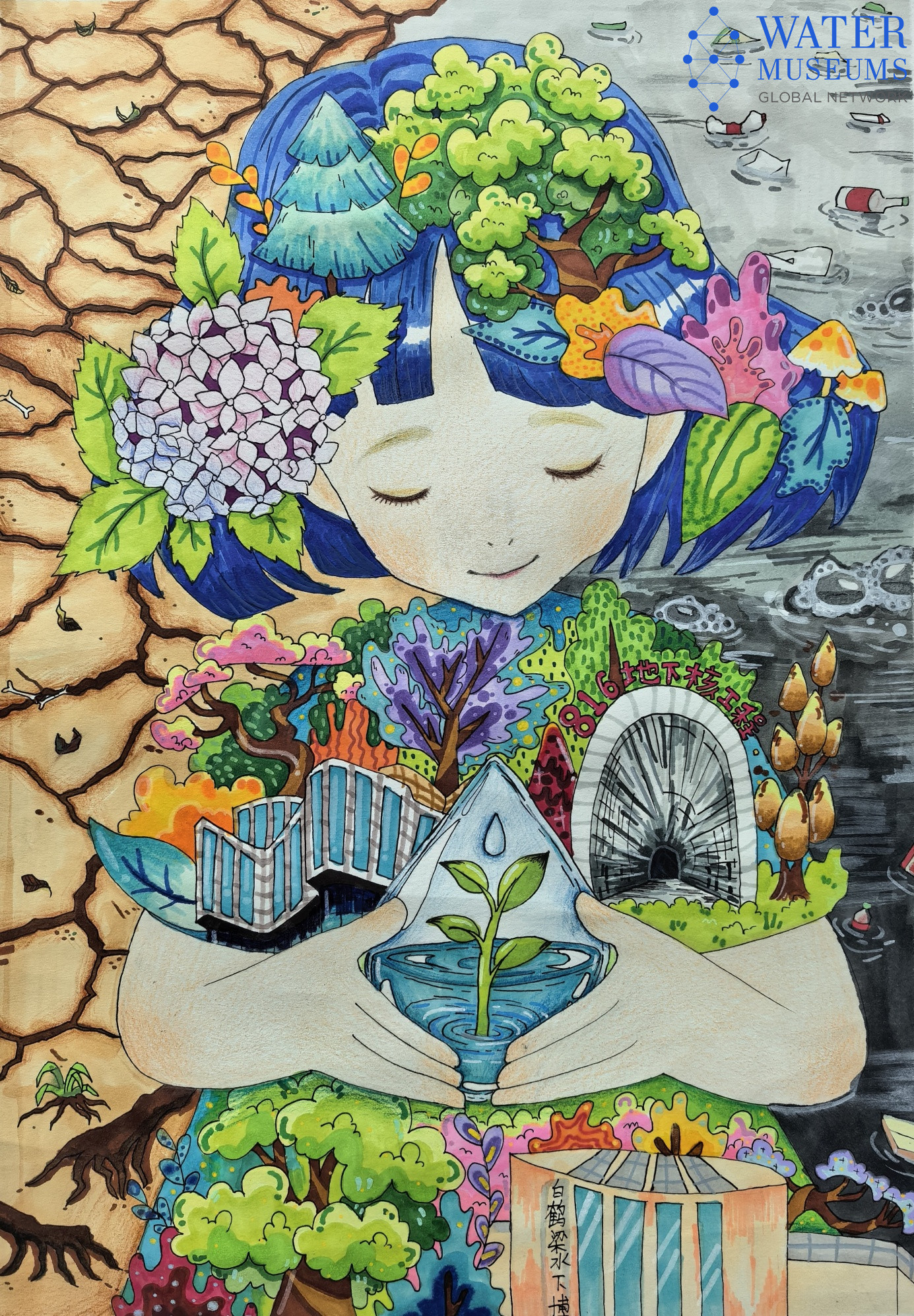
Amid cracked land and polluted waters, a young girl holds a hopeful sprout in her palms, praying for sweet rain to nourish her homeland and expressing the profound longing for clean water resources.
Identifier: #389
Special Mention
CROATIA
Aquatika – Freshwater Aquarium Karlovac, Croatia
A drop of life
Aquatika, Croatia. Dubovac Elementary School, Karlovac. Zoea Benković.
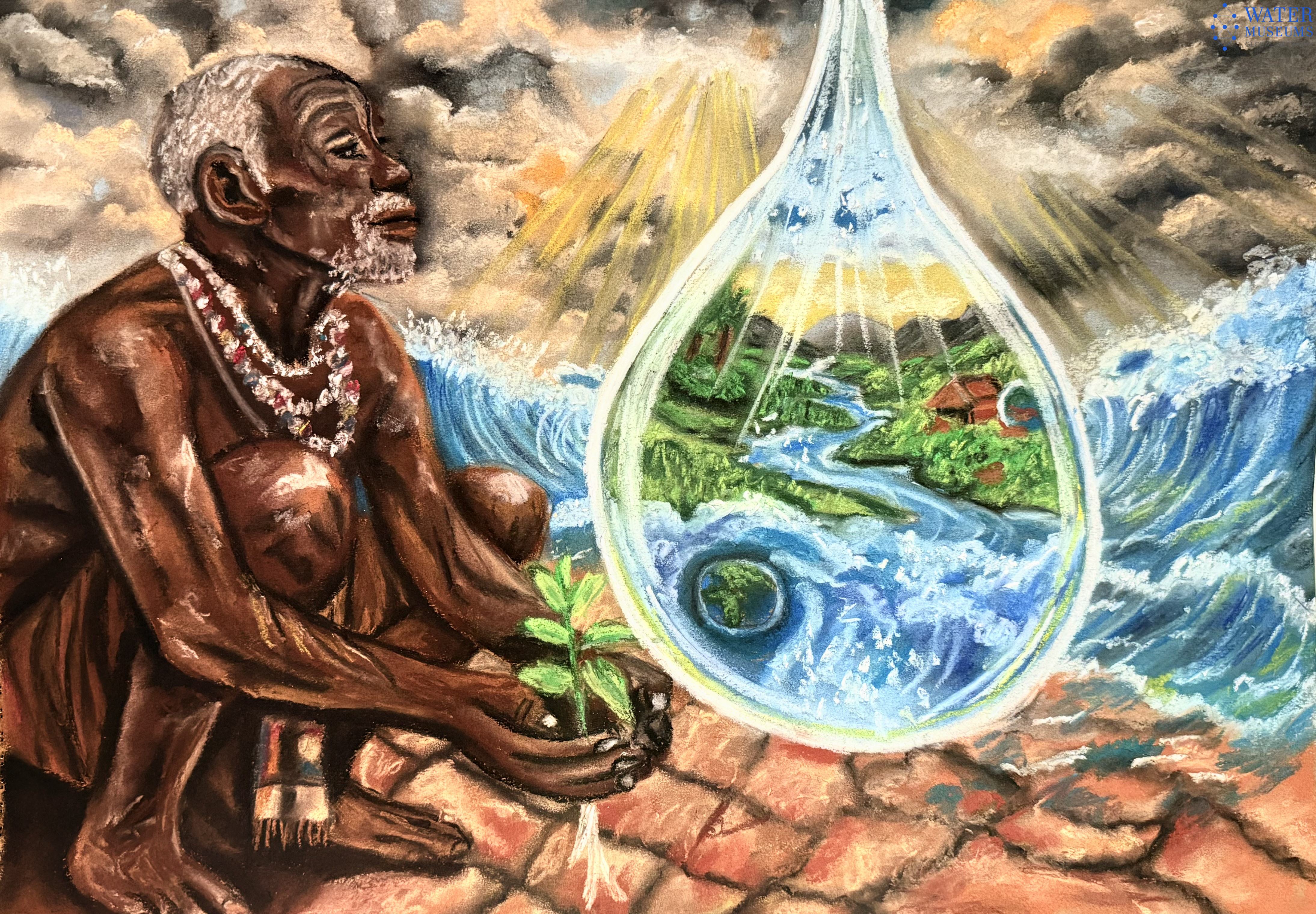
The person stands on dry land which appears broken and tired. His hands are holding one small plant and life exists throgh its presence. The ocean rises slowly and appears to come closer since it threatens the land. A drop falls from the sky which holds a reflection of nature.
The image shows a world close to loss because change can occur rapidly. The plant experiences growth and hope exhists through its strength. The person is non just standing there – he is choosing to protect life. This image tells us that even the smallest action can make a difference. In one drop, there is still life – but it may not last forever if we don’t protect it. The person creates choise and protects life because even small actions create change. They matter.
Identifier: #464
MOROCCO
Mohammed VI pour la Civilisation de l’Eau au Maroc
Every drop counts
Mohammed VI pour la Civilisation de l’Eau au Maroc. Oulad Belaaguid Central School Complex. Maissam Annouissi
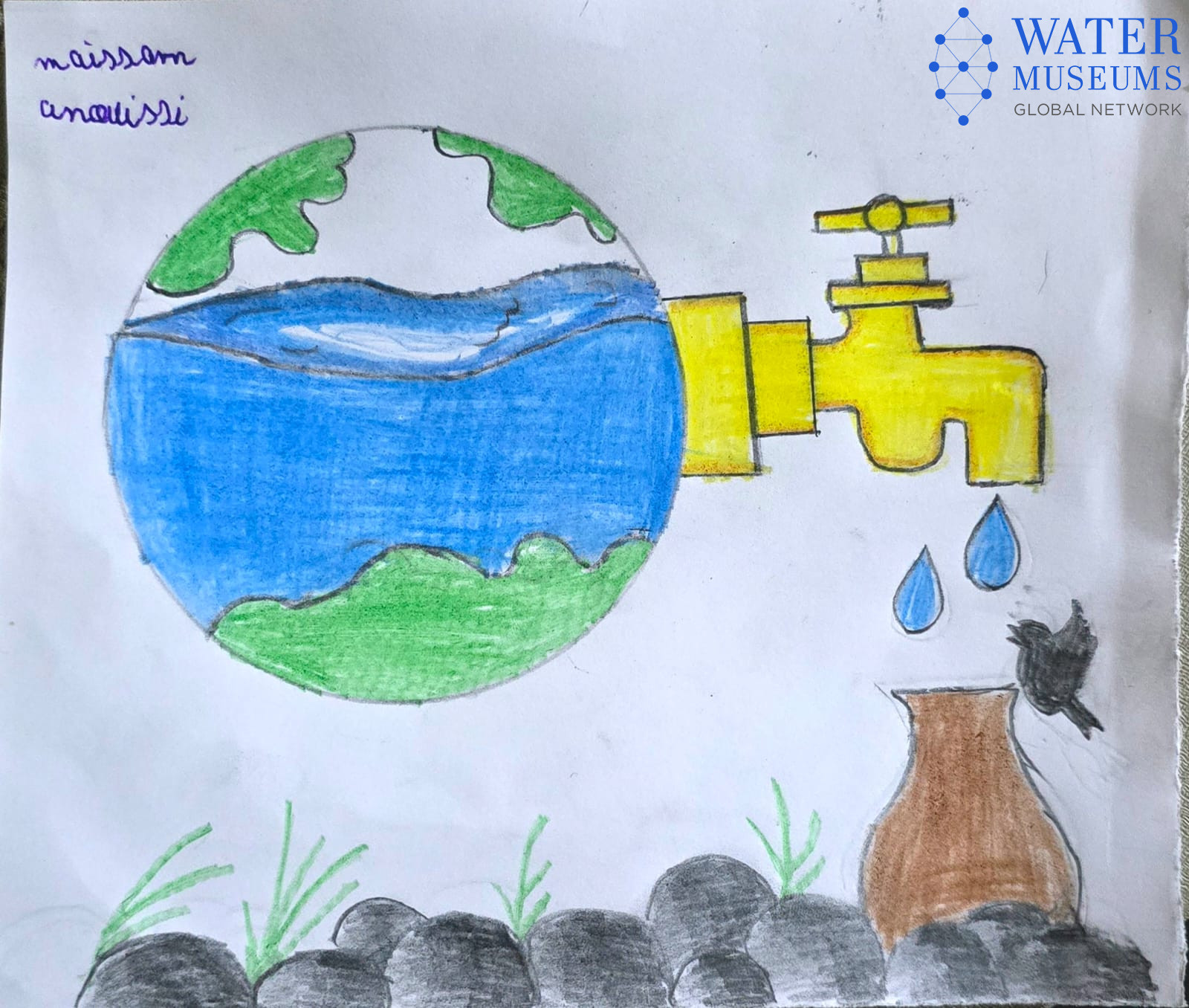
This drawing shows the Earth as a source of water connected to a tap, symbolizing how our planet provides us with this essential resource. The flowing water represents life, while the drops falling into a small container remind us that water is precious and must not be wasted. The presence of nature and a small bird highlight how all living beings depend on water. This artwork encourages people to use water wisely and protect it for the future.
Identifier: #463
MOROCCO
Mohammed VI pour la Civilisation de l’Eau au Maroc
Save water save tomorrow …
Mohammed VI pour la Civilisation de l’Eau au Maroc. Hilali Targa International school - Marrakesh. 5th primary grade
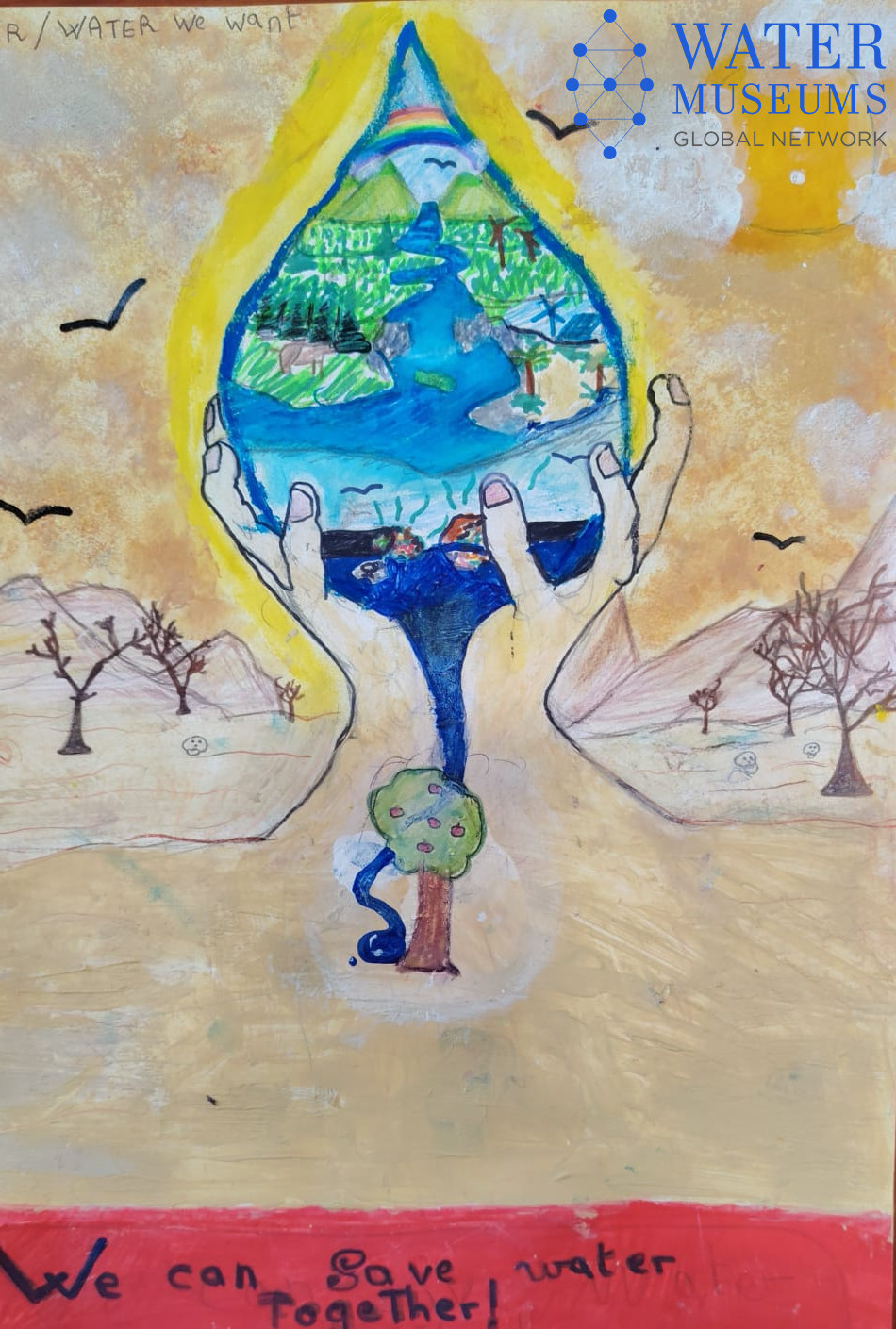
This picture shows how important water is for our world. Inside the giant shop, nature is green, fresh, and full of trees, rivers and and Outside, the land is dry, cracked and empty. waste lit It shows what happens without water. This picture teaches us to protect water and wen because it helps plants live happily.
Identifier: #462
MOROCCO
Mohammed VI pour la Civilisation de l’Eau au Maroc
Untitled
Mohammed VI pour la Civilisation de l’Eau au Maroc. STPM - Marrakesh. Teacher: Hind Elmawli
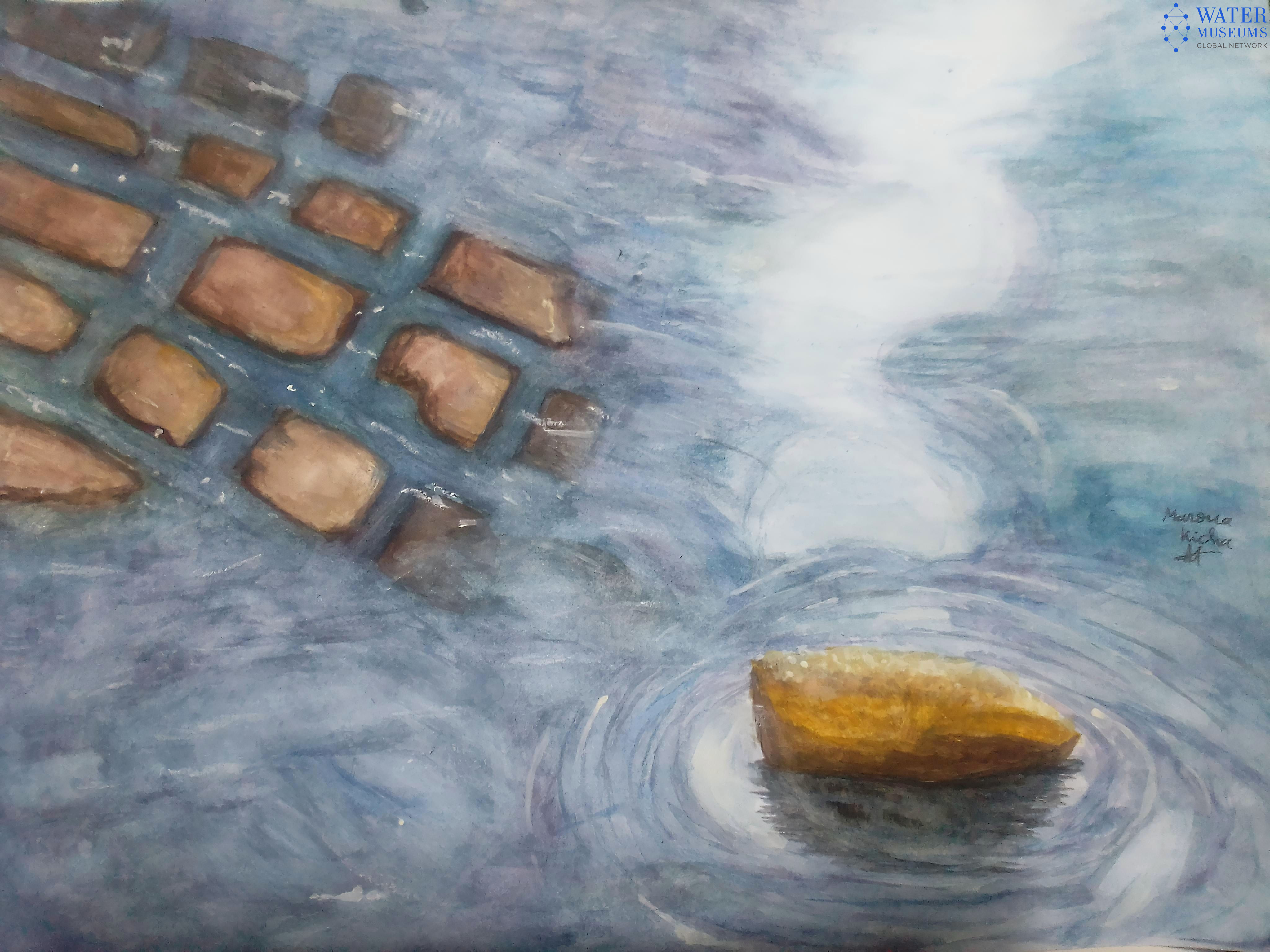
This painting depicts a single golden brick floating amidst swirling blue water, while other bricks are partially submerged nearby. The contrast between the vibrant golden brick and the muted surrounding elements draws attention to its fragility and uniqueness. The ripples aro und the brick emphasize how every drop of water has a significant impact. The artwork refl ects the scarcity of water and the importance of preserving it. It reminds viewers that water is both precious and powerful; without careful management, it can become overwhelming o r vanish entirely. The painting encourages respect for this vital resource, urging us to conserve it and recognize its essential role in sustaining life.
Identifier: #461
ROMANIA
Aquatim, Water Museum Timisoara
The Blue Bridge
Water Museum Timisoara, managed by AQUATIM. Children’s Palace Timișoara. Andreas Maier.
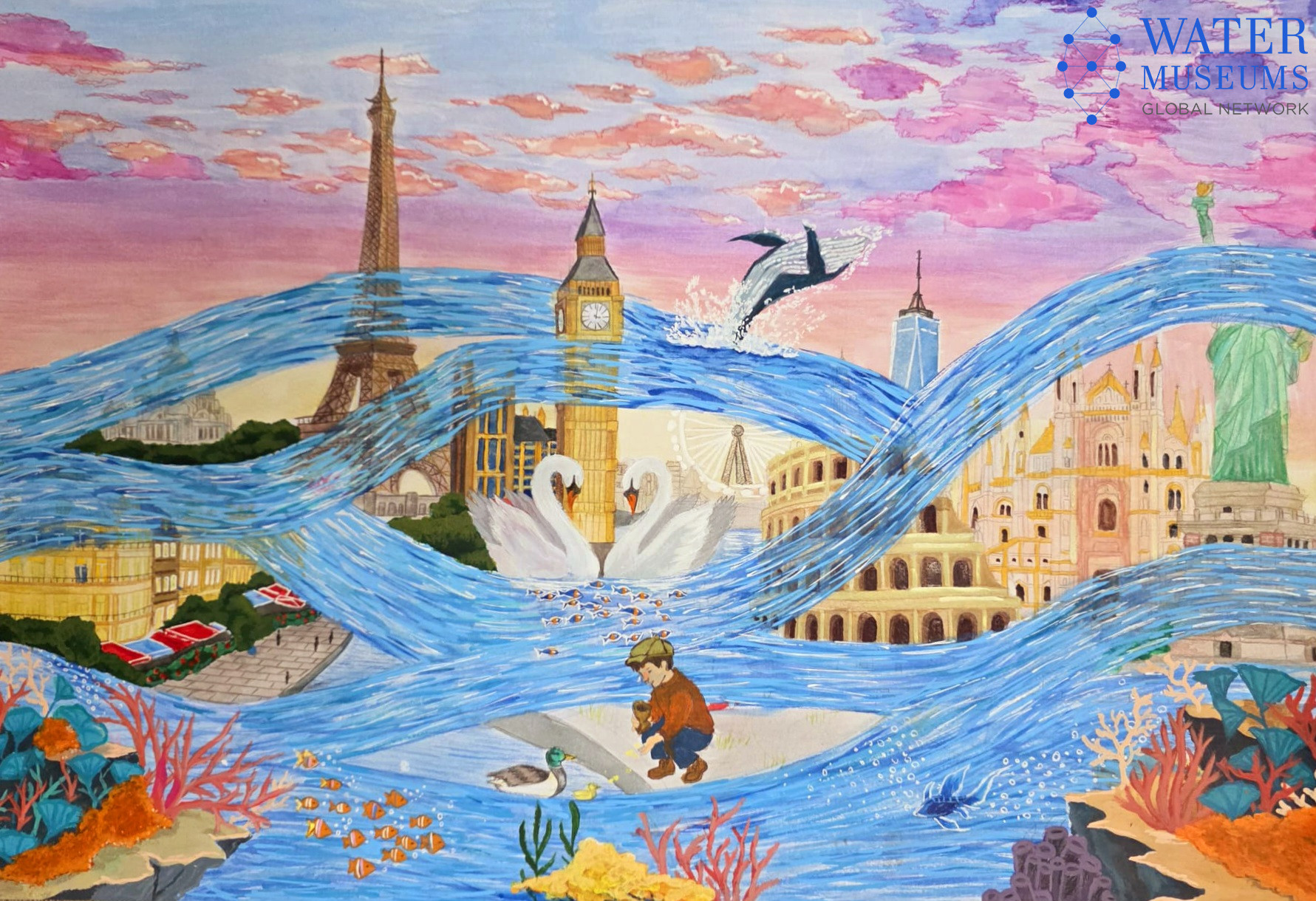
This is the map of a world united by water, the essential element. The blue bridge transcends borders and connects us all.
Identifier: #460
ROMANIA
Aquatim, Water Museum Timisoara
Idlyllic landscape with water
Water Museum Timisoara, managed by AQUATIM. Children’s Palace Timișoara. Almeea Tufiș.
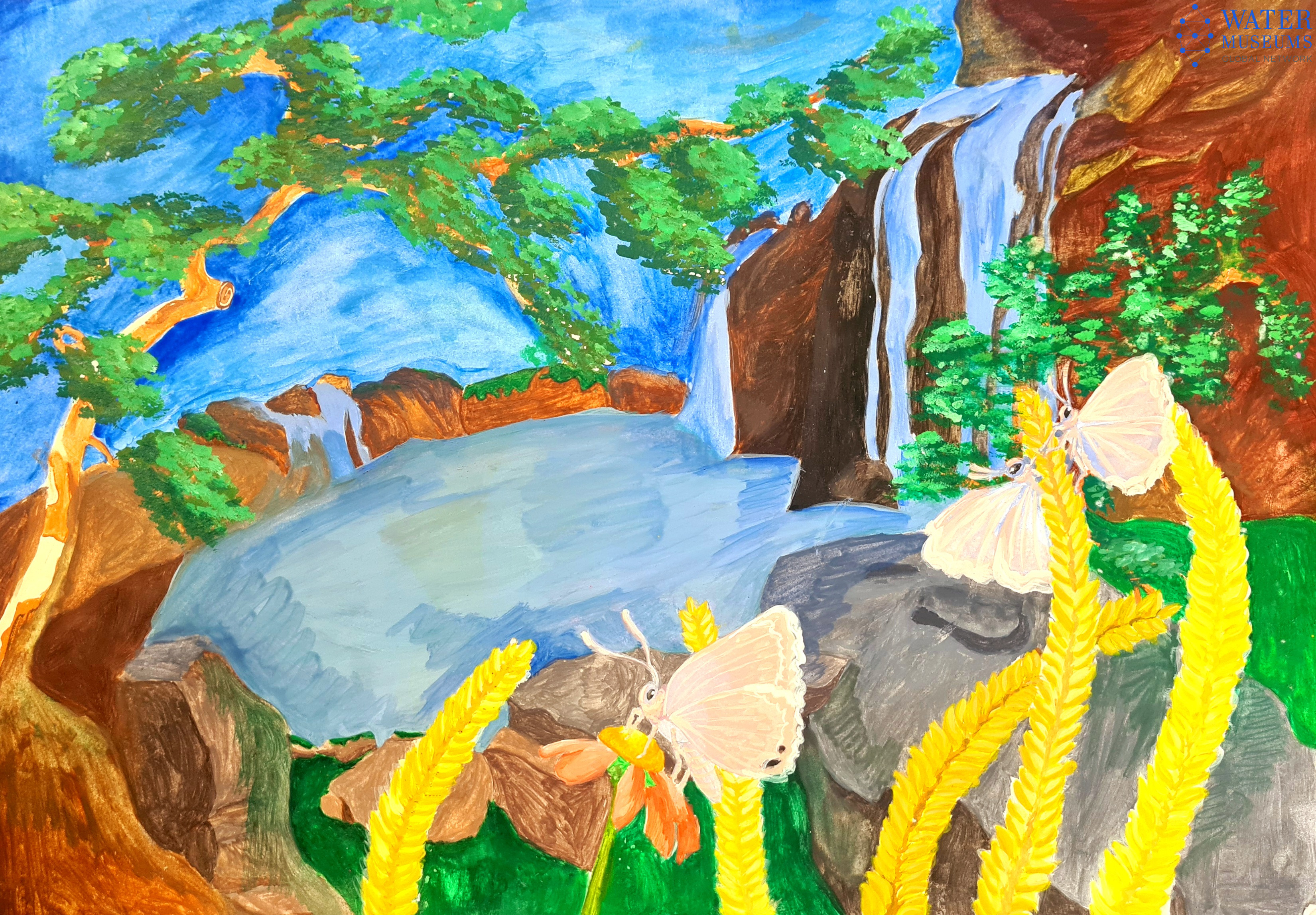
A glimpse into ”the water we want”, this composition captures the essence of the natural harmony, illustrating the primordial element in its purest form.
Identifier: #459
ROMANIA
Aquatim, Water Museum Timisoara
The Spring of Friendship (Ro: Izvorul prieteniei)
Water Museum Timisoara, managed by AQUATIM. Children’s Palace Timișoara. Roxana Roșioru.
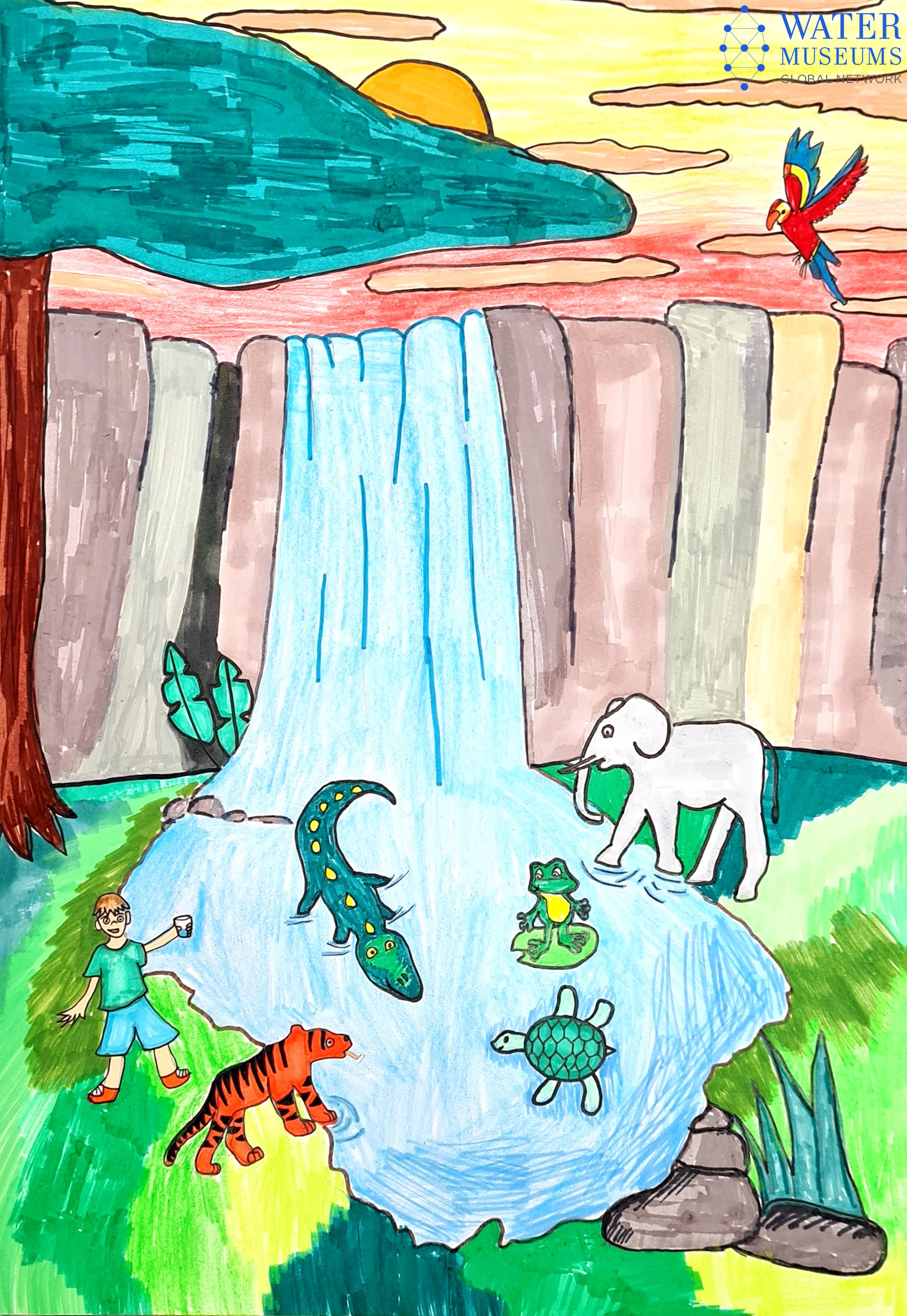
This is the ultimate vision of the water we want, a living paradise where resources are clean, easily reachable and joy-giving, where wildlife and humans live in perfect harmony.
Identifier: #458
ROMANIA
Aquatim, Water Museum Timisoara
I am the water of life (Ro: Eu sunt apa vieții)
Water Museum Timisoara, managed by AQUATIM. Palatul Copiilor Timișoara //*Eng: Children’s Palace. Agnes Pecingină-Gîrjoabă.
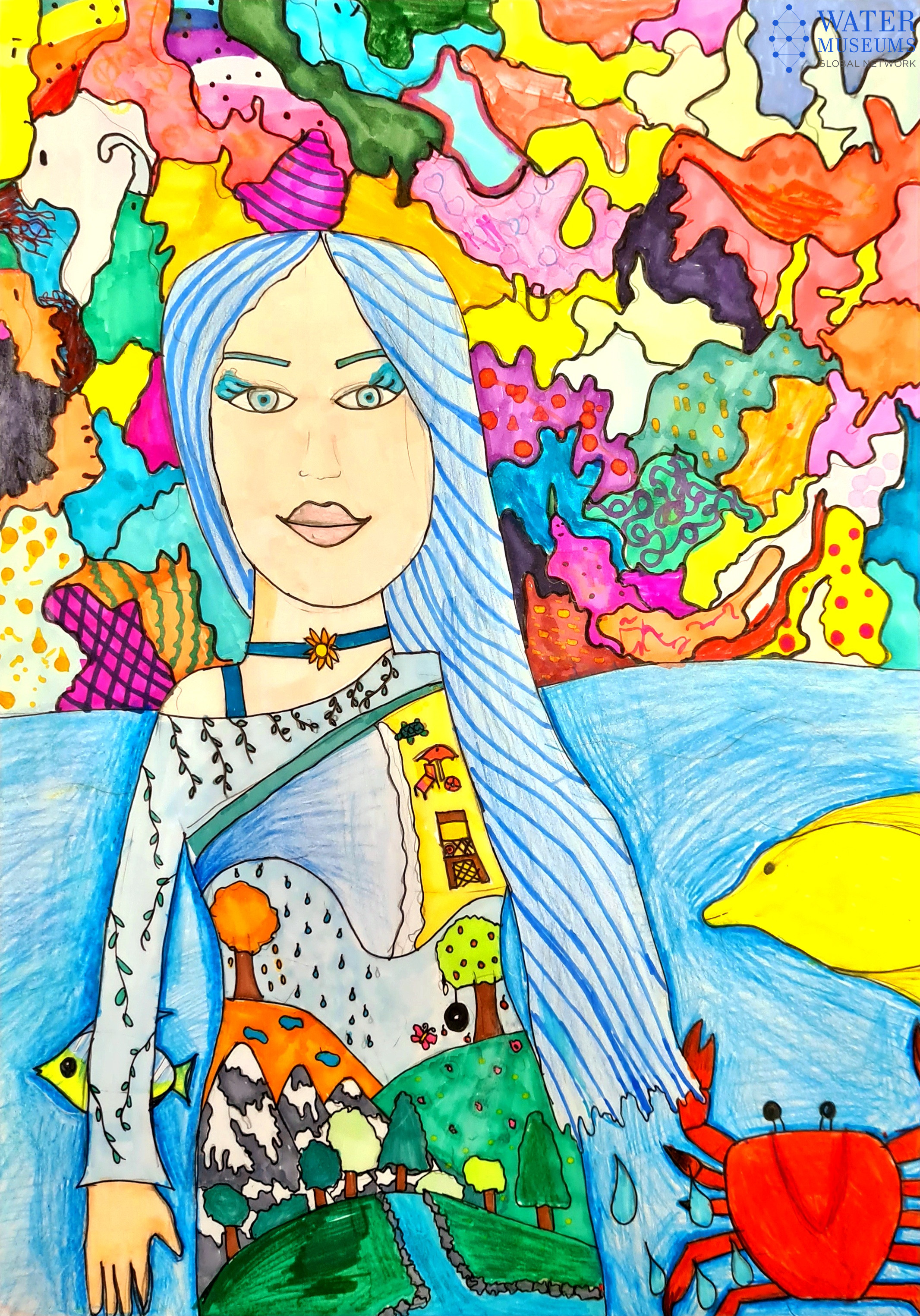
Water has its own voice and is a living presence which tells the story of its neverending life, the cycle of regeneration.
Identifier: #457
BRAZIL
Brazilian Water Museum
Treveling The Word Without Water
Brazilian Water Museum. Mucipal School Escola Municipal Rozenda Zane Moraes (MG). Enzo Emnuel Trindade Silva.
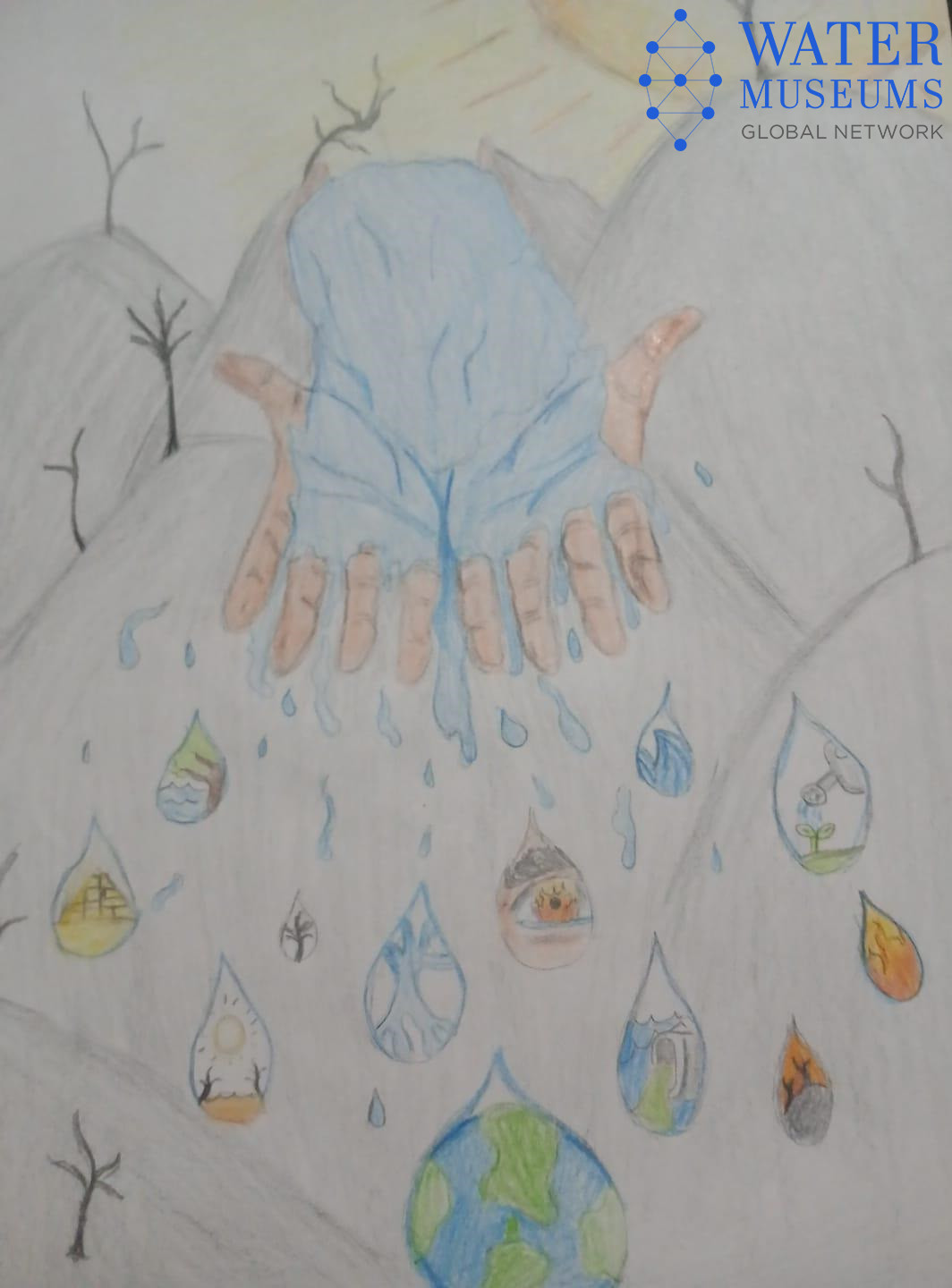
The water is essencial to life, is being wasted by human hands themselves. Each drops carries a possible future, of life or destruction, reinforcing that preseving water means preserving the planet.
Identifier: #456
BRAZIL
Brazilian Water Museum
Water is Life
Brazilian Water Museum. PEI Tarquinio Cobra Olyntho. City: Gurupi (São Paulo). Liz Siqueira Lima.
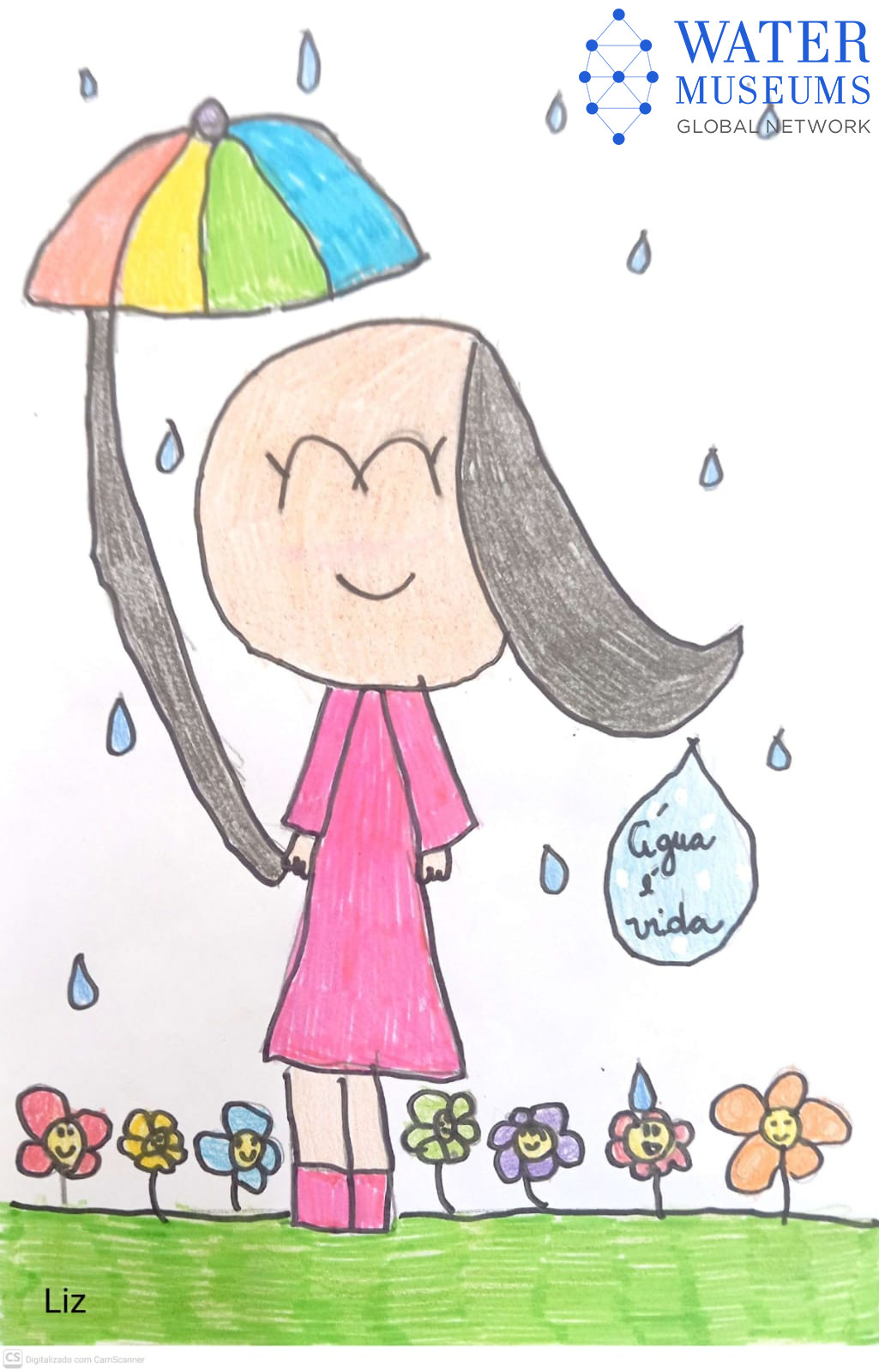
The water is very important for our survival on this planet. If we have water, we have life. We must take care of this treasure.
Identifier: #455
CANADA
Canadian Museum of Water
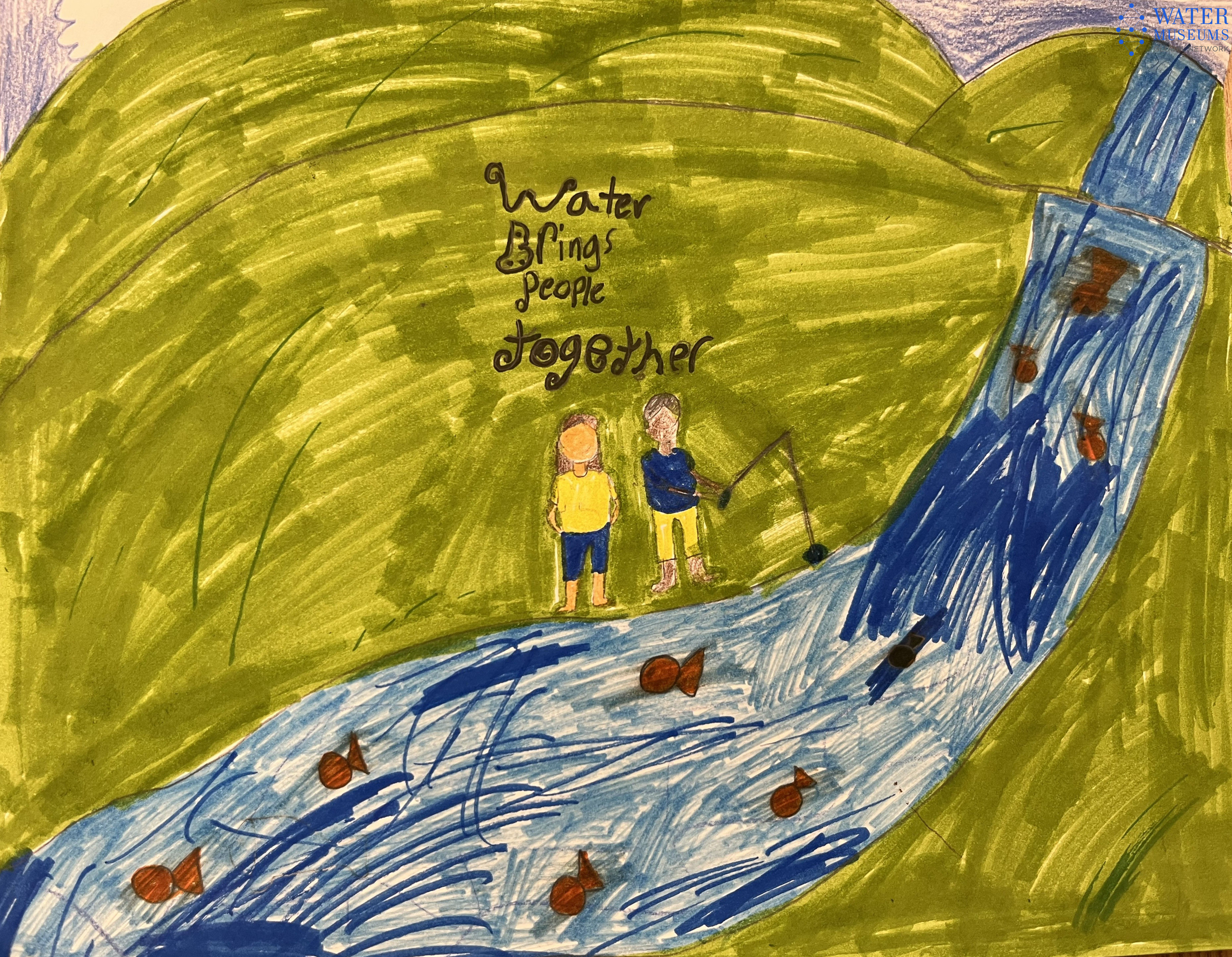
Water Brings People Together
Canadian Museum of Water. Twin Rivers Elementary, Castlegar, British-Columbia. Abigail Rilkoff, Grade 4-5 class of Ms. Sarah Arnett.
The reason I made this was to tell people that not only do we need water for our health, we need it to bring people together. It is a very simple picture with two friends fishing together. I felt very happy when I made it.
Identifier: #454
CANADA
Canadian Museum of Water
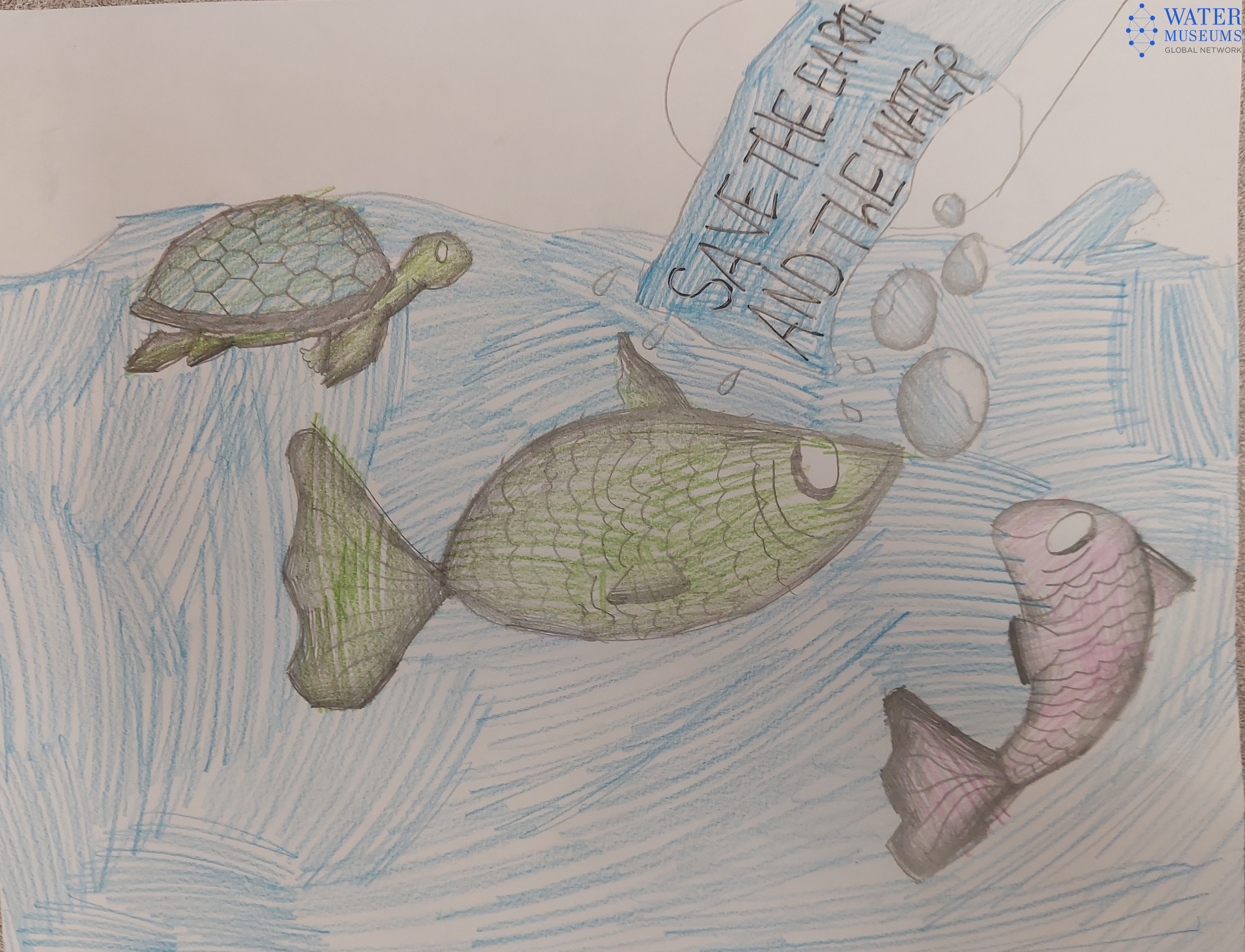
Save the Earth, Save the Water
Canadian Museum of Water. Mundy’s Bay Elementary School, Midland, Ontario. Miriam Darwish, Ms. Hannah Cheschire’s class.
I chose to do these animals because they are animals that live in the lakes. I chose them because they could be in danger. If the water is not good for us, it wouldn’t be good for animals. I hope that when people see it, they think of the environment.
Identifier: #453
COLOMBIA
Parque de la Biodiversidad COP16, Cali
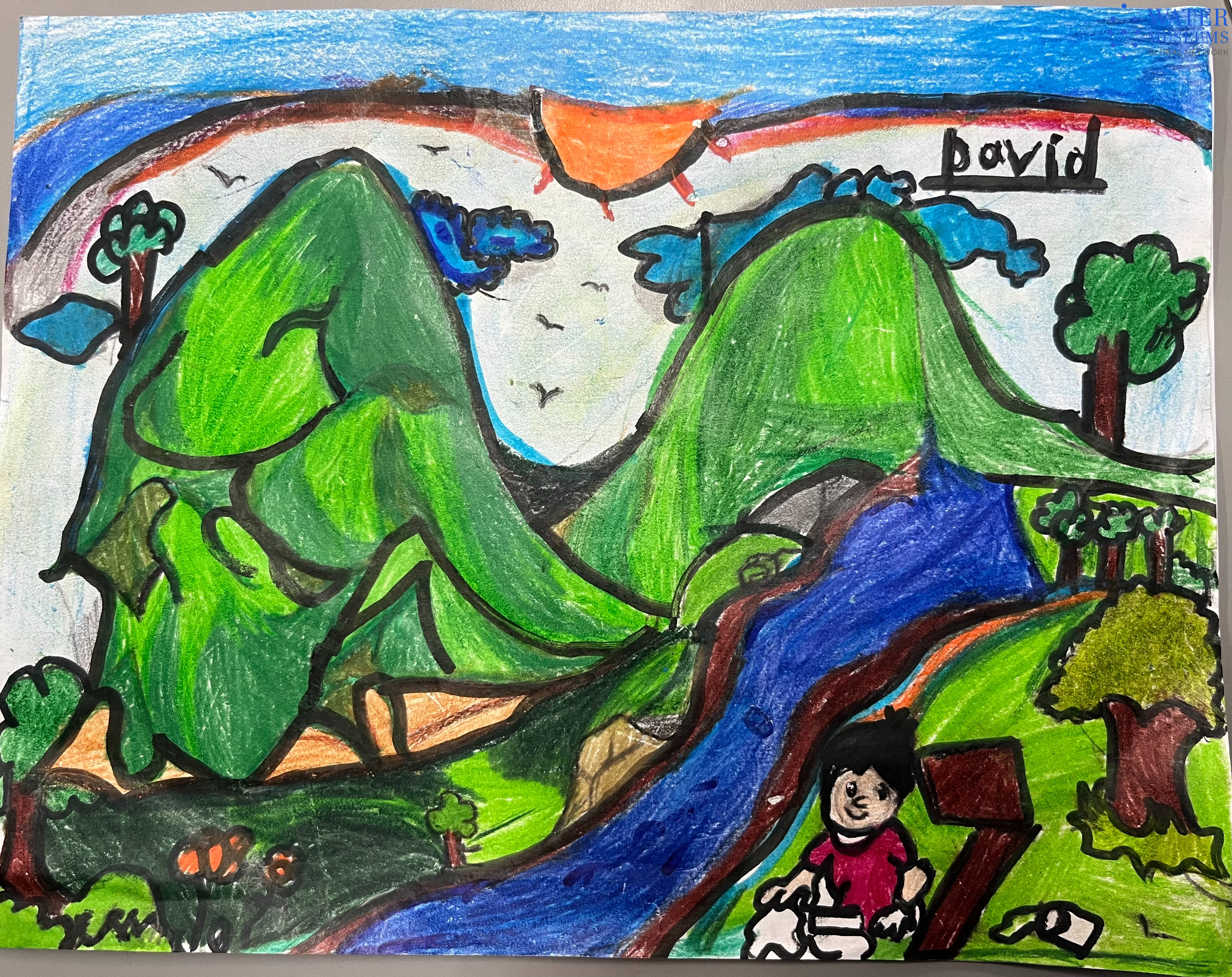
My river, water which gives life
Parque de la Biodiversidad COP16, Cali. Evaristo García Educational Institution, Cali. David Cuéllar Herrera.
The water of my river is important because it gives us life; without it, we cannot live. We must take care of it because it gives life to animals and plants.
Identifier: #451
COLOMBIA
Parque de la Biodiversidad COP16, Cali
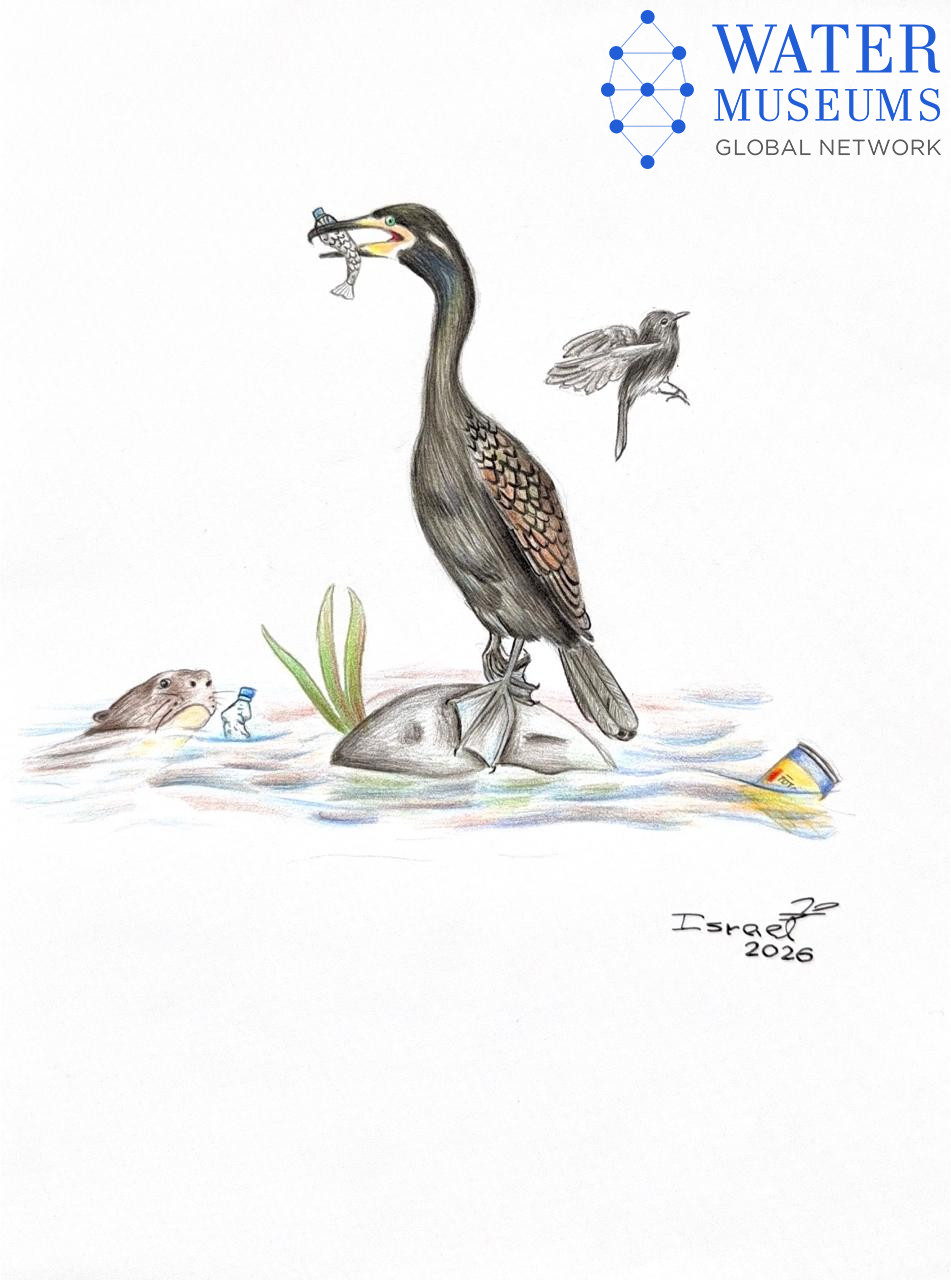
Neotropical
Parque de la Biodiversidad COP16, Cali. Enlace 375 / Fundación Aqua Plaza – Tutorías HomeSchooling, Cali. Israel Sánchez Rojas.
Water is like an ancient footprint, holding the memories of a land among the river stones. One day, watching my friend the Cormorant, I realized that despite the bottles, jars, and trash floating by, seemingly stuck in a weary river sustained only by birds and the vibrant colors of life, my friend lived peacefully, perching on that old rock to bask in the sun after his usual fishing trip. He even fished in the murky waters that revealed orange streaks flowing from a neighboring river (the Aguacatal River), a river whose life had faded... When the sun shines brightly on the Cali River, the Cormorant and his friends, perched on the stones, reveal to us the hope of life amidst the chaos. It is then that I see the Otters playing, the Waterfowl singing, and the river at rest. Today, I hold in my heart the memory of the crystalline waters of the land where I was born.
Identifier: #449
ECUADOR
Yaku Parque Museo del Agua
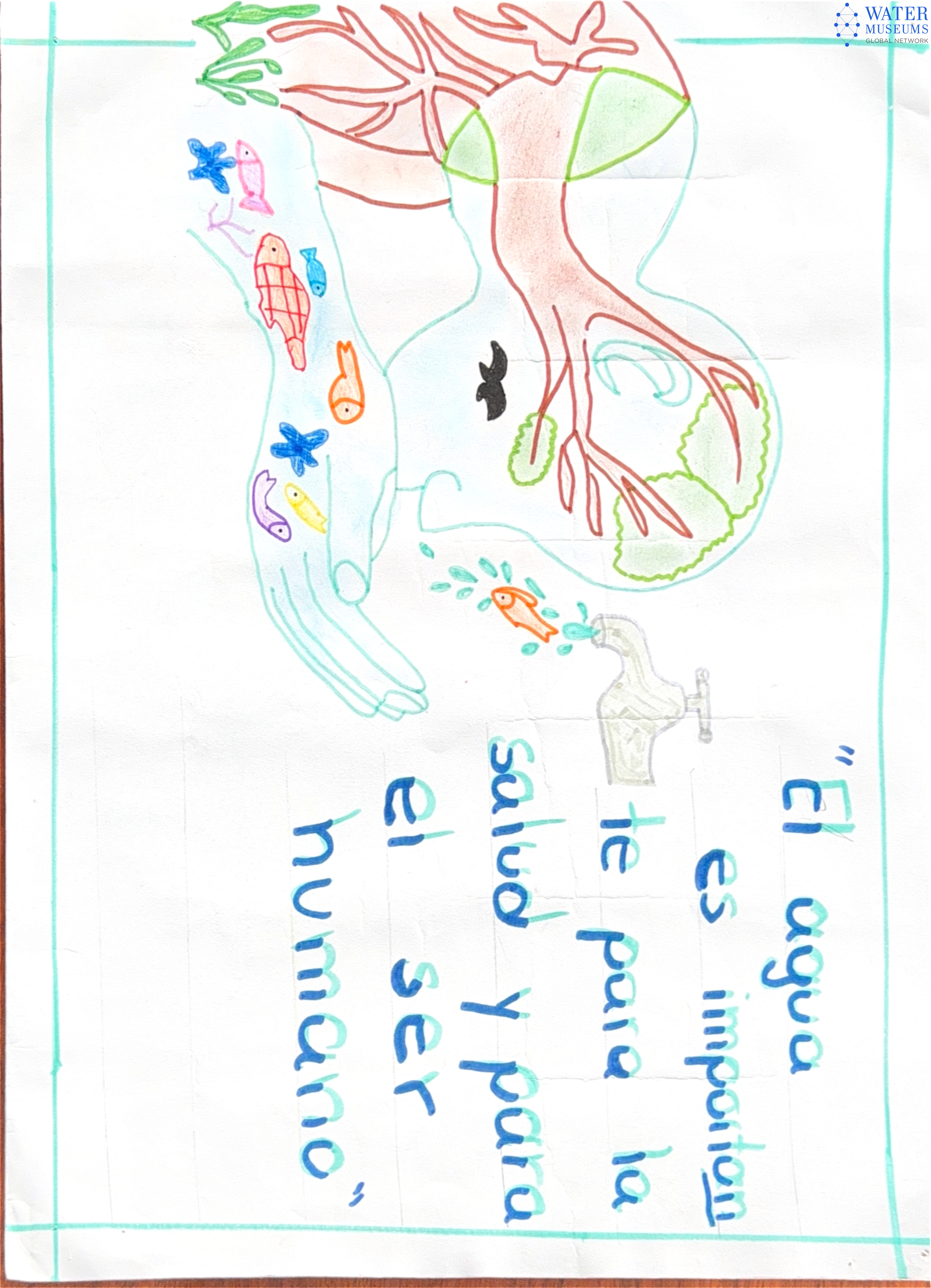
Water is important for health and for human beings
Yaku Parque Museo del Agua, Quito. Fundación Mariana de Jesús, Quito. María Fernanda Valdivieso Calderón.
Water is important for health and for people because we drink water and it makes us feel good. Animals also need water to live. We must take care of water and not pollute it so that we can drink it.
Identifier: #448
ECUADOR
Yaku Parque Museo del Agua
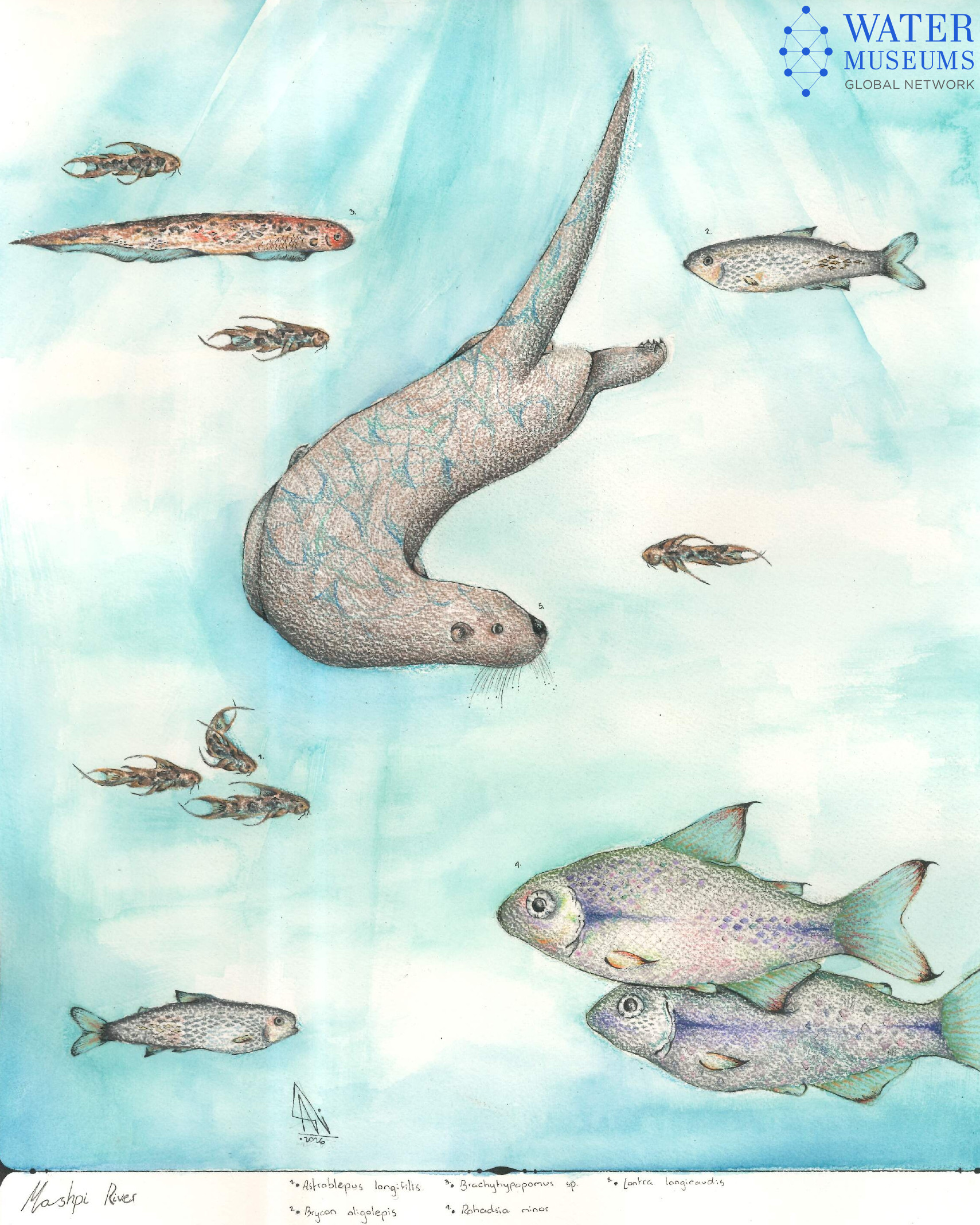
The Mashpi is Born
Yaku Parque Museo del Agua, Quito. MINE SCHOOL, Puembo – Quito. Alicia Martin.
Where the mountains bow to the forest and the mist runs untamed, the Mashpi is born. Winding through Ecuador’s Chocó, its turquoise waters brim with abundance. This drawing portrays not only the biodiversity of these waters, but also shows their vitality. The Mashpi is one of the last clean waterways of north-western Ecuador, this is evident when we analyze the biodiversity and endemism that characterizes it. The five species that are illustrated are currently in danger due to water pollution, destruction of river banks, creation of dams and introduction of invasive species. Conservation efforts have made the Mashpi’s clean waters an oasis for this species. Countless species of birds, fishes, mammals and bio-indicators such as macro invertebrates are permanent residents and have a high dependence on the river. The efforts of the communities that depend on this river to subsist have not been in vain; today, the Mashpi stands as a global example of what fresh water conservation can be. The answer is there, buried in the rocky bottom, we just need to dive.
Identifier: #447
SLOVENIA
Posavje Museum Brežice
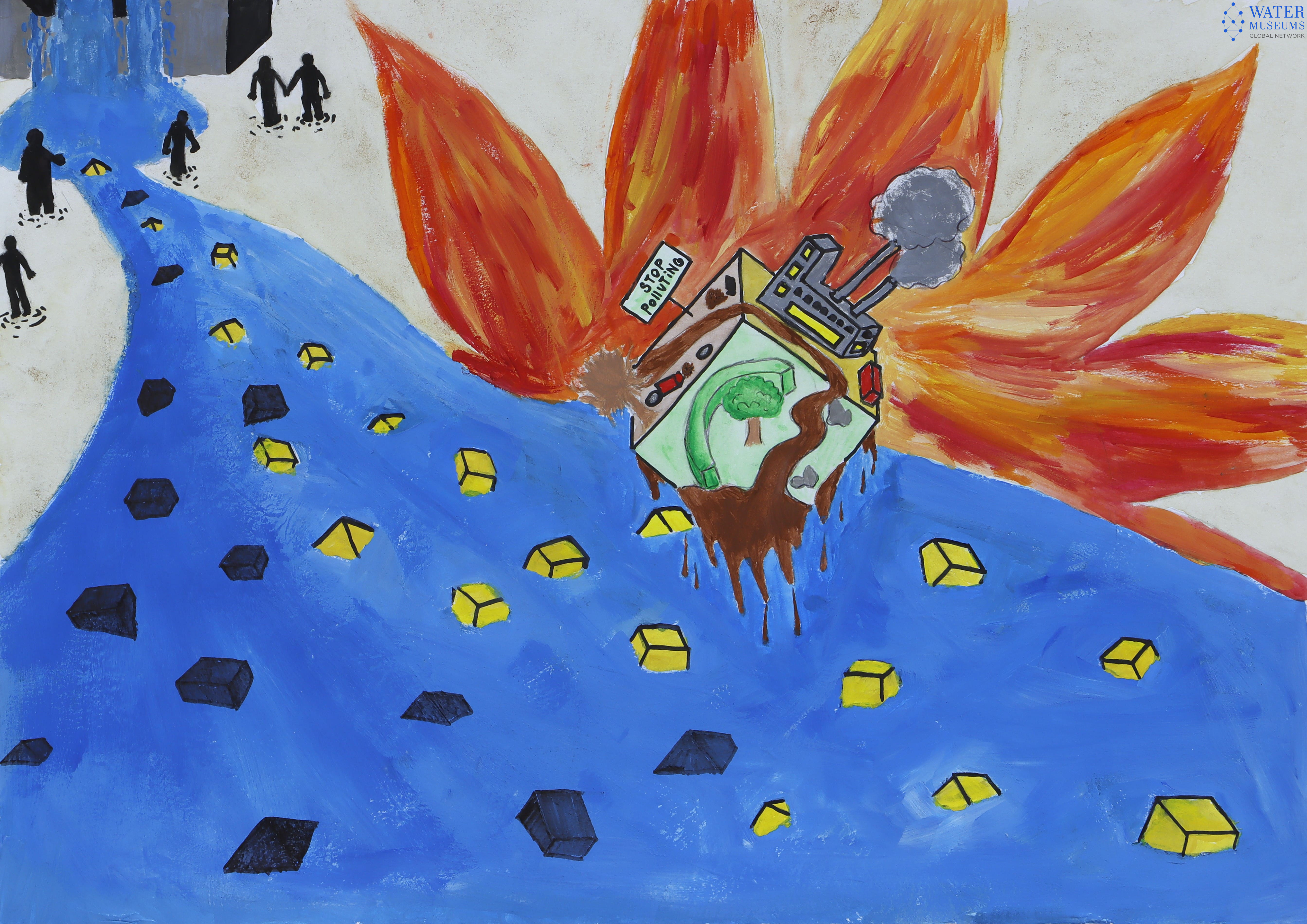
The decisions are in everyone's hands
Posavje Museum Brežice, Slovenia. Primary School Milan Majcen Šentjanž, Šentjanž. Maj Zajec / 9th Class (15 years old).
The picture I have painted represents that what every person does for the environment – or in this case, rivers-helps, even if it is just picking up a small plastic bottle from the ground. The different sides of the dice are illustrated differently because there is both good and bad in people. This means that people make choices that can either harm or improve freshwater ecosystems. There are also gold and black cubes going down the river, which also show people doing horrific and wonderful things to the freshwaters. Last and probably the most interesting part of the picture, the sun that represents hope in all humanity.
I got the inspiration for the painting when I saw a man throw away a can of a beer. That scene really hurt my heart, which is why I started painting my picture in the first place.
Identifier: #446
SLOVENIA
Posavje Museum Brežice
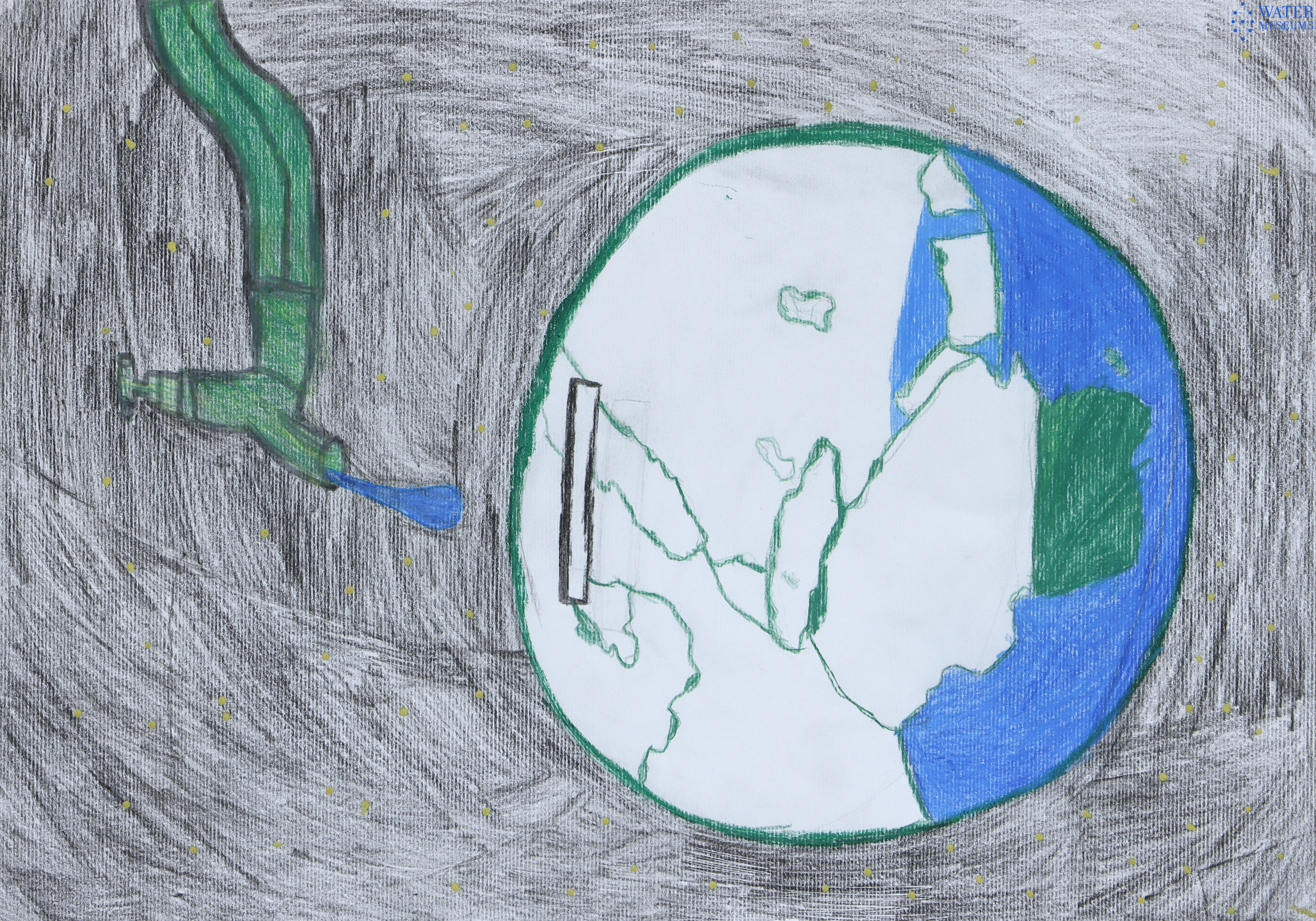
Earth's water reservoir
Posavje Museum Brežice, Slovenia. Dr. Mihajlo Rostohar Elementary School Krško, Krško. Ervin Rushani, 4th grade (12 years old).
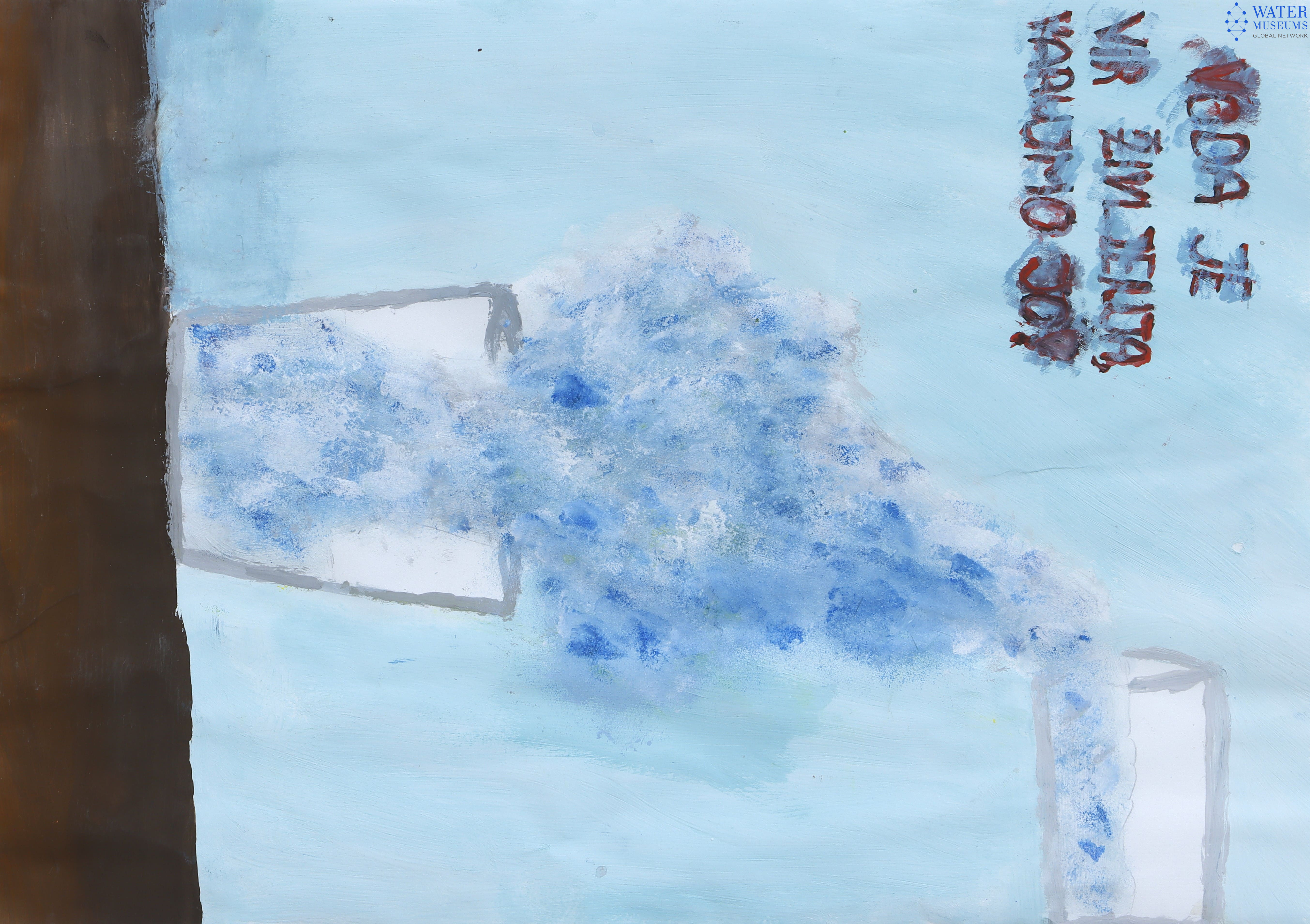
Earth is the only planet that has liquid water on its surface. It covers 71% of the entire surface. Most of this water on Earth is salt water. The human body also consists of an average of 55-70 % of water, which decreases with age. Therefore, it is important to consume enough fluids, especially water. The drawing thus warns against the moderate use of fresh water, and reminds us that we know how to be responsible when using it, because only in this way will we preserve it on our Earth for as long as possible.
Identifier: #445
SLOVENIA
Posavje Museum Brežice
Water is the source of life
Posavje Museum Brežice, Slovenia. Primary School dr. Jože Toporišič Dobova, Dobova. Hanah Savnik Mihelin, 7th Class (12 years).
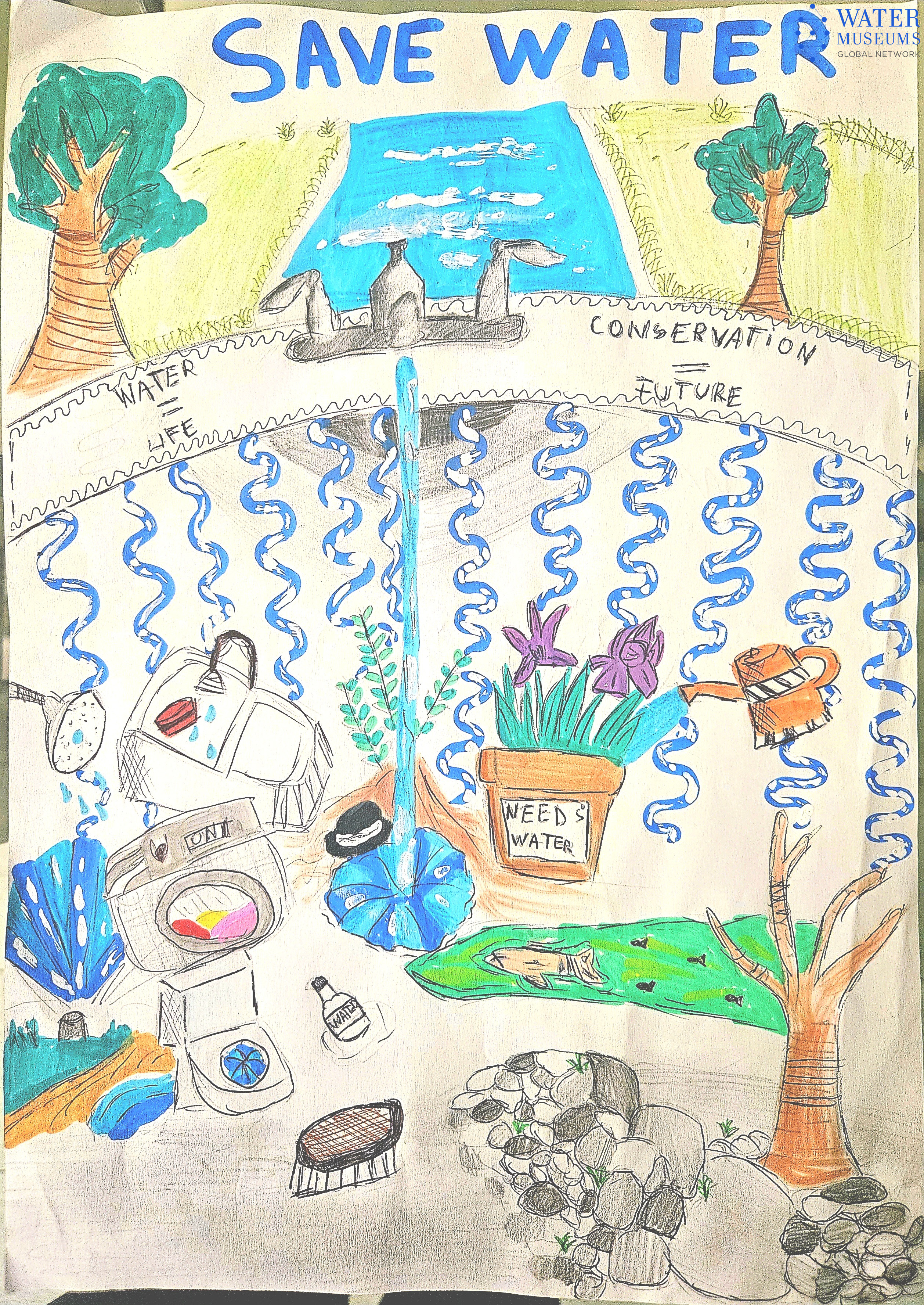
The artwork Water is the Source of Life reflects on the quiet force that sustains all existence. Water becomes a symbol of continuity, balance and the deep connection between humanity and nature. It carries the idea of care and responsibility, reminding us that life depends on what we choose to protect. The piece invites reflection on water as a vital and fragile resource – one that must be respected and preserved for generations to come.
Identifier: #444
SLOVENIA
Posavje Museum Brežice
Water – the source of everything
Posavje Museum Brežice, Slovenia. Primary School dr. Jože Toporišič Dobova, Kapele branch school, Kapele. Ines Martini, 4th Class (9 years).
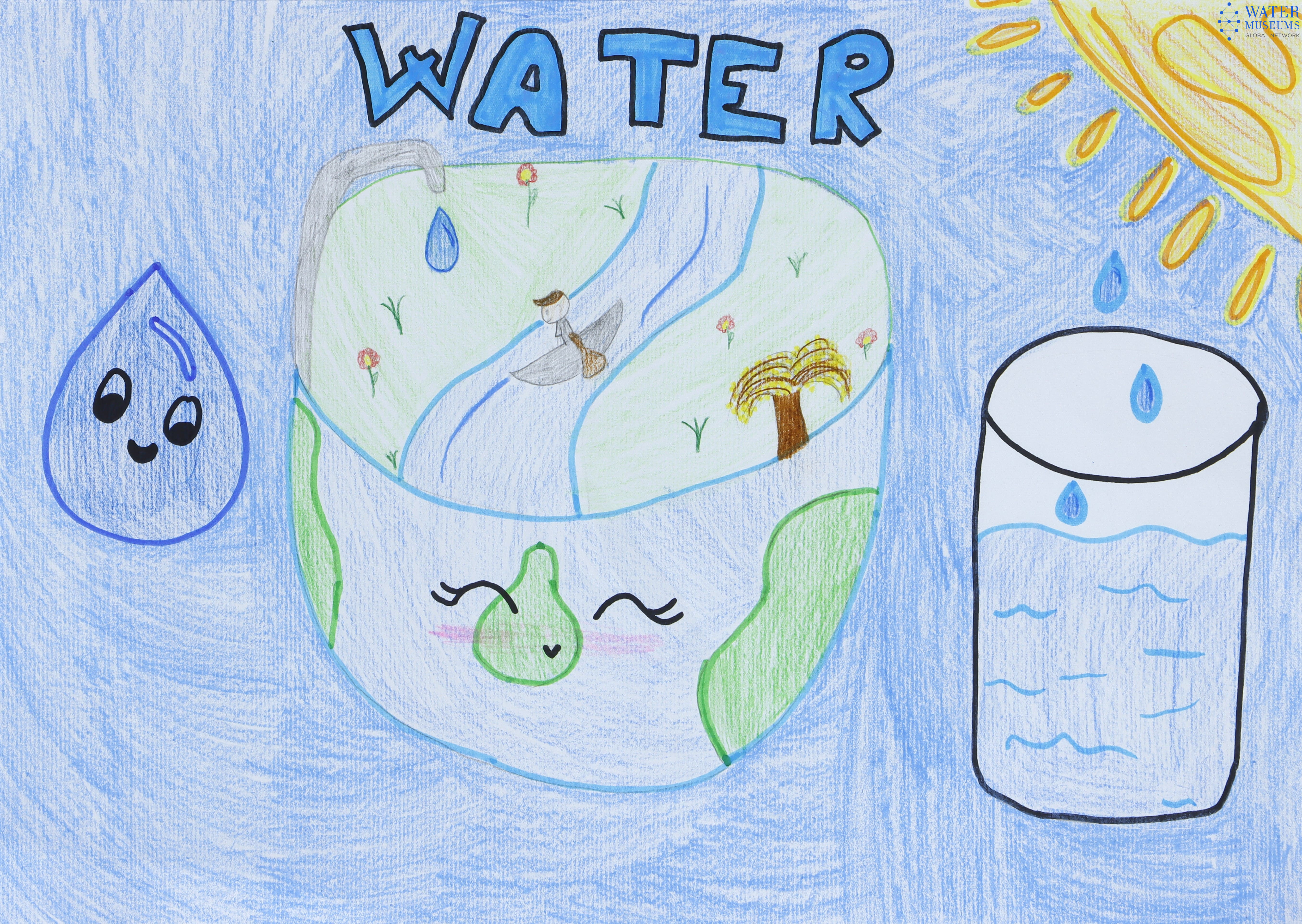
The illustration shows a cross-section of the globe with a boy paddling down a river surrounded by flowers and willow. On the left, a tap draws water directly from the blue planet, while on the right stands a glass of a clear drinking water. Under a warm sun, the scene connects nature, humanity and the planet into a circle of life.
Identifier: #443
ROMANIA
“Leonida Truta” Water Museum
Water – ReGlow
“Leonida Truta” Water Museum, Cluj-Napoca, Romania. “Colegiul Tehnic Ana Aslan” College, Cluj-Napoca. Simona Niste.
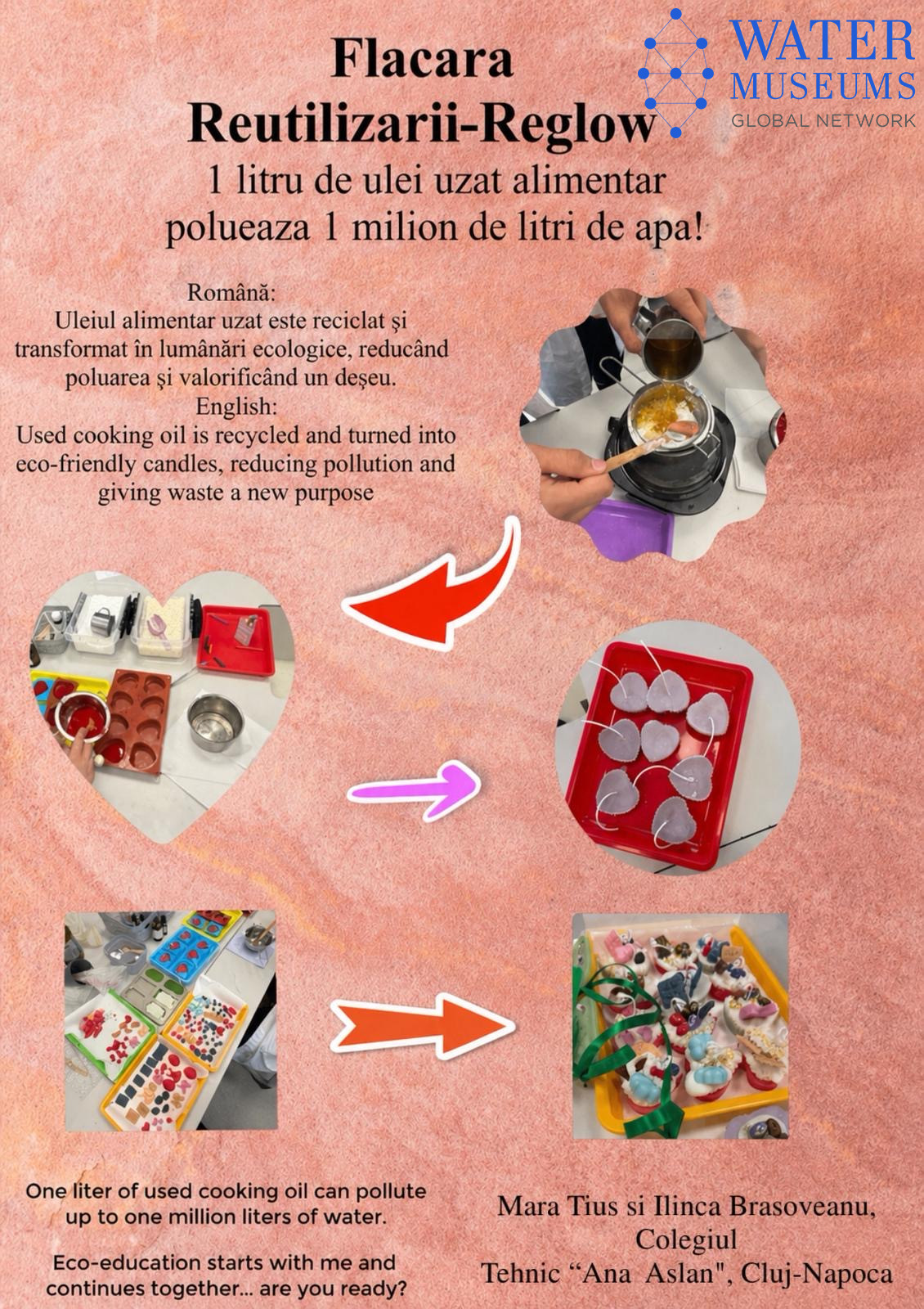
The project focuses on recycling, used cooking oil by turning it into eco-friendly candles, reducing water and soil pollution. The process includes collecting and filtering the oil, mixing it with stearin and pouring it into containers with a wick.
Identifier: #442
ROMANIA
“Leonida Truta” Water Museum
The Echo of Fresh Waters
“Leonida Truta” Water Museum, Cluj-Napoca, Romania. “Gh. Șincai Florești”, structure SC GIM, Luna de Sus. Bartiș Carolina Elena.
Freshwater bodies, repositories of a millennial cultural and natural heritage, are currently facing the severe pressure of pollution and climate change. Saving these ecosystems is not only an ecological necessity but also an act of preserving our collective memory reflection on our river-related traditions.
Identifier: #440
ROMANIA
“Leonida Truta” Water Museum
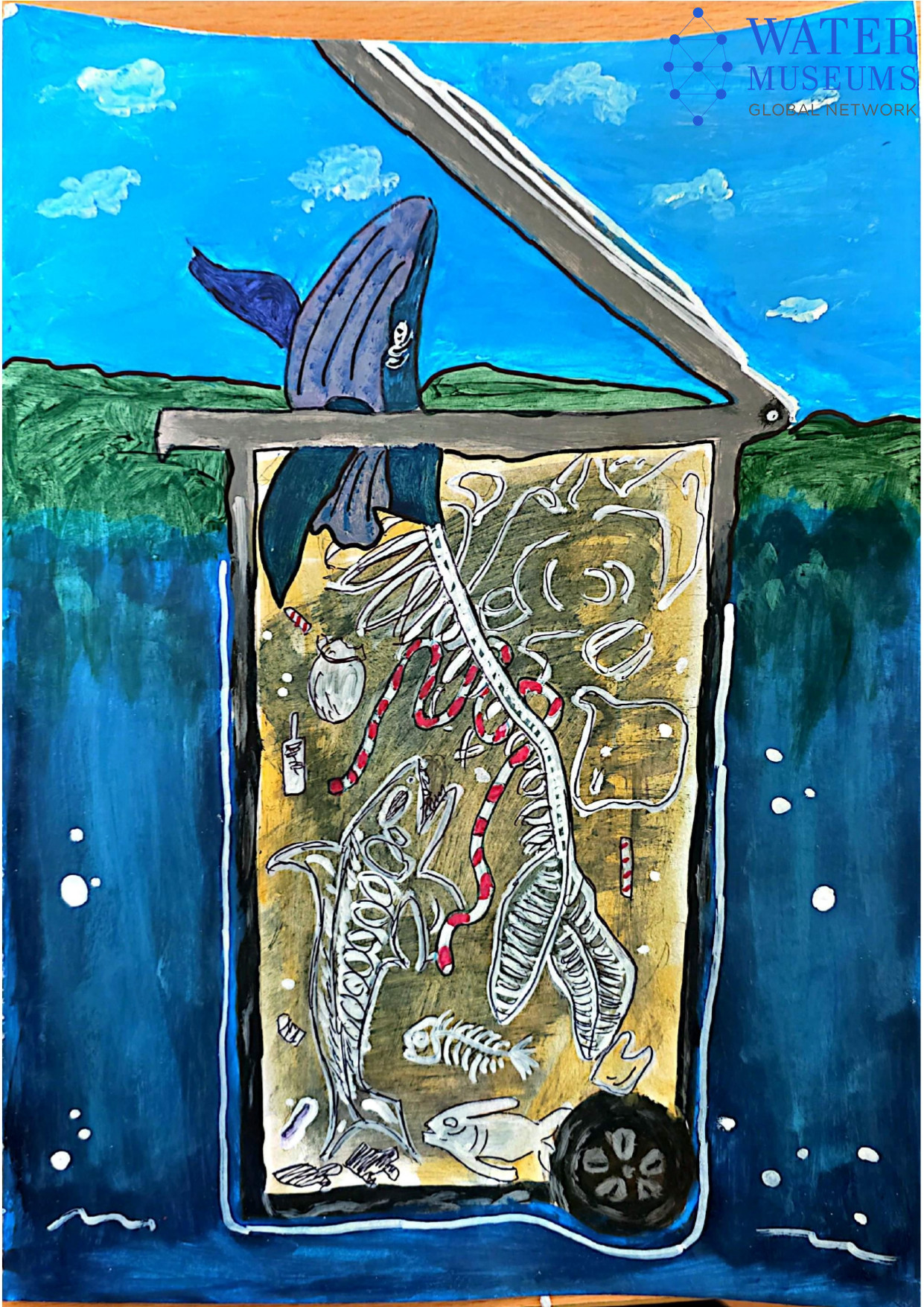
A lost life
“Leonida Truta” Water Museum, Cluj-Napoca, Romania. “Colegiul Tehnic de Comunicații Augustin Maior” School, Cluj-Napoca. Dumitraș David.
The drawing illustrates people’s negligence regarding water pollution, referring to the degradation of surrounding life. The image of the whale is a parallel to the scale of the disaster and the contamination of waters that were once clean.
Identifier: #439
ROMANIA
“Leonida Truta” Water Museum
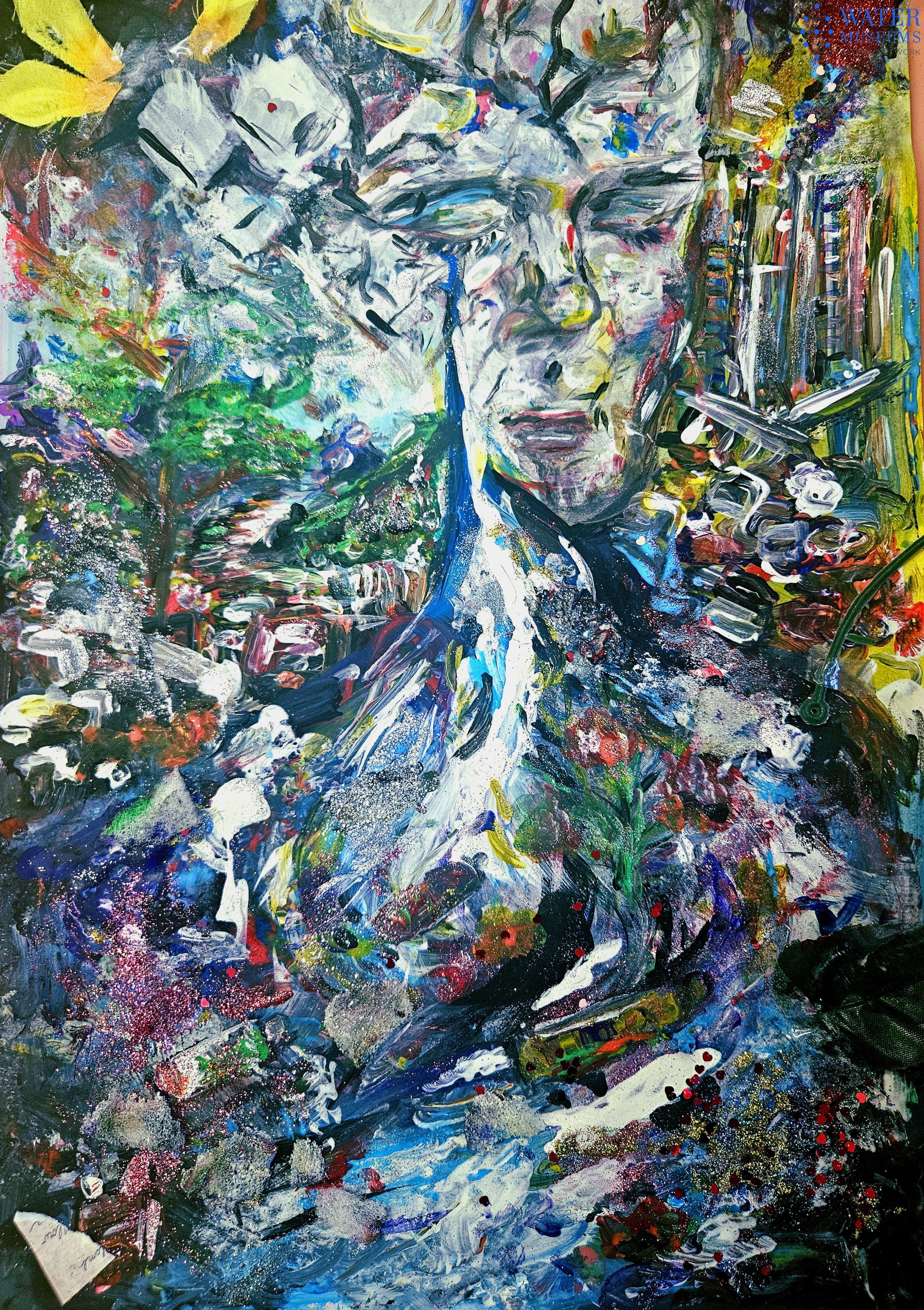
The crying nature
“Leonida Truta” Water Museum, Cluj-Napoca, Romania. “Colegiul Național Gh. Șincai”, Cluj. Agighioleanu Anisia.
Water is the blood of our planet and rivers are the arteries that carry life. A running water is a vibrant ecosystem, a symphony of sounds and colors. By protecting rivers we protect our own future and give nature back the right to smile again through the clarity of its waters.
Identifier: #438
CHINA
National Water Museum of China
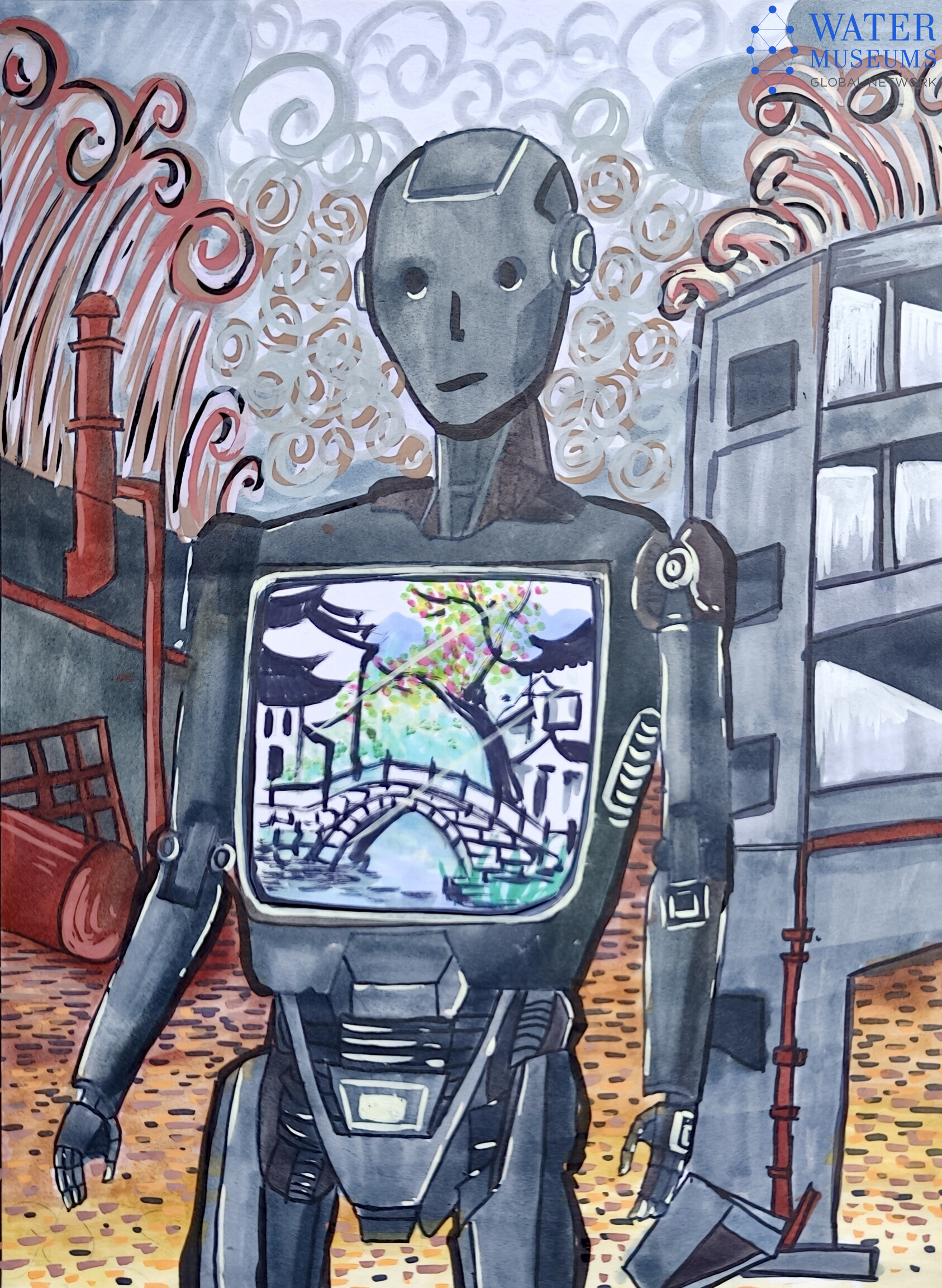
Mechanic Heart, Hidden Water Verse
National Water Museum of China, China. Shaoxing Youth Activity Center, Shaoxing. Shan Qizheng.
A cold, stern cybernetic mechanical figure stands towering amid a steel-and-concrete industrial city, its metallic shell embodying the rigidity and detachment of technology. Yet hidden within the robot’s chest lies a gentle poetic realm of the Jiangnan water town.
Winding streams flow gracefully beneath stone bridges; white-walled houses with grey tiled roofs nestle along the water’s edge. Lush plants unfurl their soft green hues along the spring ripples, and the tranquil waters of Jiangnan become the unique tenderness and poetry dwelling within the mechanical core.
Centered on the motif of water, the painting weaves together the dual romance of frigid technology and warm nature. The hustle and impetuosity of the industrial metropolis are softly soothed and dissolved by the serene water hidden deep within the heart.
Carrying the ethereal charm of Eastern landscape aesthetics, the flowing water courses through the mechanical frame. It symbolizes that no matter how rapidly technology advances with the times, the gentle, agile spirit of water forever enfolds inner peace and poetic sentiment. It endows rigid technology with the delicate, lingering humanistic warmth of running water.
Identifier: #435
CHINA
Yellow River Museum
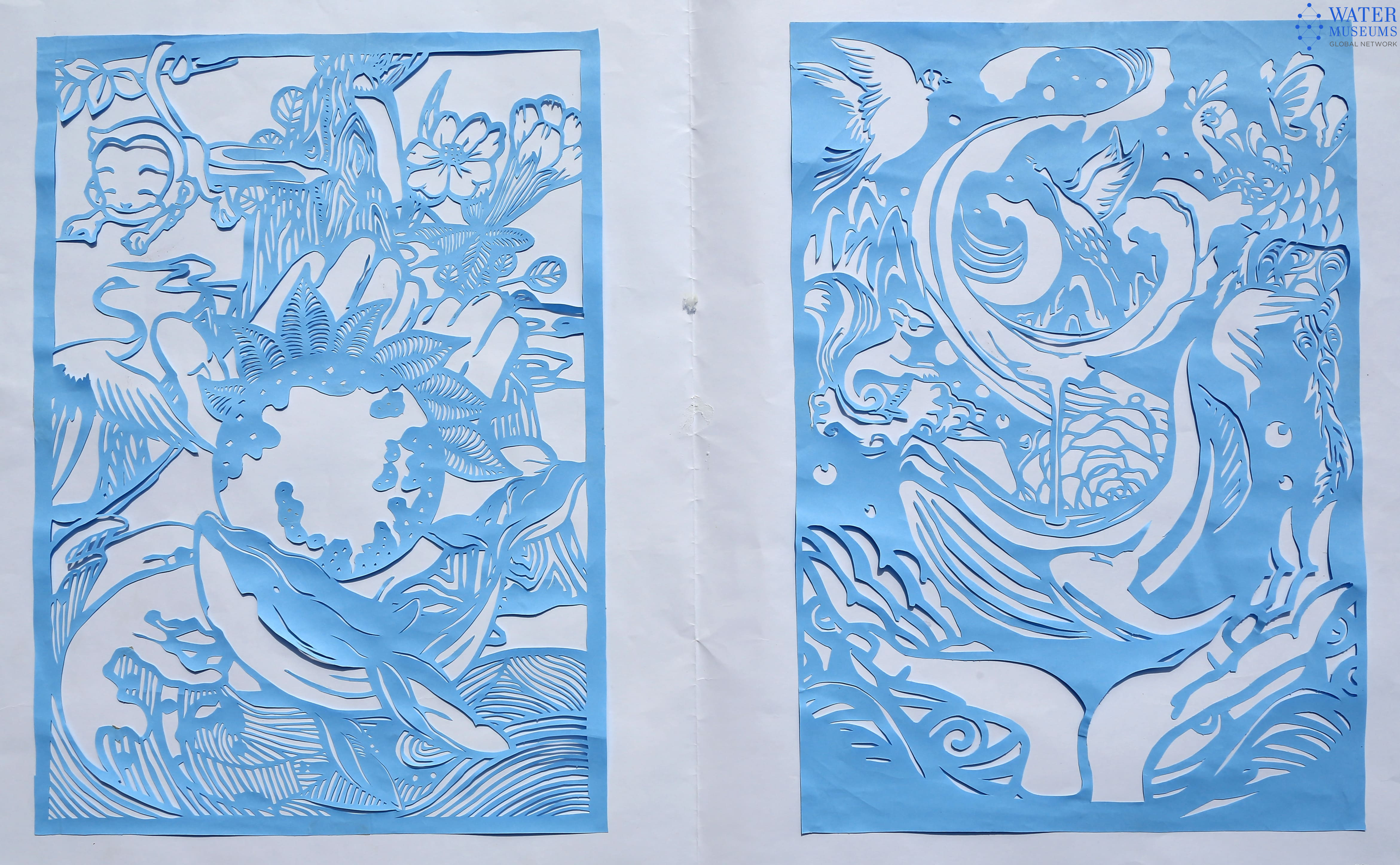
Protecting Water Resources
Yellow River Museum, China. Zhengzhou Sihe Art School, Zhengzhou. Student/Class: Zhu Yuanrui.
This work is presented in the form of paper cutting, a traditional Chinese art, and an intangible cultural heritage as well, which is an indispensable part of global culture. As water resources are increasingly being depleted due to excessive use by people, it is hoped that the importance of water can be demonstrated through the form of intangible culture.
Identifier: #434
CHINA
Yellow River Museum
Water
Yellow River Museum, China. Best Bilingual Primary School, Zhengzhou. Liu Peixi.
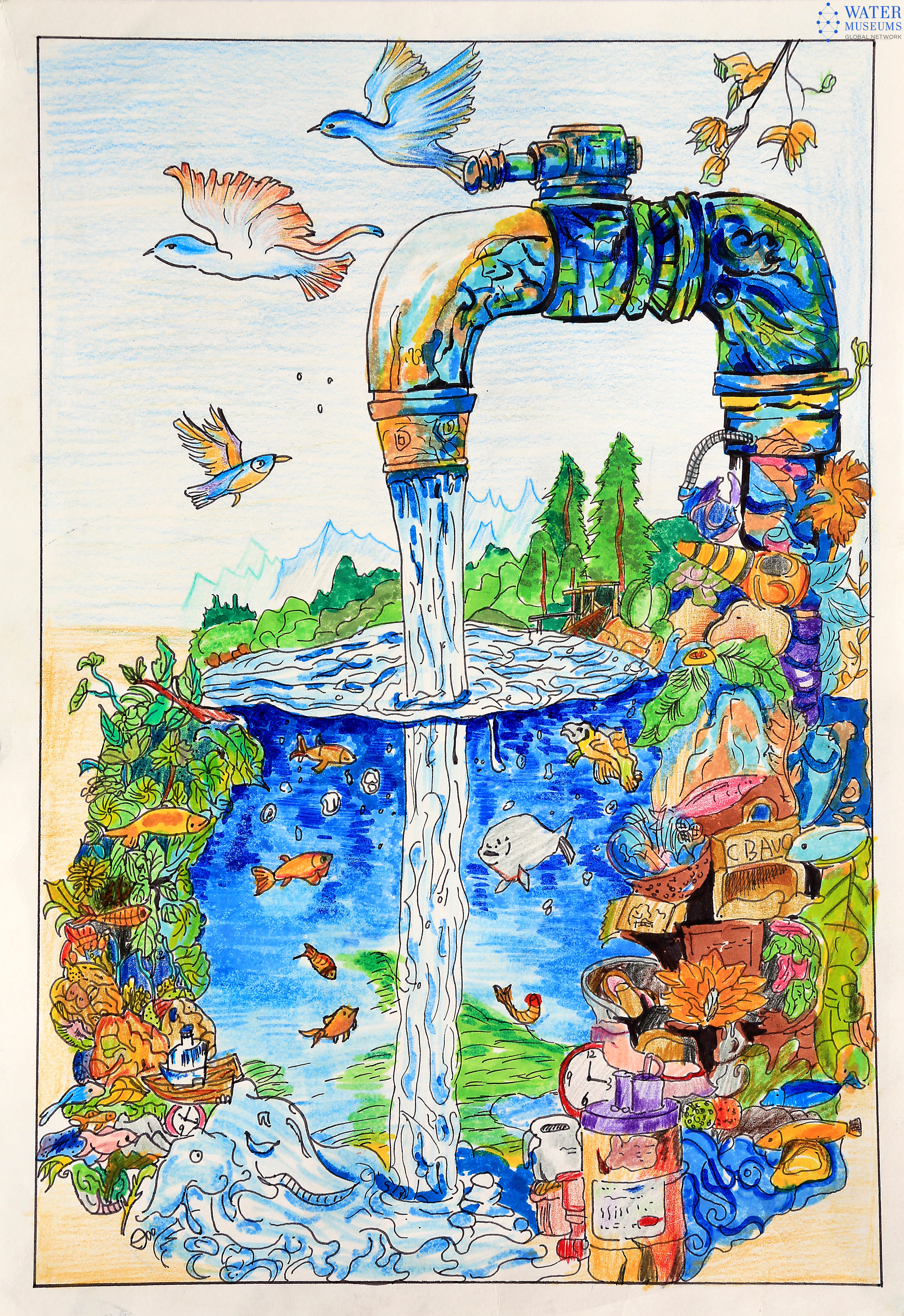
The painting contrasts the piled garbage on one side with the lush waterweeds on the other. The distant green mountains and the nearby garbage serve as reminders of the importance of ecological conservation.
Identifier: #433
CHINA
Yellow River Museum
Don't Let Tears Become the Last Drop of Water
Yellow River Museum, China. Best Bilingual Primary School, Zhengzhou. Chen Xindi.
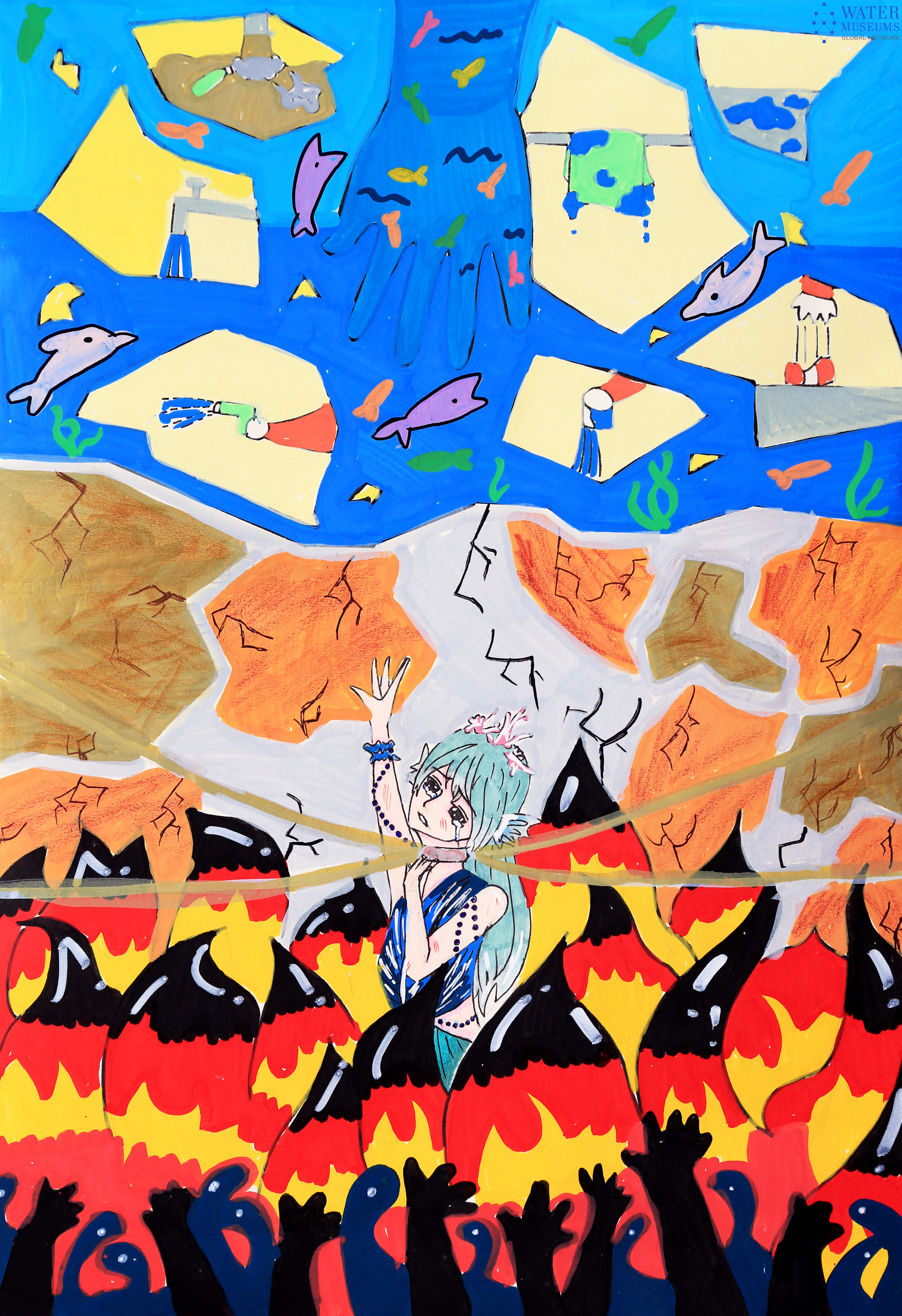
Amidst the raging flames, the water spirit desperately cries for help. Above her is a rescue hand formed of water, seemingly within reach, yet always out of her grasp. The water around the hand is abundant, but people are continuously wasting it. The more water they waste, the farther the hand formed of water moves away from the water spirit. If only she could be saved, she could release water sources to the whole world. While wasting water, people are also pulling themselves into the abyss.
The tears of the water spirit become the last drop of water.
Identifier: #432
CHINA
Yellow River Museum
The Water Seems to be Running Low
Yellow River Museum, China. Best Bilingual Primary School, Zhengzhou. Hou Junqiang.
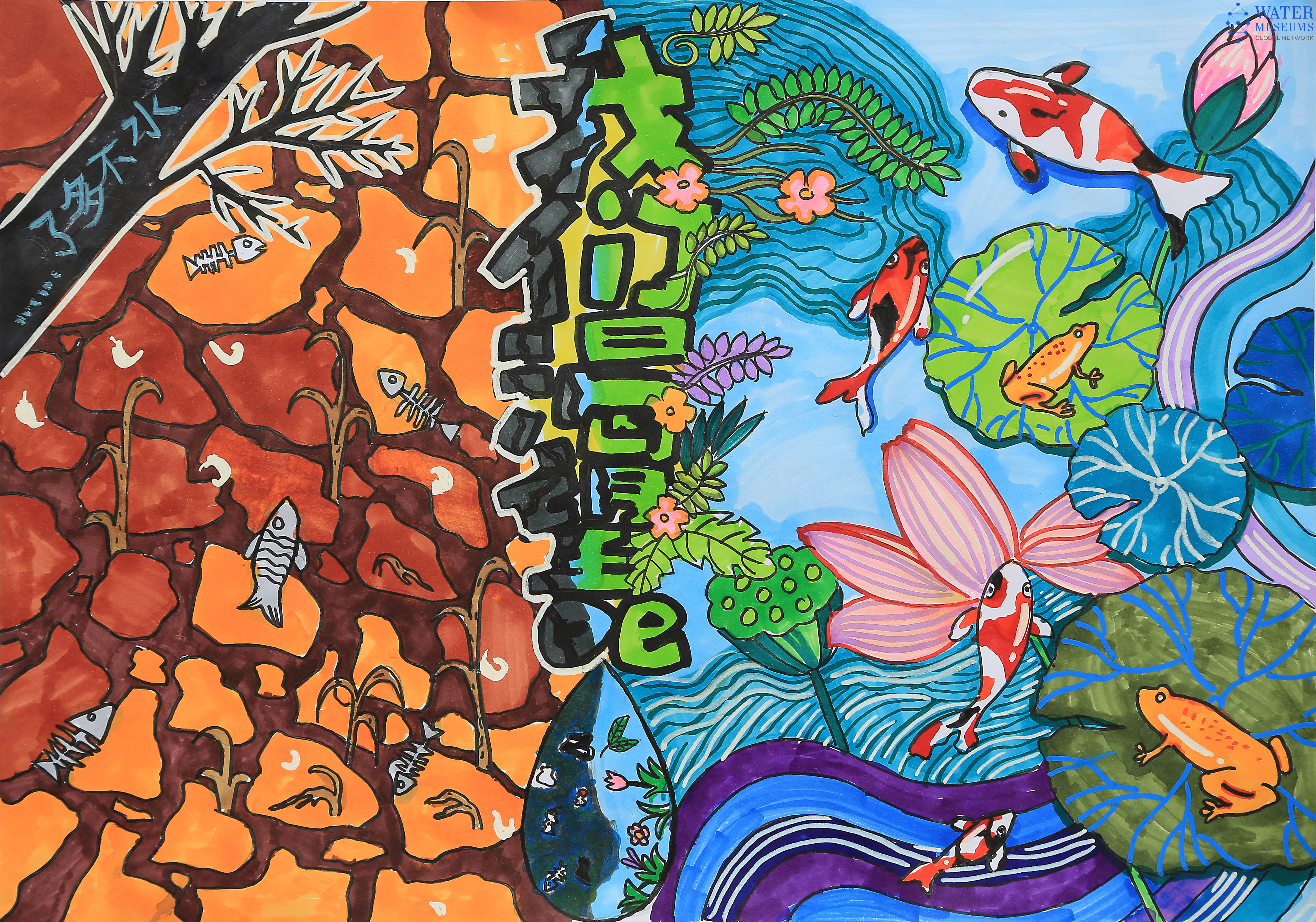
A stark contrast is formed between the dryness and the vibrant vitality, with the dryness serving as a warning to everyone through an erosive effect on the left part of the painting: “If we continue to waste like this, the cleanliness and vibrancy will eventually turn into dryness and emptiness”.
Identifier: #431
CHINA
Yellow River Museum
Space Waterpower Station
Yellow River Museum, China. Headstart Bilingual Primary School, Zhengzhou. Huang Chengche.
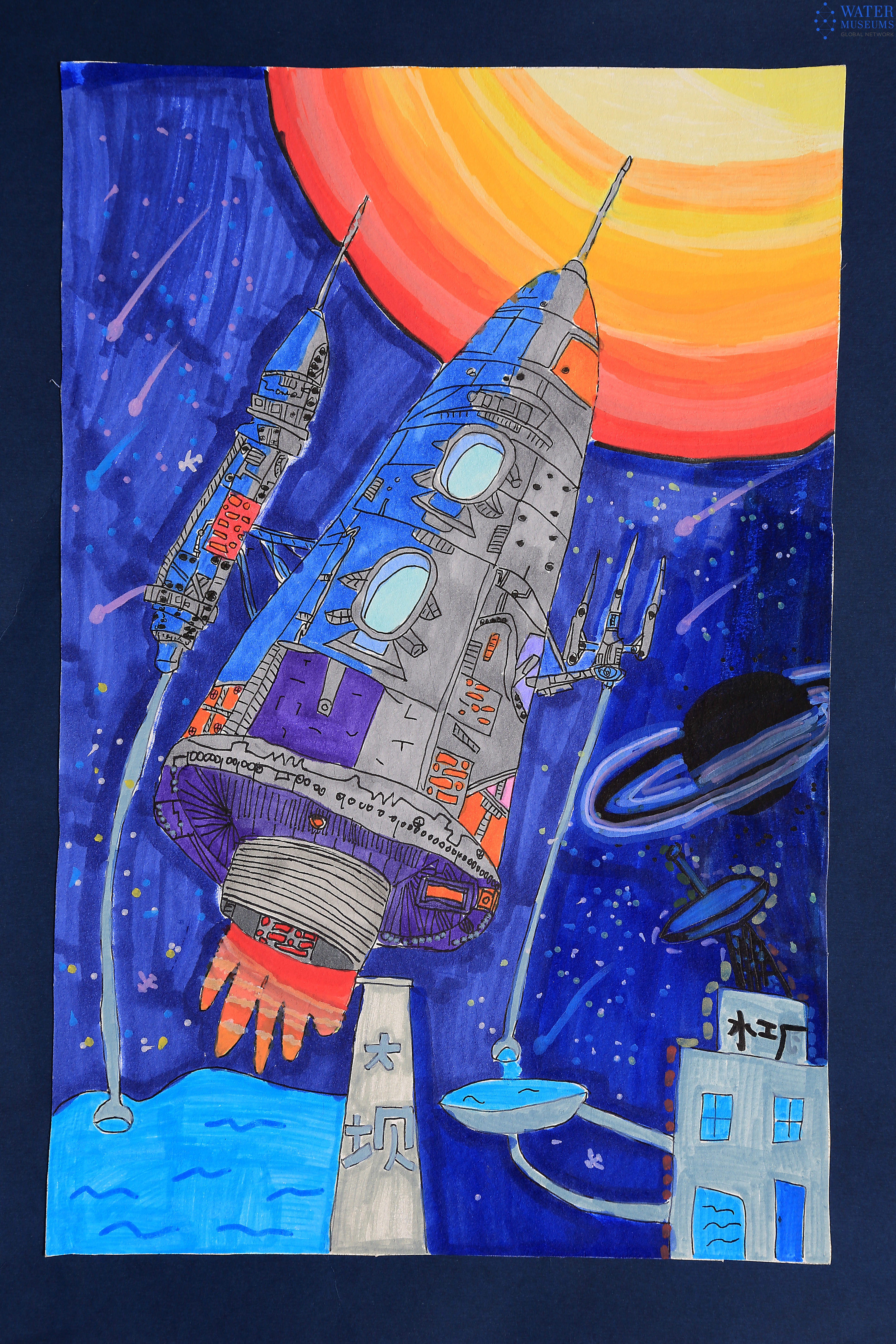
This sci-fi themed painting, set before the distant starry sky, portrays a future technological landscape with vibrant and intense colors. The center of the painting is a delicately designed giant rocket, with powerful flames out. Beneath the rocket, modern facilities such as dam and water plant are artfully integrated with aerospace equipment, symbolizing the connection between water resources and space exploration.
The work embodies a vision of the future, combining aerospace technology with water infrastructure. It not only showcases boundless curiosity about the universe but also carries a beautiful aspiration to empower life through technology, brimming with imagination and creativity.
Identifier: #430
CHINA
Yellow River Museum
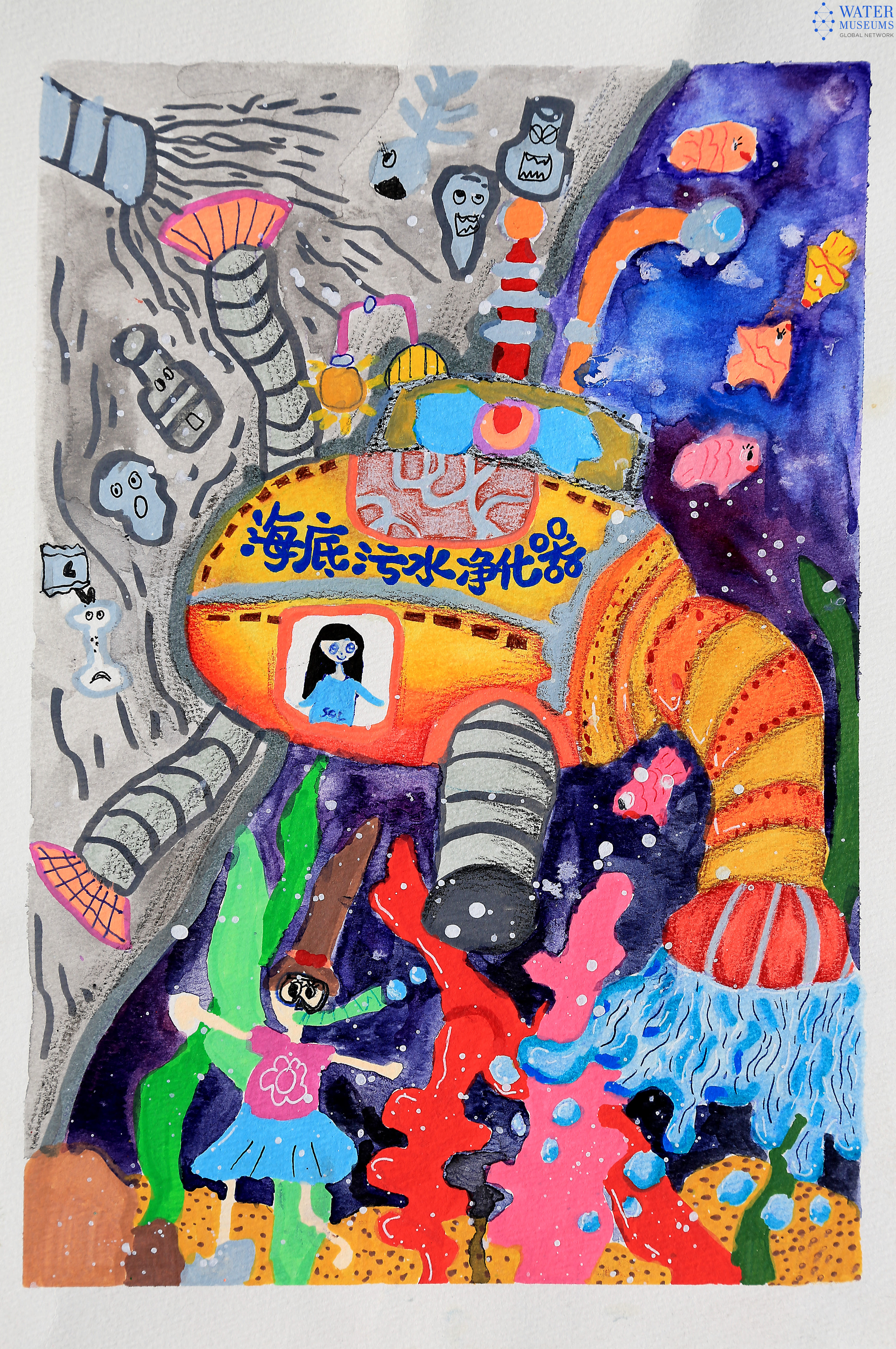
Future: Deep-sea Purification
Yellow River Museum, China. Headstart Bilingual Primary School, Zhengzhou. Yao Yushi.
This work, centered around the concept of "undersea sewage purification," depicts a technological vision for future ocean governance. At the heart of the painting stands a yellow-and-red "undersea sewage purifier," with its thick pipes treating polluted water. Operated by professional personnel, the purifying device coexists with its surrounding colorful fish, shrimp and agile jellyfish harmoniously, in which the vibrant colors contrast with the hidden concern of ocean pollution.
The painter, with bold sci-fi imagination and a childlike touch, integrates environmental awareness into his creation, showcasing a wonderful vision of using technology to protect our blue homeland, as well as the deep concern and sense of responsibility that youngsters have towards ecological protection.
Identifier: #429
ROMANIA
House of Water Museum Târgu Mureș
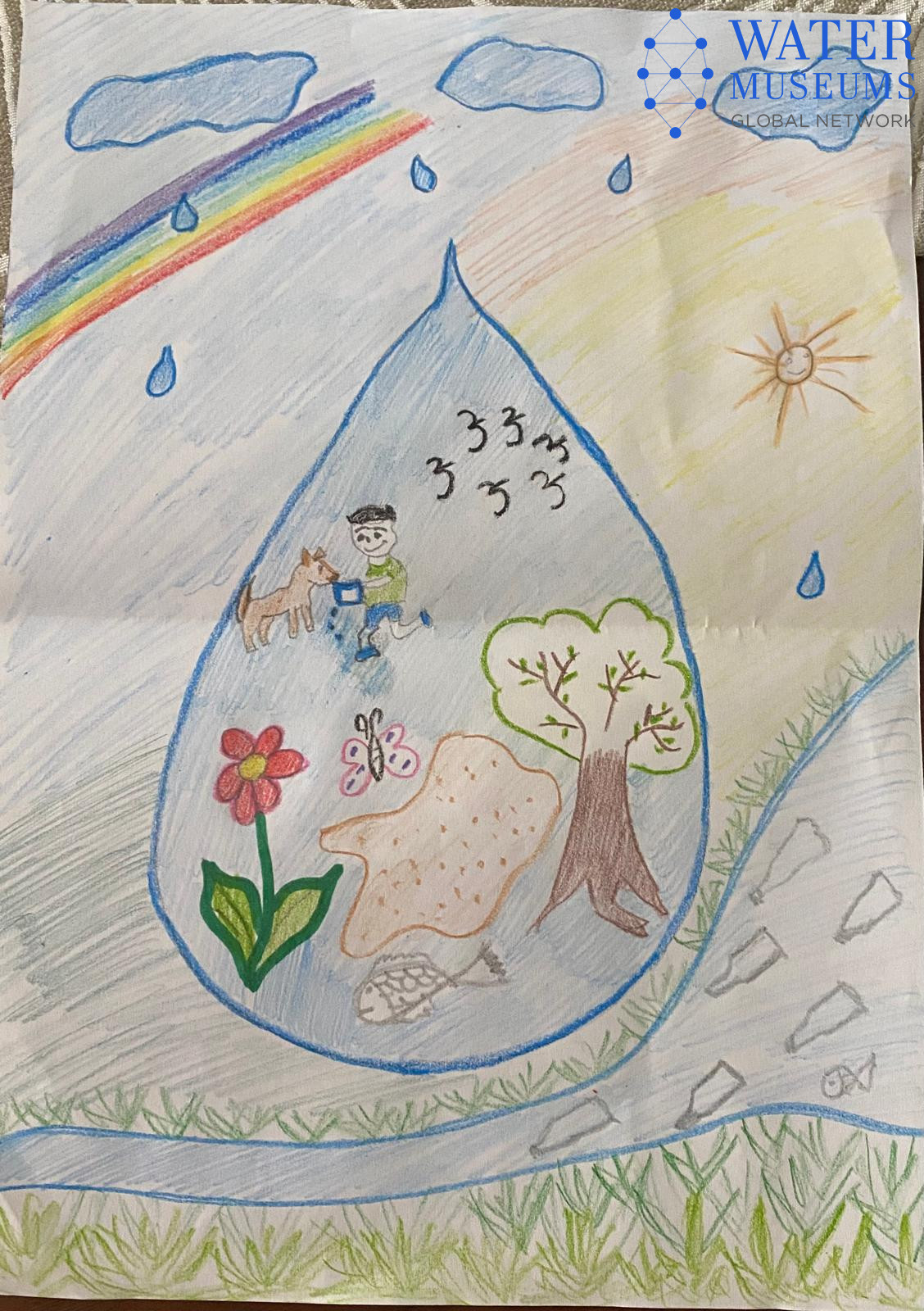
The Water of Everyday Life
House of Water Museum, Romania. Secondary School Sânger. Preparatory Grade.
This drawing shows how important water is our lives. The largest drop of water protects plants, animals, people and is vital for everyone.
Inside the drop, see a child who takes care of an animal, a tree, a flower, a butterfly, a fish and birds, symbols of life and friendship with nature.
The rainbow, the clouds and the sun bring light, joy and hope. Around the drop, nature is sad, showing that we must protect the environment and not waste water.
The drawing wants to cover the message that each of us must understand the importance of water and appreciate, for a clear, healthy and bright future.
Identifier: #428
ROMANIA
House of Water Museum Târgu Mureș
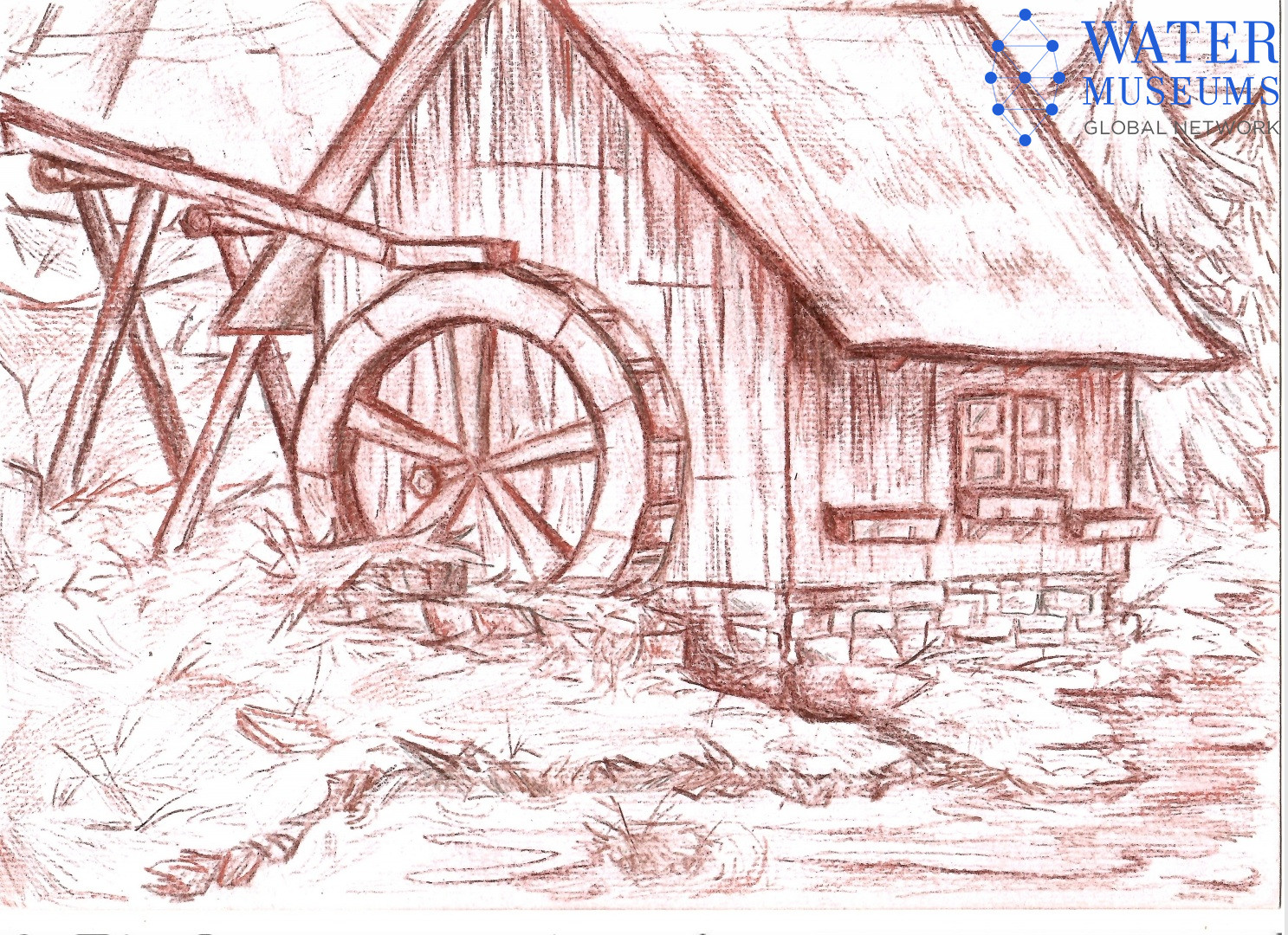
The Harmony between Water and Nature
House of Water Museum, Romania. ”Gheorghe Marinescu” Theoretical High School, Târgu Mureș. Chirilă Daria Maria.
This drawing illustrates a water mill, integrating harmoniously in a natural scenery. In the backgrounds, mountains and a pine tree can be seen, suggesting a quiet and traditional setting. This work highlights the importance of water not only to the balance of nature but also to human activities underlining it’s essential role in daily life.
Identifier: #427
ROMANIA
House of Water Museum Târgu Mureș
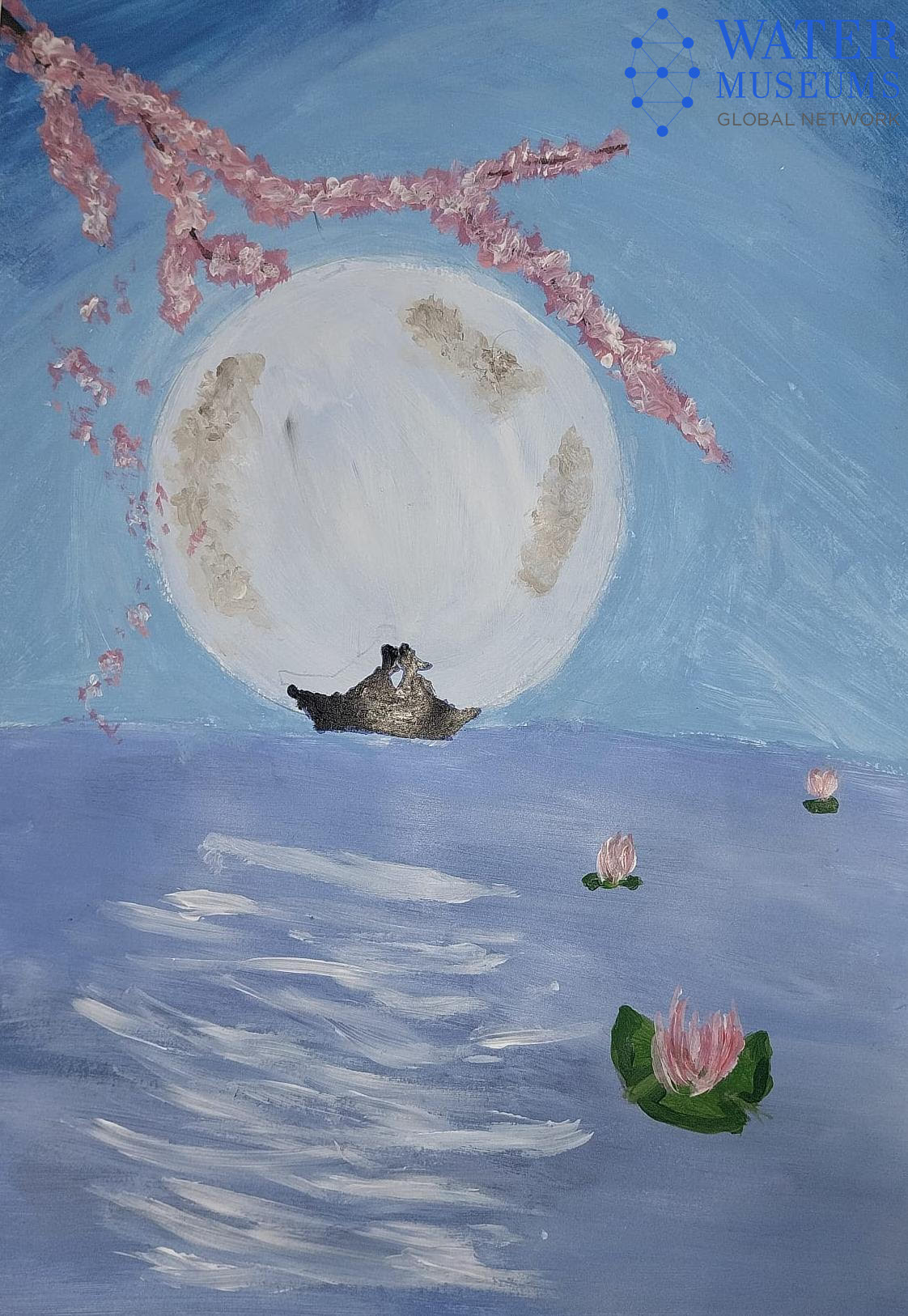
Moonlight Dream
House of Water Museum, Romania. Secondary School no. 1, Luduș city. Banea Iulia and Luca Nicoleta.
A nocturne landscape is dominated by the moonlight which reflects in the clear water of a lake. The blooming tree branch and the waterlilies show the idea of the vivid world while the boat on the back brings the human presence, one which melts in the landscape without disturbing it.
Identifier: #426
ROMANIA
House of Water Museum Târgu Mureș
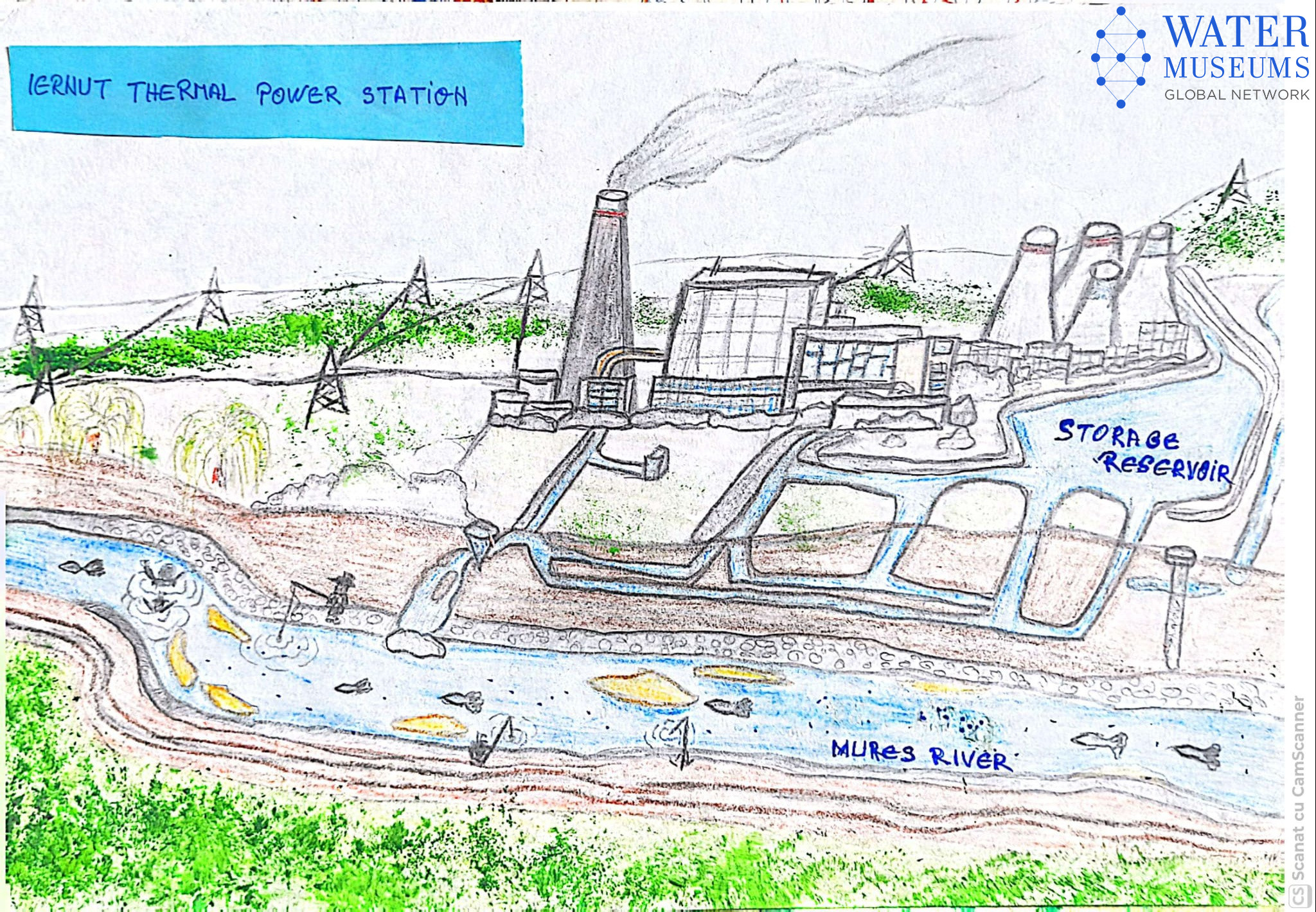
Mureș River Hidro
House of Water Museum, Romania. School, City: Secondary School no. 1, Luduș city
Student: Bacsko Selena
The drawing is an imagination exercise. O hydro plant instead of the Iernut power-plant. A change in order to provide a cleaner energy source. Meanwhile the river keeps his roles: a place for fishing and swimming.
Identifier: #425
ROMANIA
House of Water Museum Târgu Mureș
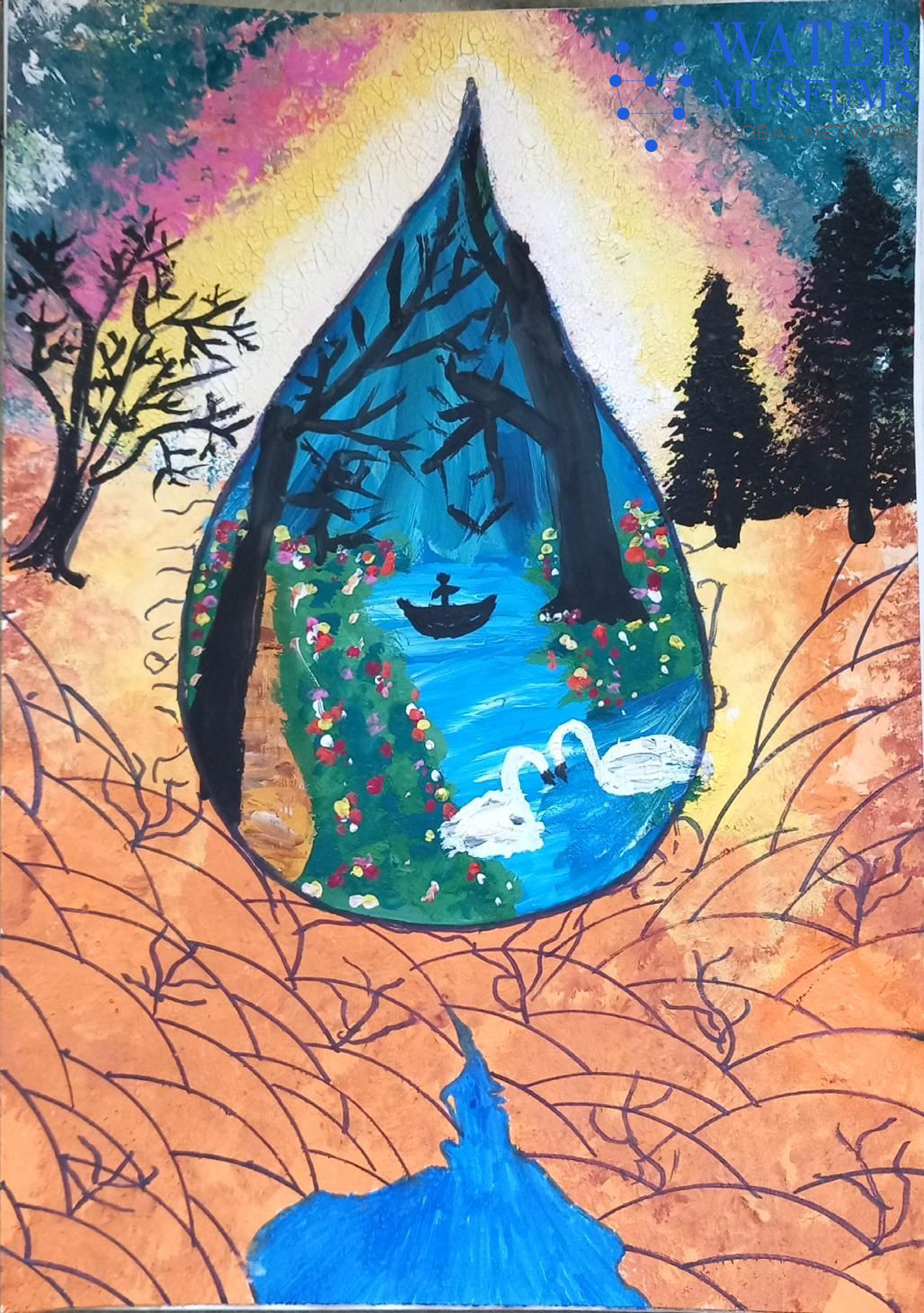
Tear of the Forest
House of Water Museum, Romania. Secondary School no. 1, Luduș city. Anca Anamaria.
A drop of water in the shape of a tear is hiding a dream-like vision: two swans on a clear spring of water and a fisherman in the background. Outside the tear everything is red/black, burned but a string of water is flooding slowly the waste land and it is bringing it to life.
Identifier: #424
ITALY
Water Museum of Venice
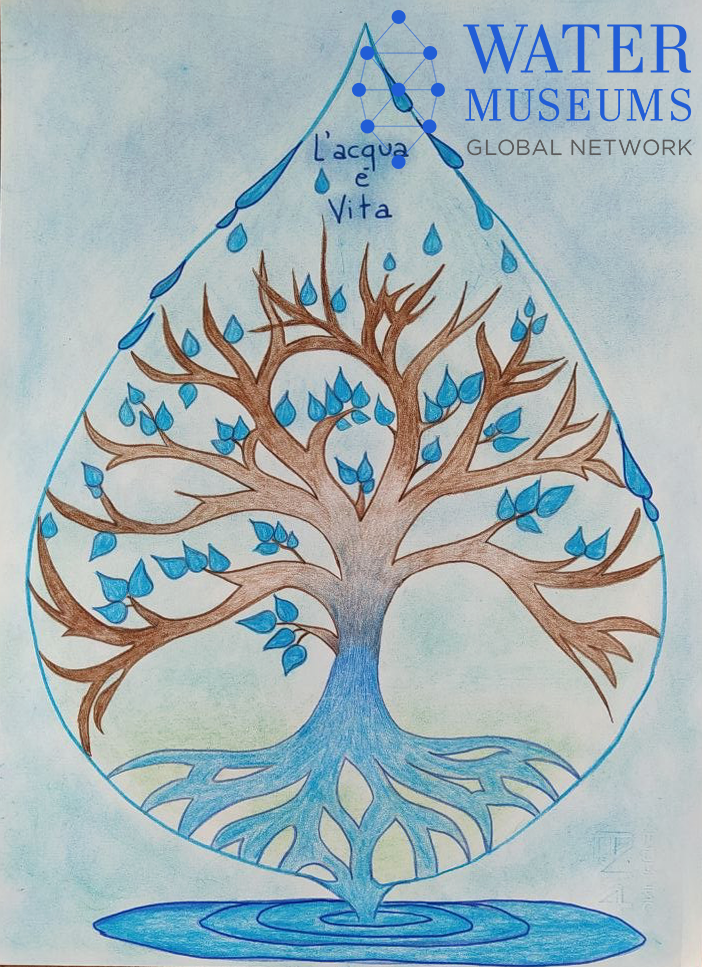
Water is life
Water Museum of Venice, Italy. Secondary school “A. Martini” Peseggia, Scorzè, VE. Class: Benedetta Rossetto 1^F.
The hierarchy of life: no life form would exist on our planet without water. Every drop is precious.
Identifier: #423
ITALY
Water Museum of Venice
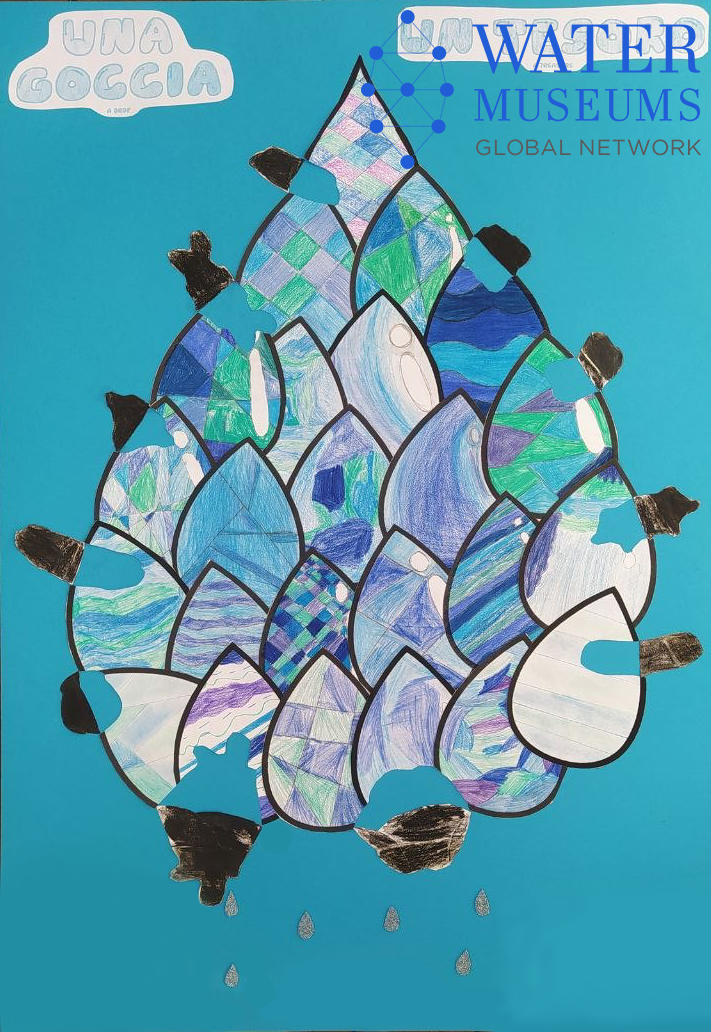
A drop, a treasure
Water Museum of Venice, Italy. C Borgoricco, Primary school “Mazzonetto” San Michele delle Badesse, Borgoricco, PD. Class: 3^A.
A drop of water may seem tiny, but it's actually very important. We can't live without it: we need it for drinking, for washing, and even for plants to grow. Even animals need water every day. If we waste water, one day it could run out, and then it would be a big problem for everyone. That's why we must be careful: let's not waste it, let's not pollute it, let's use it wisely! Every drop counts, even the smallest one, because without water there’s no life. It's like a little treasure that we must protect every day. A DROP of water falls slowly, but it travels a long way. It shines in the sun like a diamond, it's a simple, yet important TREASURE. It contains health and life, and it's an infinite source!
Identifier: #422
ITALY
Water Museum of Venice
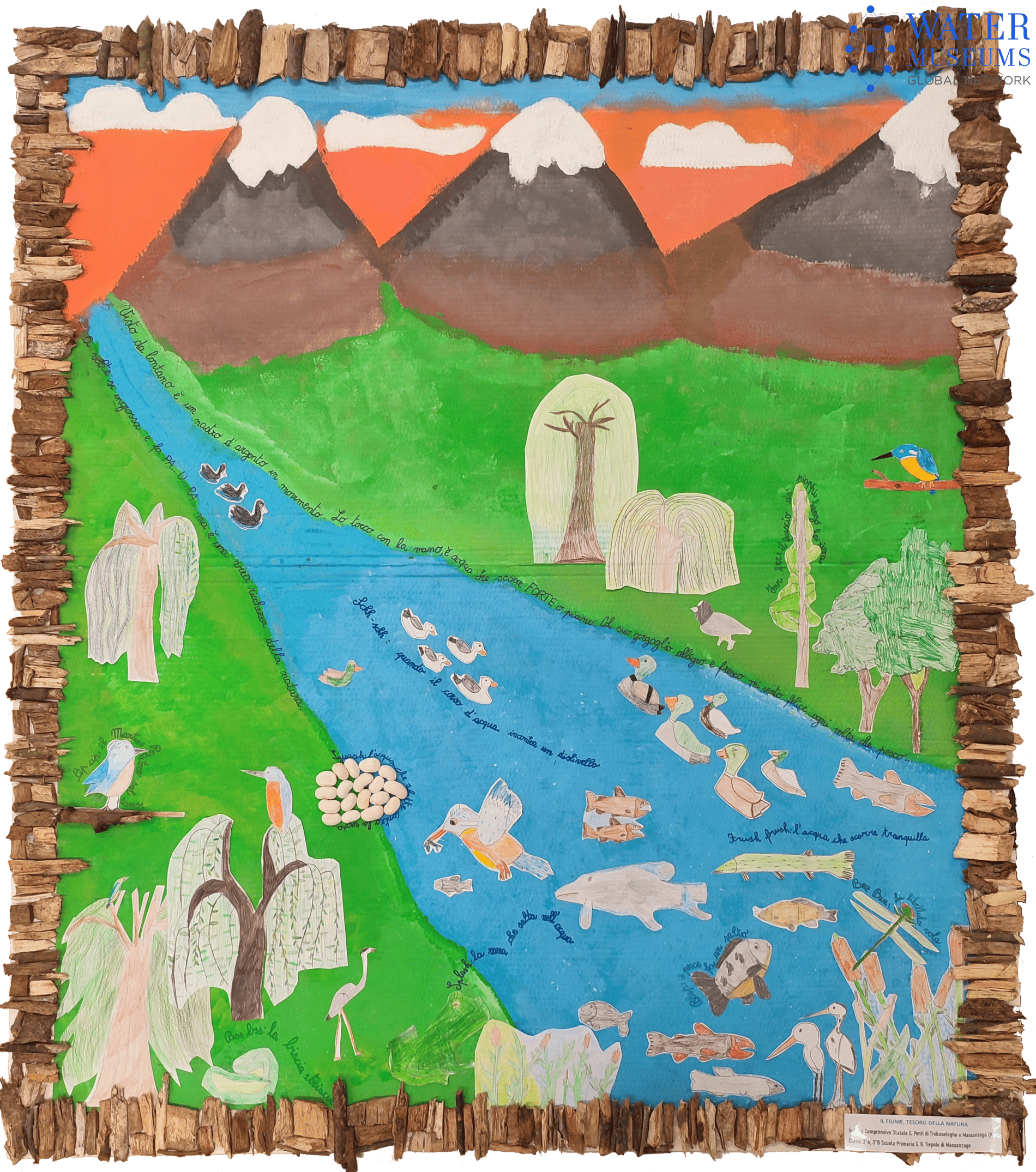
The river: a natural treasure
Water Museum of Venice, Italy. I.C.S. “G. Ponti” di Trebaseleghe, Primary school “G.B. Tiepolo” Massanzago, PD. Class: 3^A – 3^B.
This project, developed by classes 3A and 3B of the Massanzago Primary School, is the result of an extensive interdisciplinary journey combining Geography, Science, Language Arts, and Fine Arts.
Through classroom study, hands-on workshops, and field activities organized by the "Ama il tuo fiume" (Love Your River) initiative, the students explored the river’s ecosystem in depth. Their final work aims to convey the vital importance of rivers for all living beings, while celebrating the sensory beauty they offer: the sight of the flowing water and the peaceful melodies heard when one closes their eyes to listen.
Identifier: #421
ITALY
Water Museum of Venice
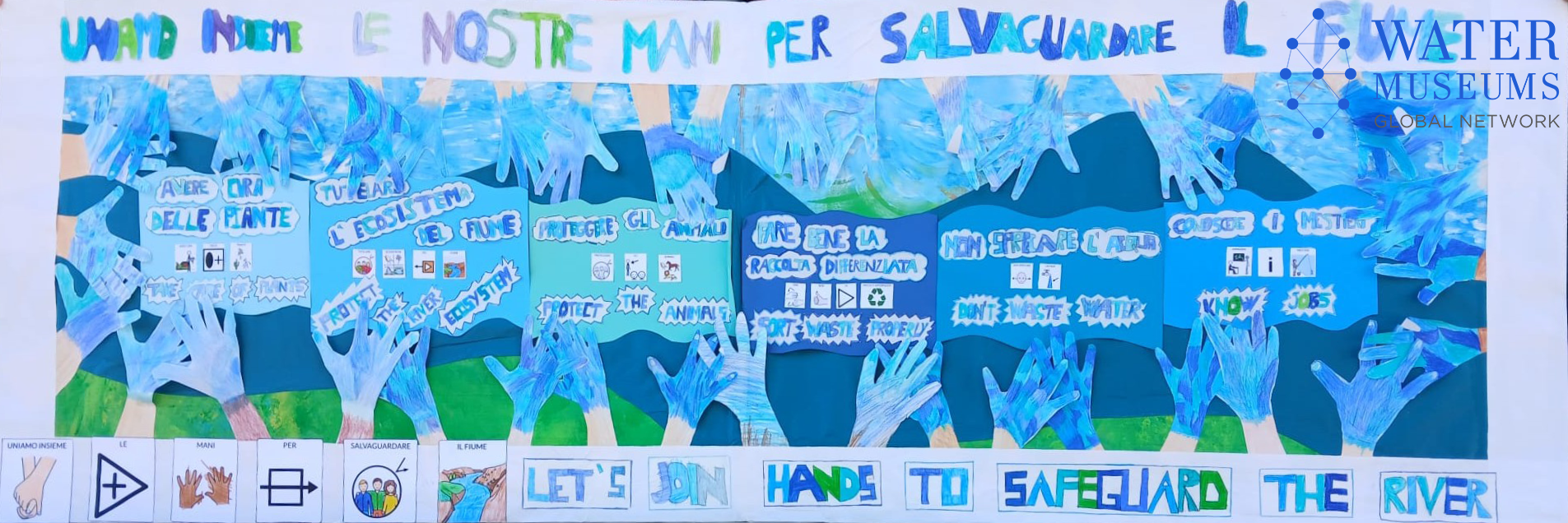
Together we can
Water Museum of Venice, Italy. I.C. “F. e P. Cordenons”, Primary school “F. Farsetti” Santa Maria di Sala, V. Class: 3^B.
The project aims to communicate, through the children’s hands, their unity in committing to safeguarding the river as an ecosystem, through feasible actions within their reach.
The use of different forms of writing and materials enabled everyone to collaborate and interact.
The students worked together using different materials: pencils, markers, scissors, glue, paint, sponges, different kinds of paper, and recycled materials.
Using Italian, English and Augmentative and Alternative Communication helped enrich the project and foster everyone’s participation.
Identifier: #419
PORTUGAL
Lisbon Water Museum
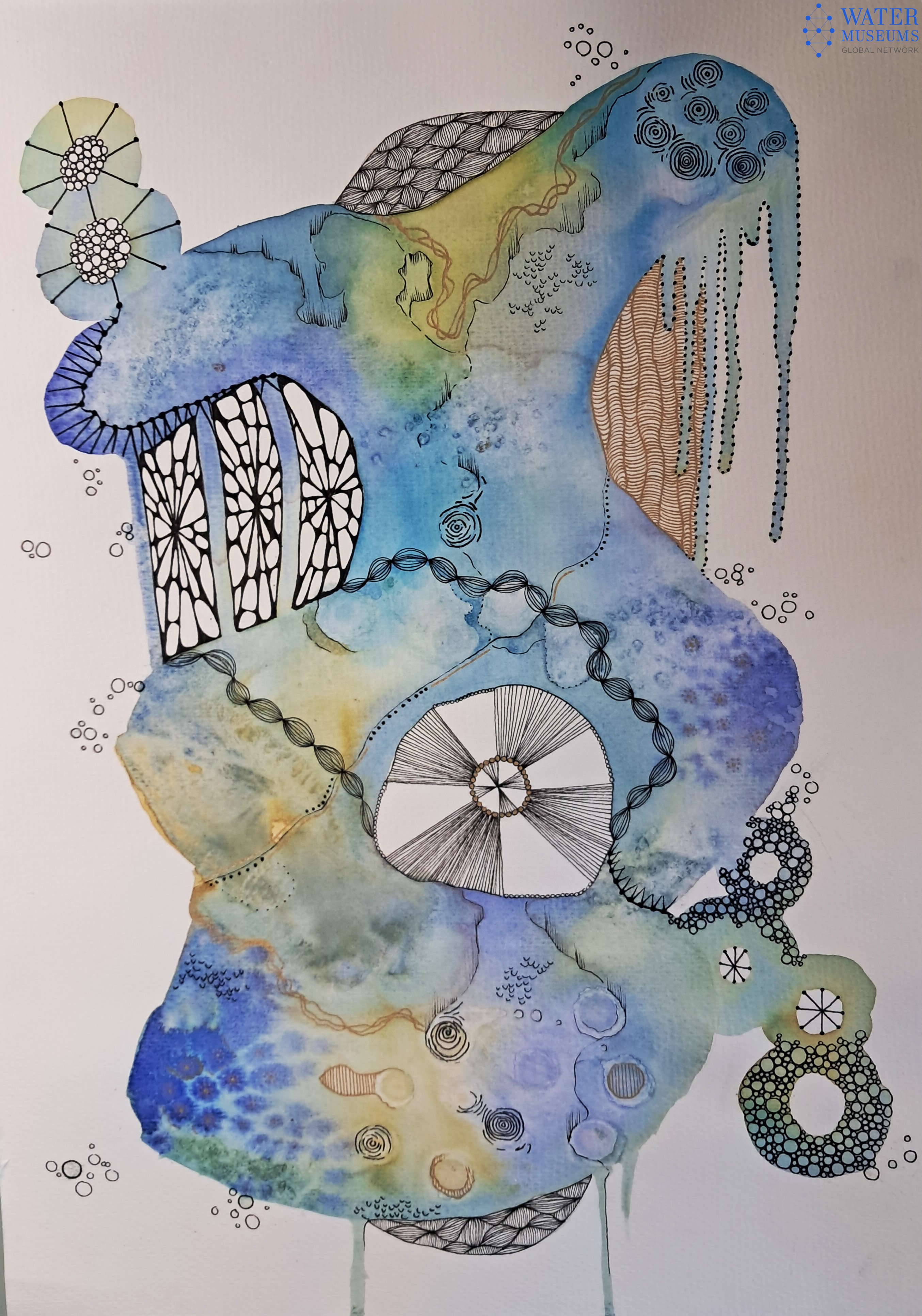
On the Other side of the Water
Lisbon Water Museum, Portugal. Escola Secundária da Amadora. Marina Ferreira e Pinho (17 Y).
This artwork explores water as on organic and fluid element. I used watercolour to create flowy stains and transparencies that evoke water streams and depths, allowing the pigment to spread in a controlled yet spontaneous way. The layering of different tones suggests different temperatures and ecosystems. With a fine-tip pen, I introduced patters that resemble microorganisms, creating a contrast between the free gestures of the watercolour and the precision of the line. The goal was to combine science and sensitivity representing both the macroscopic dimension and the abstract side of the water.
Identifier: #418
PORTUGAL
Lisbon Water Museum
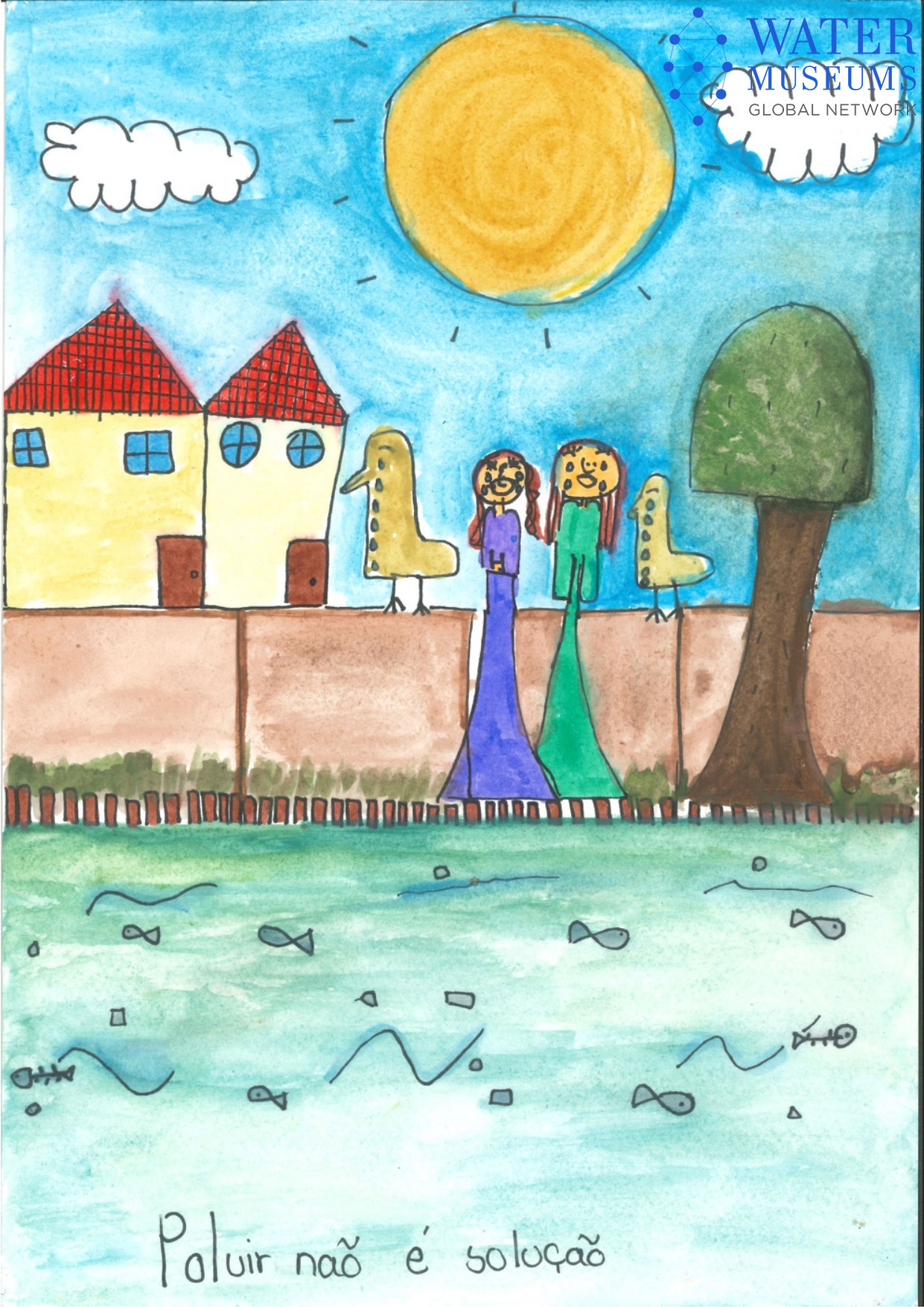
Pollution is not the solution
Lisbon Water Museum, Portugal. CEIDE – Centro de Educação e Desenvolvimento (Cascais). Madalena Ramos (9 Y).
A polluted stream, birds trapped in trash, ducks in the water – some already dead. People fell Sad and angry when they see the destruction of nature. This scene alters to the urgency of protecting he environment and preserving life.
Identifier: #417
PORTUGAL
Lisbon Water Museum
Water essential to Biodiversity
Lisbon Water Museum, Portugal. Escola Básica Venda do Pinheiro (Mafra). Lara Rodrigues Lopes (15 anos).
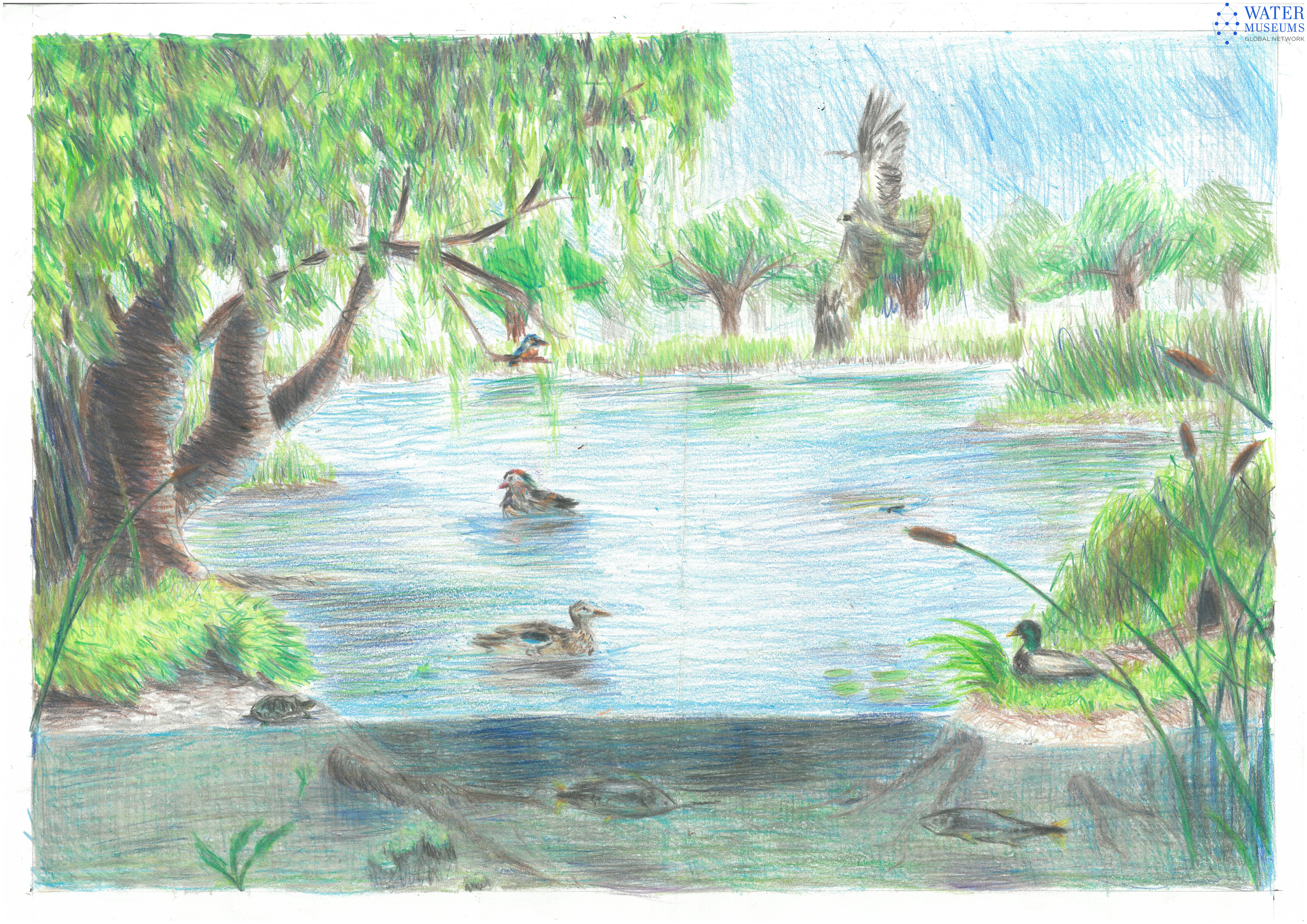
In a world where it’s increasingly difficult to find places unaffected by pollution, this drawing seeks to show what a healthy ecosystem looks like: unpolluted water, abundant flora, fish and other aquatic animals, birds like the osprey (who hunt in places like rivers and lakes), the mallard (who is pretty common in lakes and rivers across Europe), the kingfisher, (equally spread across Europe and hunts in rivers) and the mandarin duck (who is also easily found in rivers and lakes of Asia).
Identifier: #416
MALTA
Ghajn Water Conservation Centre
Water We Want
Ghajn Water Conservation Centre. San Gorg Preca, Marsa. Katrina A Biao.
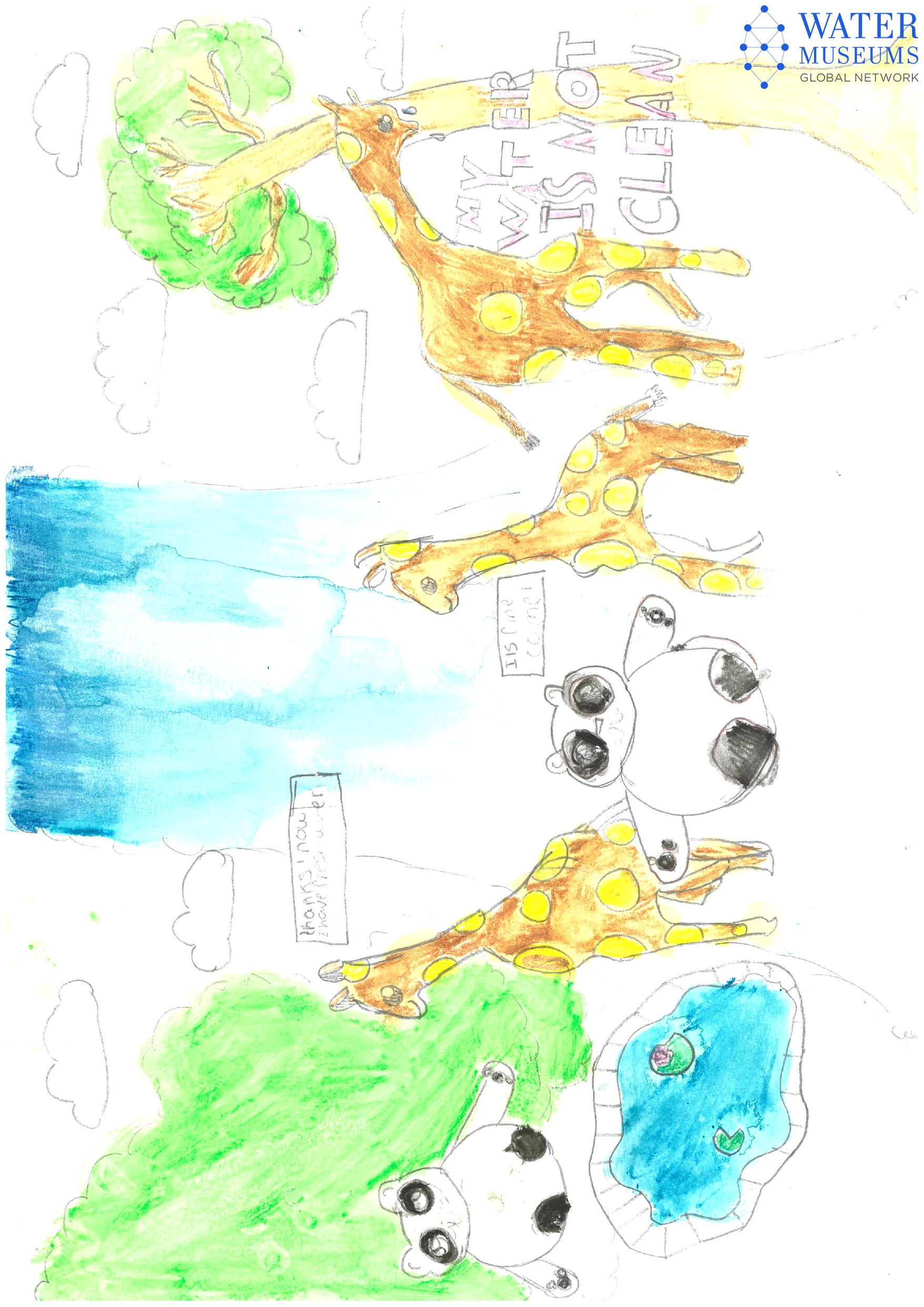
The water we want is clean, clear and safe to drink. It should not have dirt, germs and harmful chemicals in it. Clean water helps us stay healthy, grow strong and avoid sickness. We use water for drinking, cooking, washing and farming…our crops. To make sure we always have the water we want we must keep the sea (in our case) and ground water clean. Taking care of water today, helps everyone have enough safe water for tomorrow.
Identifier: #415
MALTA
Ghajn Water Conservation Centre
Desalinated Water in Malta
Ghajn Water Conservation Centre. San Gorg Preca, Marsa. Yr5.2 Hailey Bugeja.
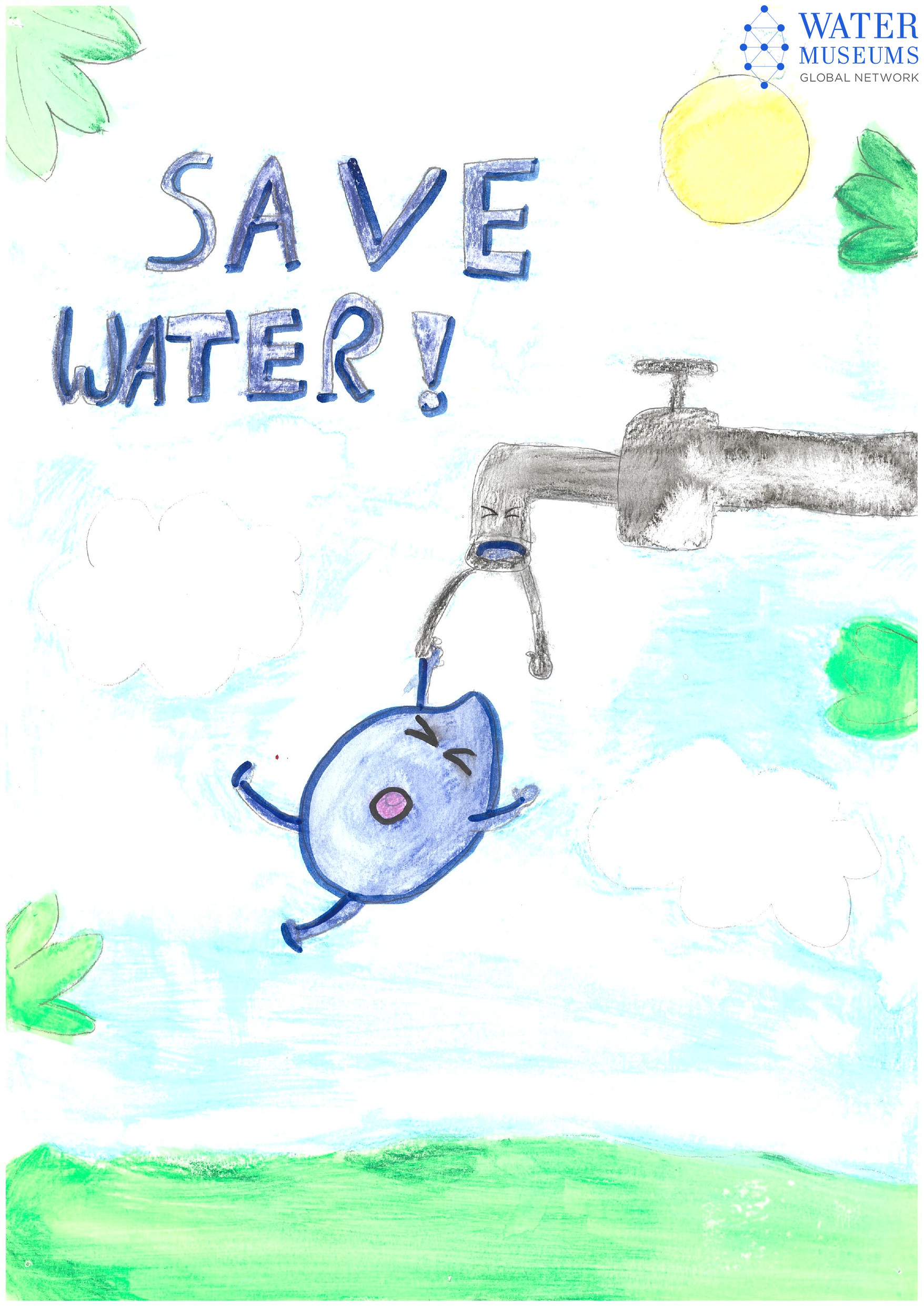
As our country does not have rivers and lakes, most of our drinking water comes from the sea. Malta uses special desalination plants that take seawater and clean it, so that salt and tiny particles are removed. This process is called reverse osmosis, and it uses high pressure to push seawater through very fine filters, leaving fresh water behind. This clean water is then mixed with some natural groundwater before it flows from our taps in our homes.
Identifier: #414
MALTA
Ghajn Water Conservation Centre
Ground Water
Ghajn Water Conservation Centre. The Archbishop’s Minor Seminary, Marsa. Luka Rakic.
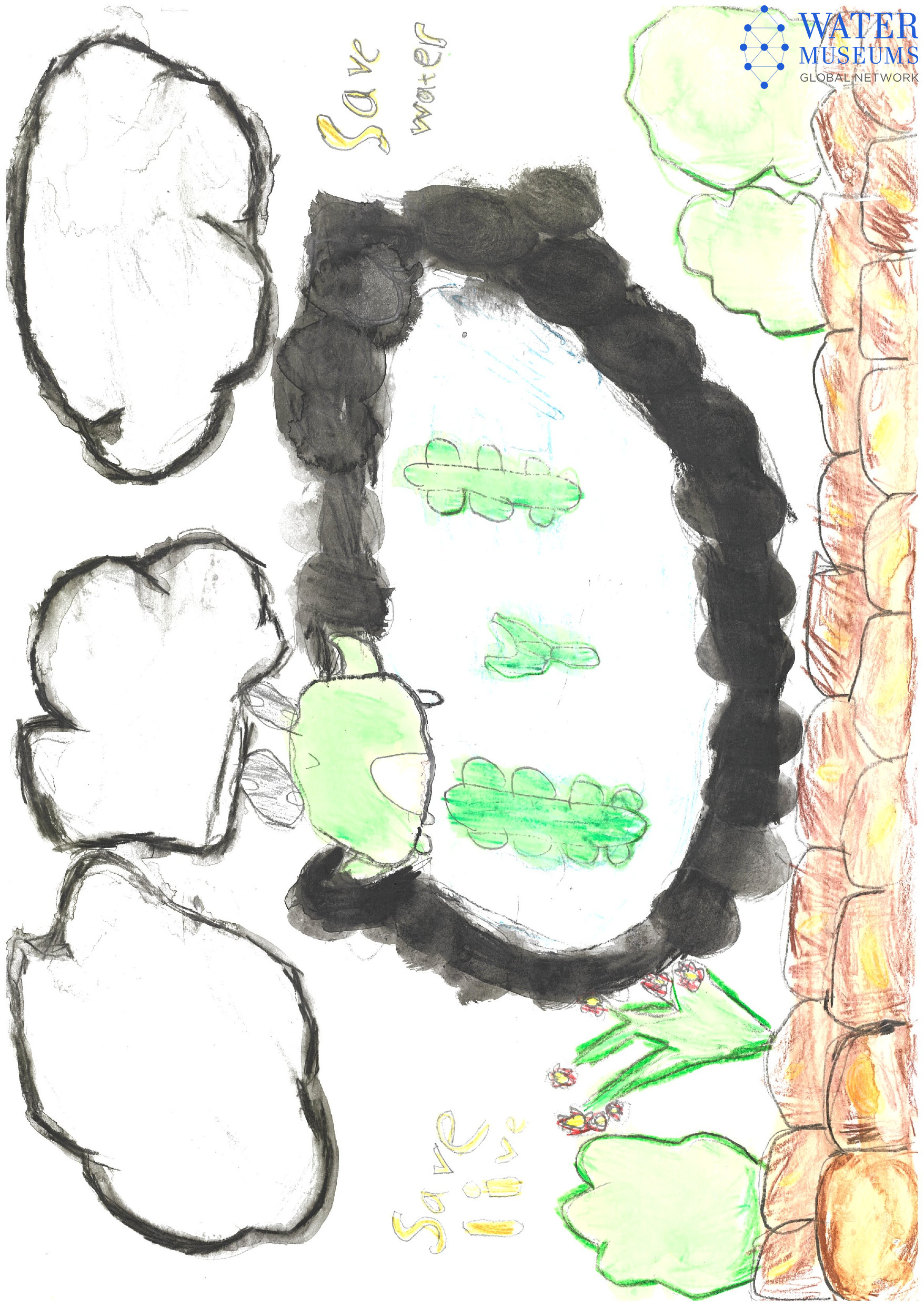
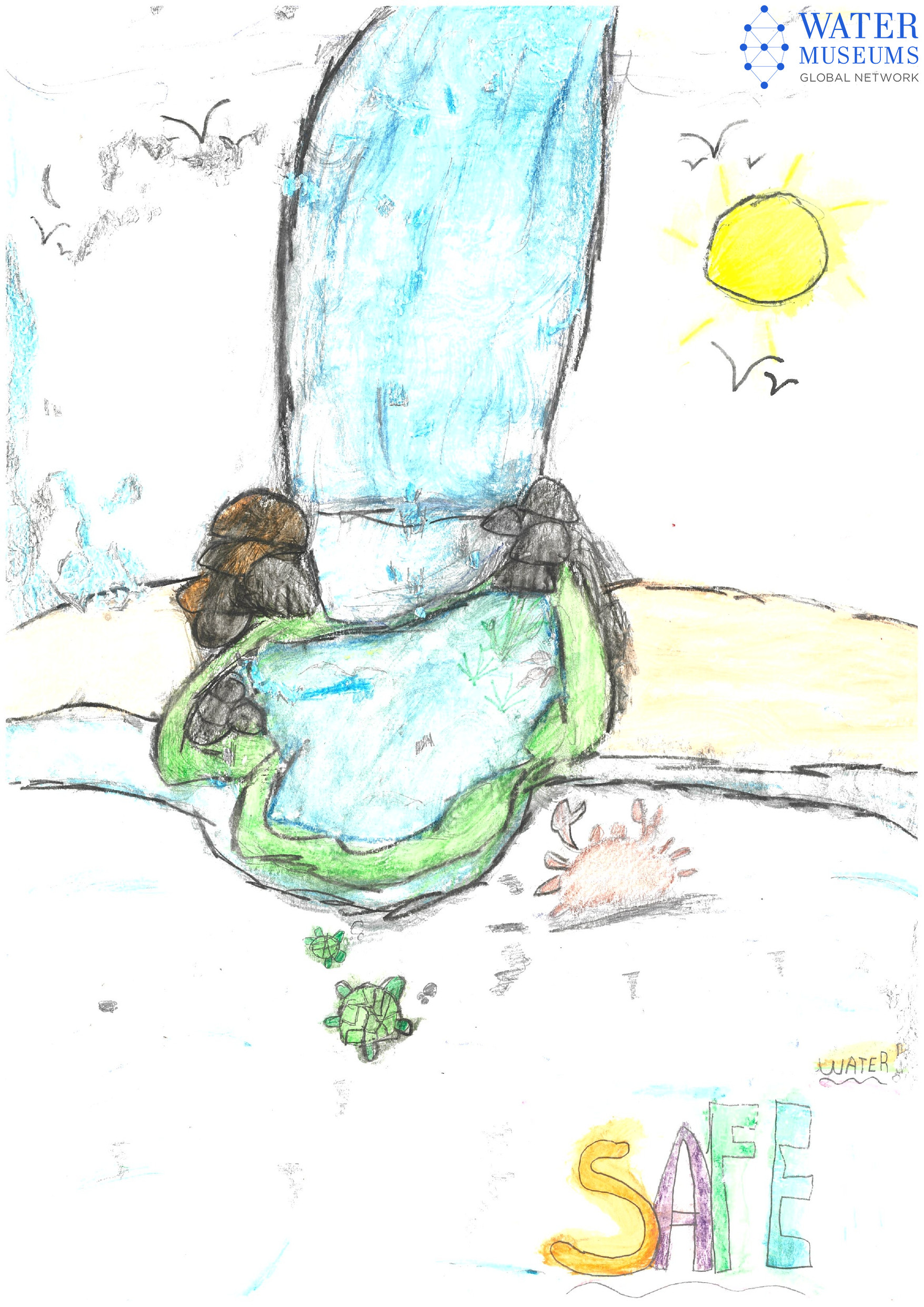
Groundwater is water that lives underground hidden in tiny spaces between rocks and soil. When it rains some of the water soaks into the ground instead of flowing into the sea. This water travels down and collects in special underground layers called aquifers, which are like big natural water storage tanks. People, especially in Malta use ground water by digging wells to bring up water for farming and washing. Even though we can’t see it ,ground water help plants to grow and give communities clean water to use everyday
Identifier: #413
MALTA
Ghajn Water Conservation Centre
Fresh Water in Malta
Ghajn Water Conservation Centre. San Gorg Preca Marsa. Kalea Agius Year 5.
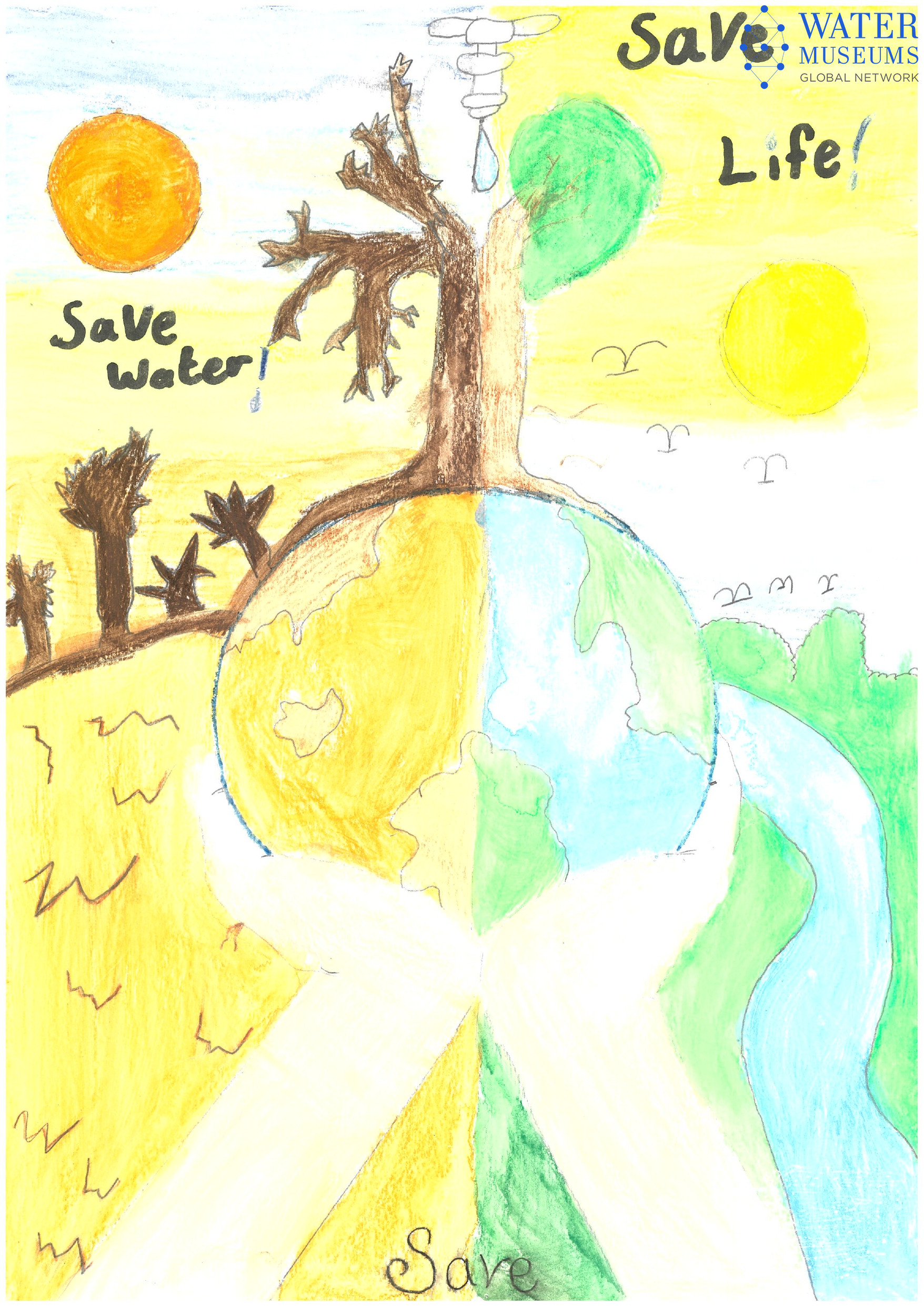
Malta has very limited natural fresh water because there are no permanent rivers or natural lakes. Rainfall is seasonal and relatively low. Most natural seawater cuts underground in aquifers but although rare Malta does have a few temporary or semi natural freshwater ponds and wetland mostly formed by rainwater .We also name a series of small manmade reservoirs like Chadwick Lakes built by the British on the 19th Century
Identifier: #412
MALTA
Ghajn Water Conservation Centre
Importance of water
Ghajn Water Conservation Centre. San Gorg Preca, Marsa. Ella El Houni Yr5.2.
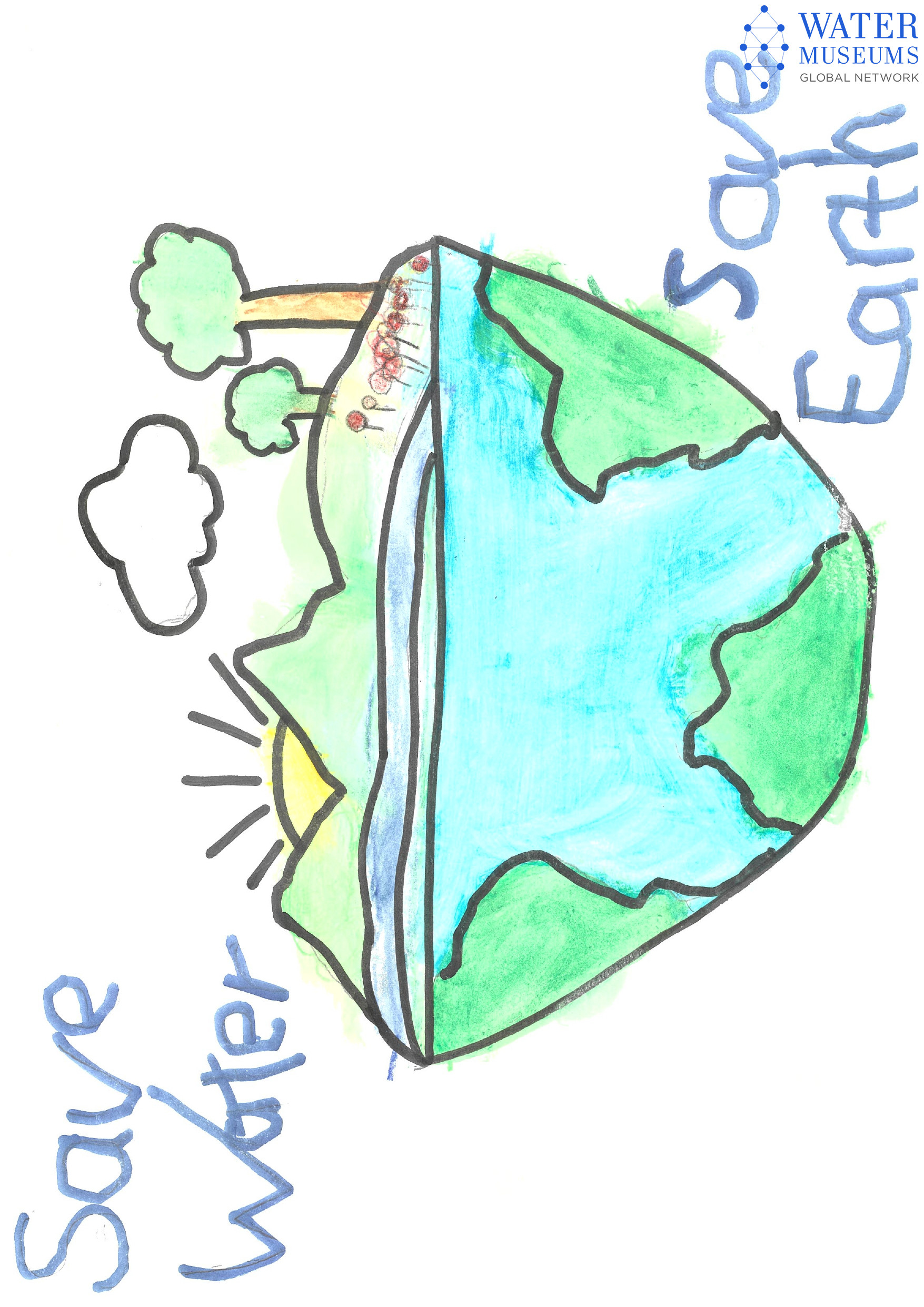
Water is very important for all living things. People, animals and plants all need water to stay alive and healthy. Our bodies use water to cool, move nutrients around us and help us grow. Plants need water to make the food through a process called photosynthesis. Even animals need water to drink and keep hydrates. Without water, life on Earth would not be possible.
Identifier: #411
MALTA
Ghajn Water Conservation Centre
Water for Our Future
Ghajn Water Conservation Centre. The Archbishop’s Seminary. Sven Xerri Yr3.
Water is very important for our future. As more people are born and cities grow, we will need more water for drinking, farming and making food. If we continue to waste water, pollute our rivers and lakes there may not be enough safe water tomorrow. Saving water, fixing leaks , planting trees and keep our environment clean can help protect this precious resource.
Identifier: #410
INDIA
Living Waters Museum
Only ‘12 minutes’
Living Waters Museum. Ek Tara, Kolkata. Sumaiya Khatoon.
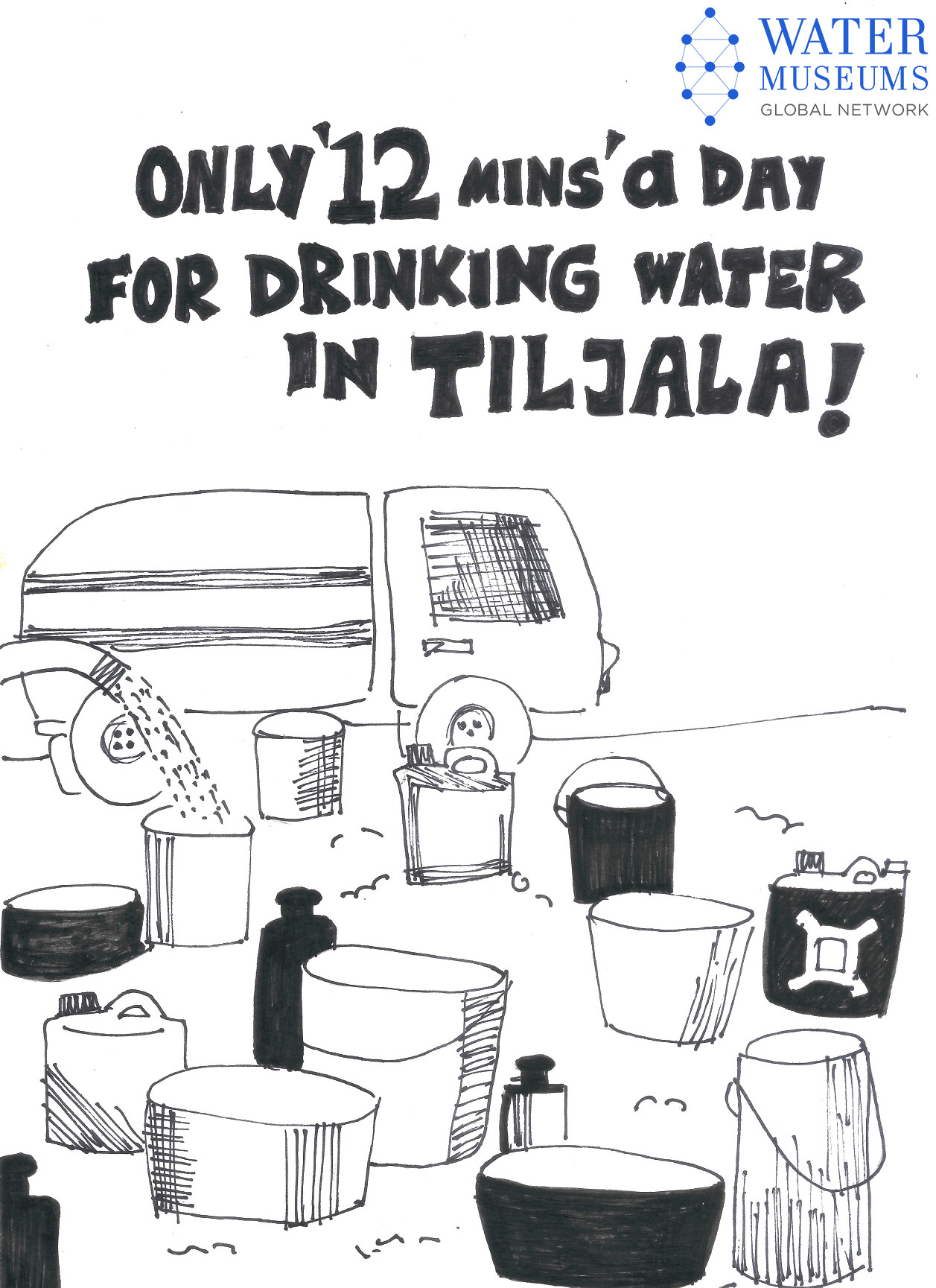
We live in Topsia, in the largest slum of eastern India. Every day, we face the struggle for the resources that have been given by nature. Due to extreme misuse of the nature’s creation we face several problems. For example, in our locality, drinking water comes for only 12 minutes and the entire population of the community finds it extremely difficult to store the water. The problem becomes more severe during the summer. We must protect the environment to solve the issues and in this case, increase the 12 mins only water availability in our lives.
Identifier: #409
INDIA
Living Waters Museum
Hope
Living Waters Museum. St Johns Diocesan Girls High School, Kolkata. Anusua Chowdhury.
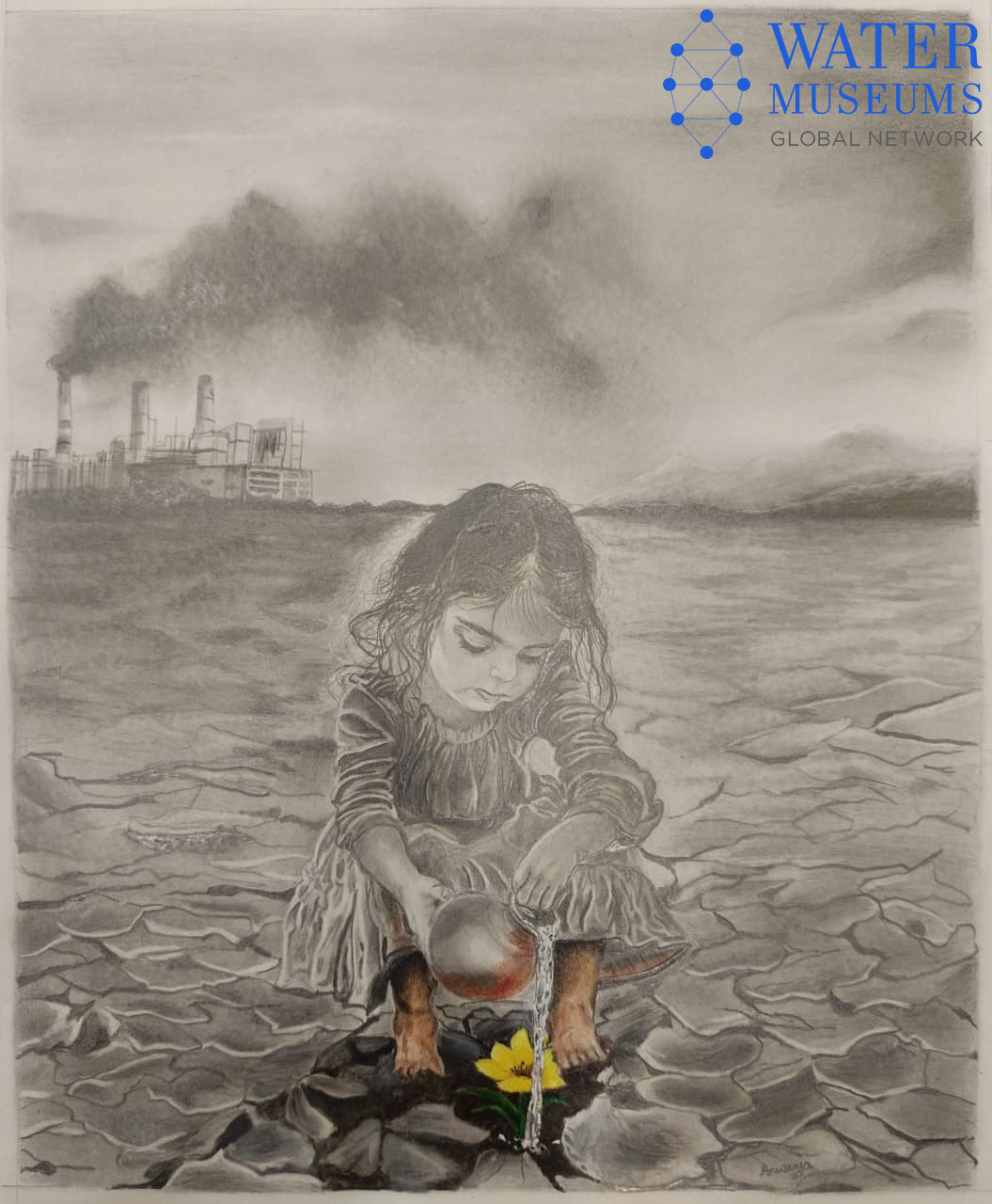
When there is nothing left, let that last drop of water be your ray of hope. This artwork shows a world affected by pollution and water scarcity. In the background, industries release smoke into the sky, representing human activities that harm the environment and contribute to climate change. The dry, cracked land reflects the severe shortage of freshwater and the impact it has on nature.
In the center, a young girl gently pours a small amount of water onto the barren ground, where a single flower begins to grow. This flower symbolizes hope and the possibility of life, even under difficult conditions. The act of the girl shows that even small efforts can make a difference in protecting water and nurturing life.
My drawing conveys that water is essential for all living beings, and it is our responsibility to use it wisely and protect it for the future. Without water, the world will become dry and lifeless, but with care, life can still bloom.
Identifier: #408
INDIA
Living Waters Museum
Mother Ganga: Between devotion and destruction
Living Waters Museum. Modern High School for Girls, Kolkata. Ahaana Rakshit.
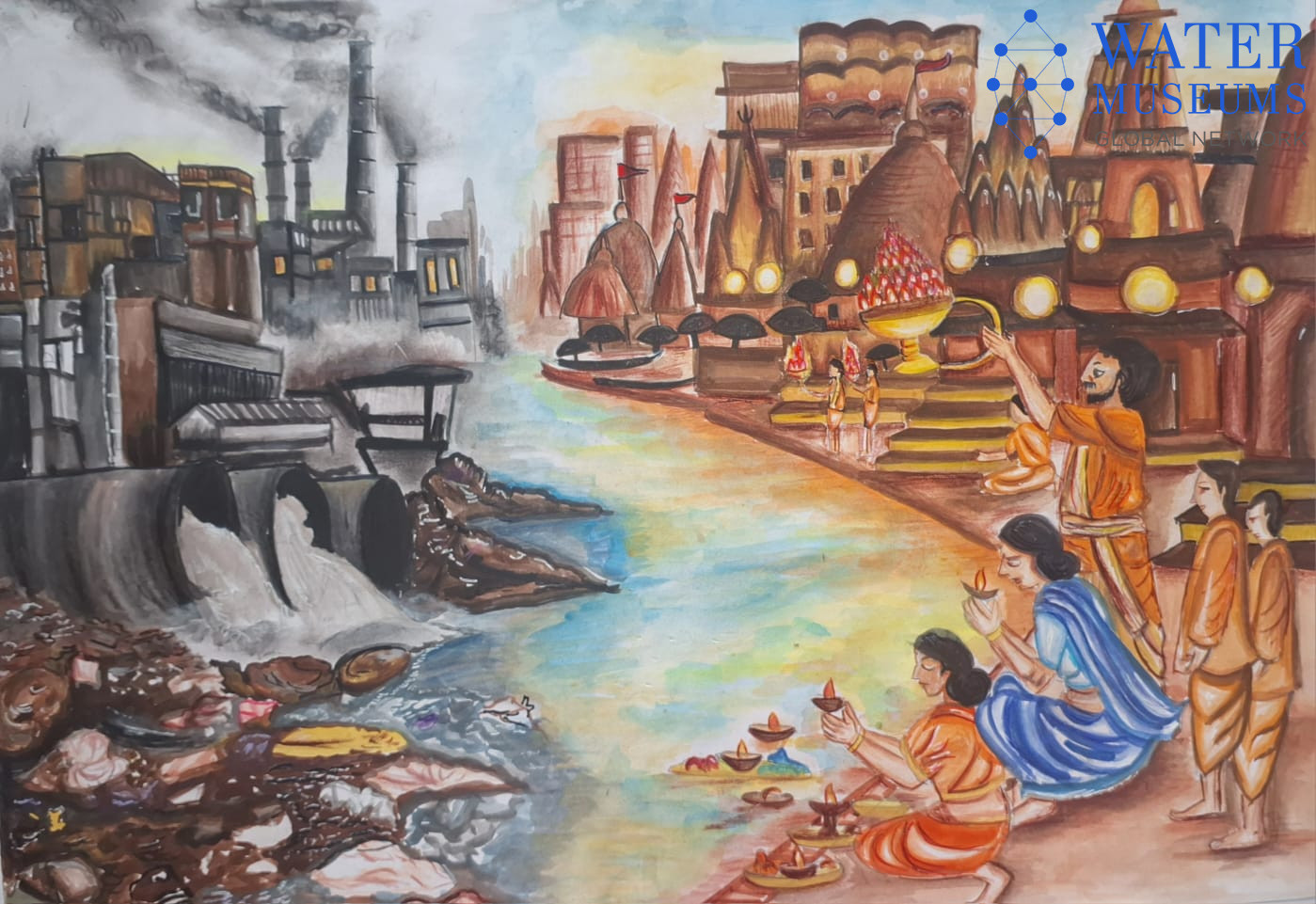
This painting emphasizes the difference between the two faces of the River Ganga. On the left side, we can see factories emitting harmful gases into the air and the water-bodies have been heavily polluted by plastic and waste discharged by humans. On the opposite bank, we can see the peaceful and serene side of the river. People are chanting prayers offering flowers to the river. Priests are performing the Ganga Aarti, a daily ritual. This shows us that the river is more than a source of water, it is our mother.
Identifier: #407
ITALY
Autonomous Province of Trento
A jump in the water
Autonomous Province of Trento, Italy. IC Trento 3 – Scuola Primaria “Nicolodi”.
Classe 5 A.
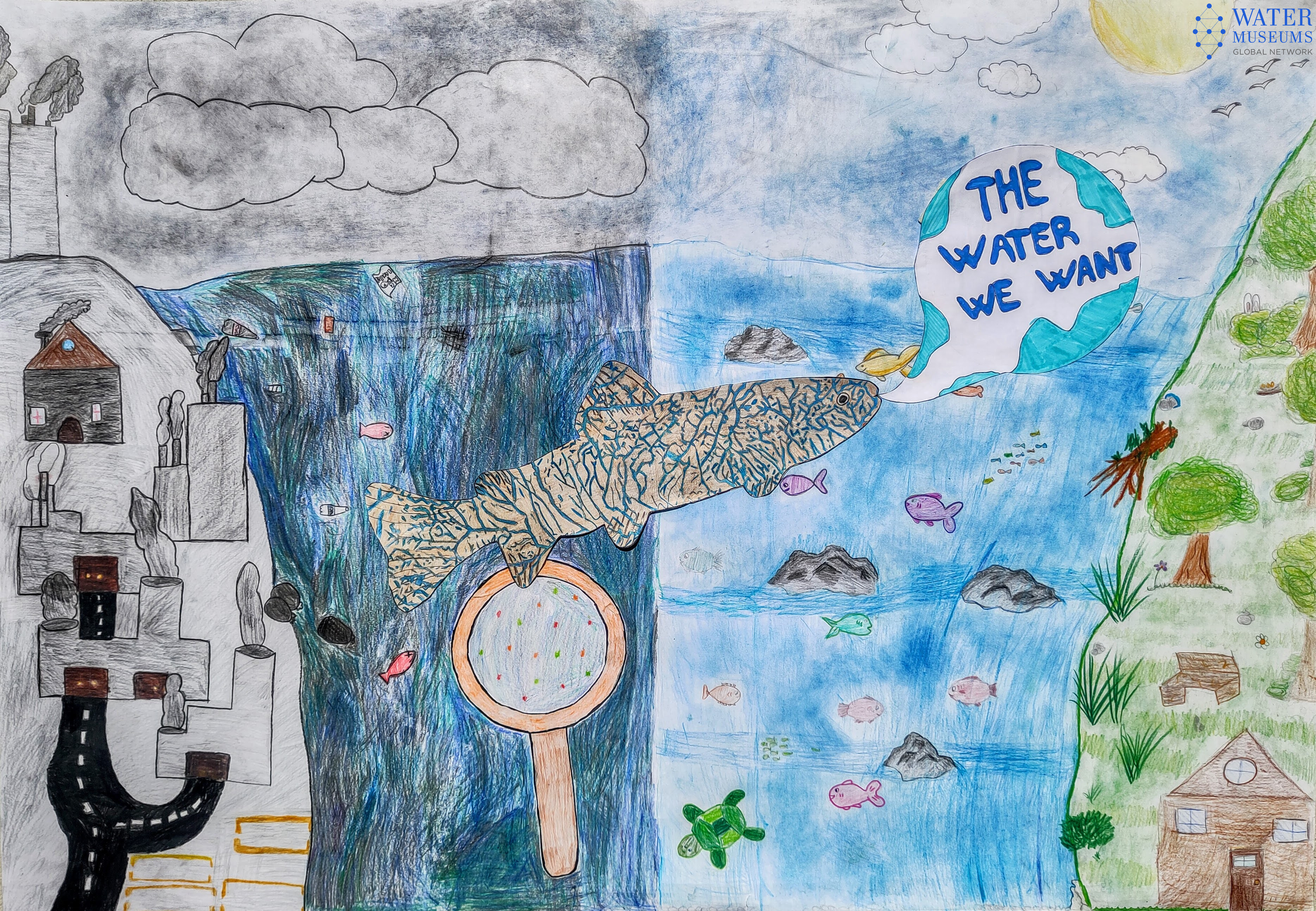
We are children of the 5th grade of Nicolodi Primary School and we are very happy to submit our artwork. In “A jump in the water” we depicted a fish called marble trout, an endemic species of the south alpine rivers. In our work, its unique livery was drawn tracing the map of the italian alpine rivers where it lives. The image shows our transition from polluted waters (also with icroplastics) to a cleaner future. We divided the poster to create a contrast: polluted water on the left and pure, clean water on the right. We hope that the clean future we imagined will come true!
Identifier: #405
MEXICO
Iurhekua Interactive Water Museum
Tear of Hope
Iurhekua Interactive Water Museum, Mexico. EPLER, Uruapan. Jhonatan Sajid Vaca Villanueva.
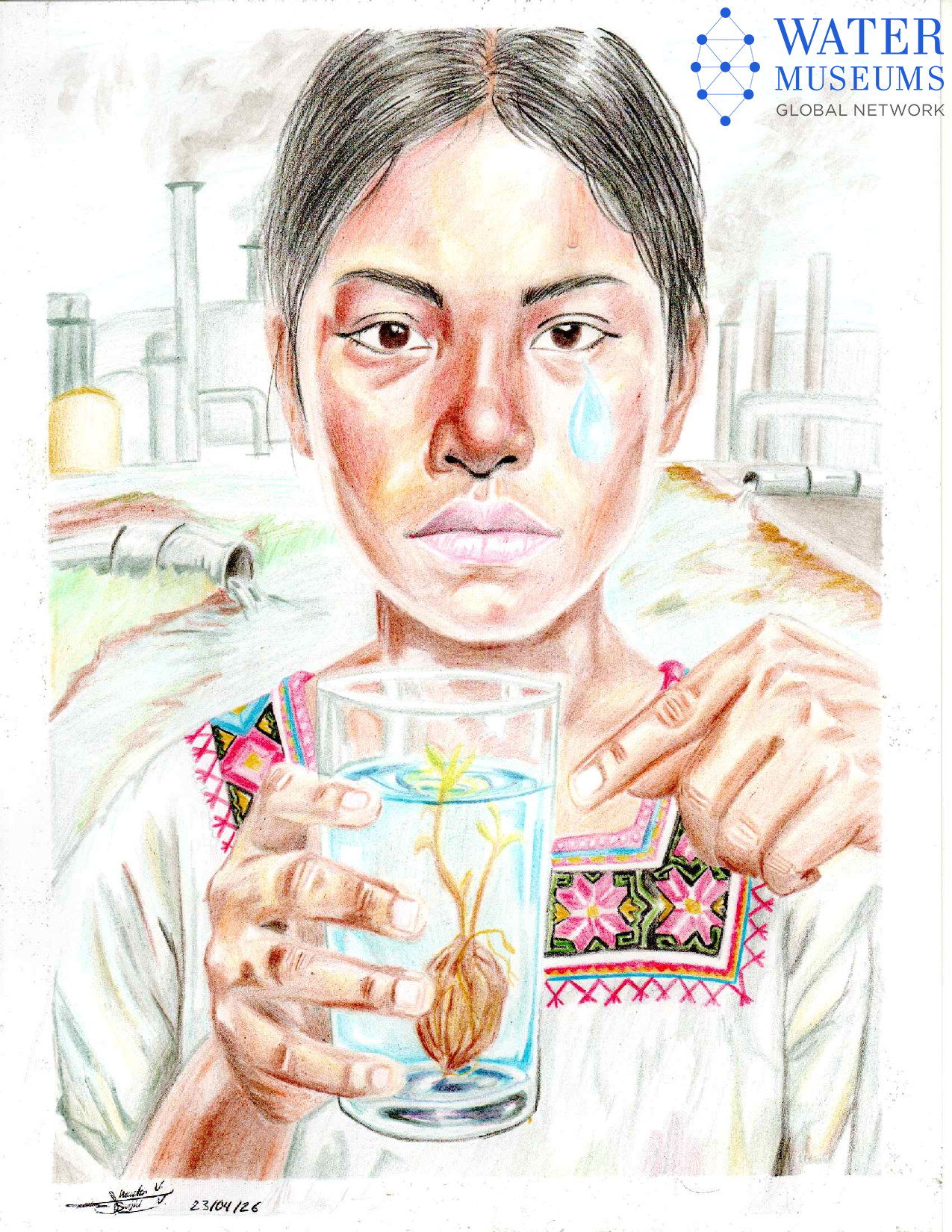
The drawing represents a little purepecha girl heiress of a culture that always known how to live in harmony with the water. She firmly holds a glass of pure water where a small plant germinates representing that we can still make a change. Her embroidered huipil carries the colours and patterns of Michoacan land. A tear falls down her face, not out of weakness but out for hope.
Identifier: #404
MEXICO
Iurhekua Interactive Water Museum
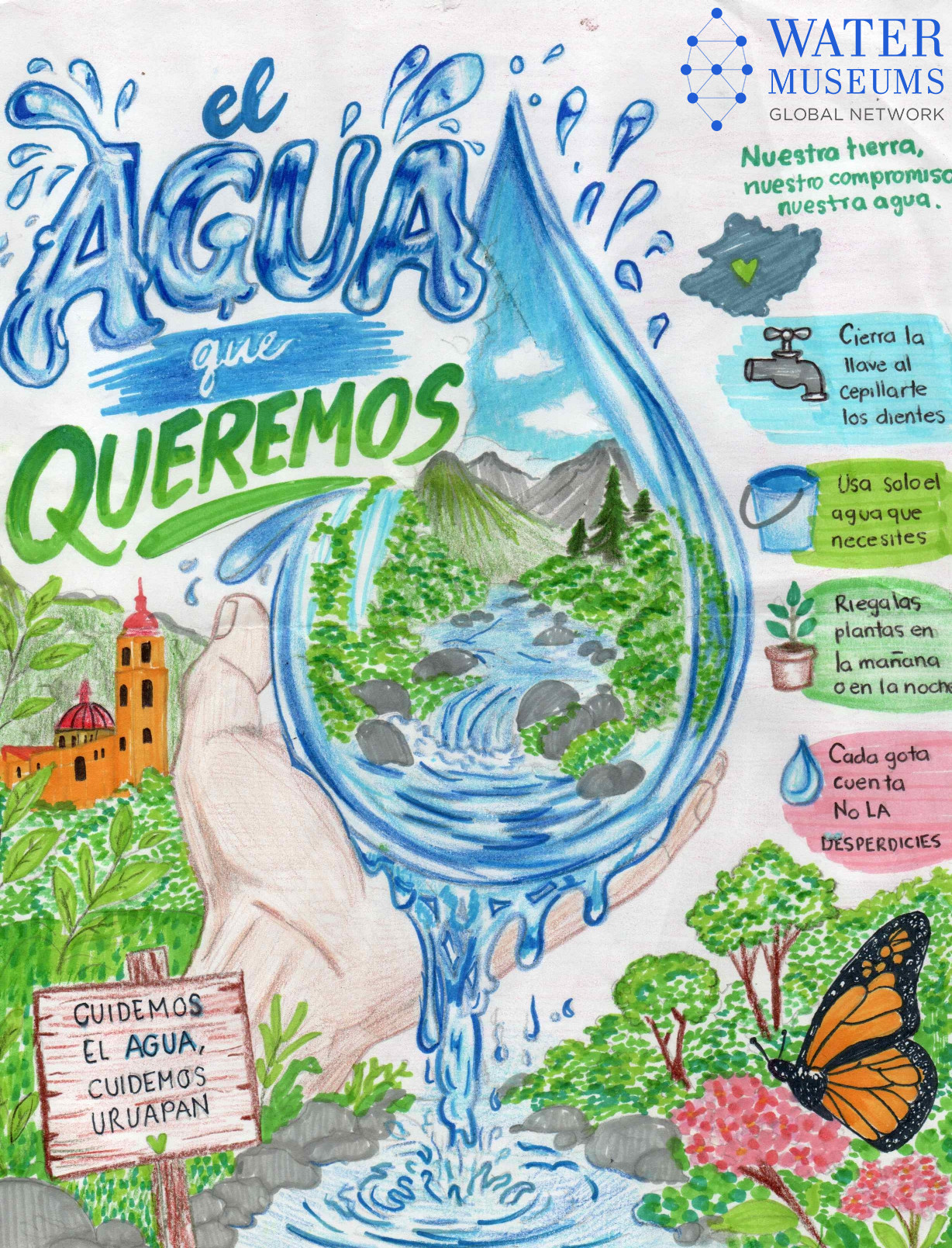
Uruapan: where the water dreams and the earth breaths
Iurhekua Interactive Water Museum, Mexico. EPLER, Uruapan. Class 21.
I want to represent that the water is not just something we use, but the foundation of life. In the drawing the journey of water shows us how everything in nature is connected, every plant, tree and landscape depends on it. If we protect water, we protect life”.
Identifier: #402
CHINA
Lingqu Canal Museum
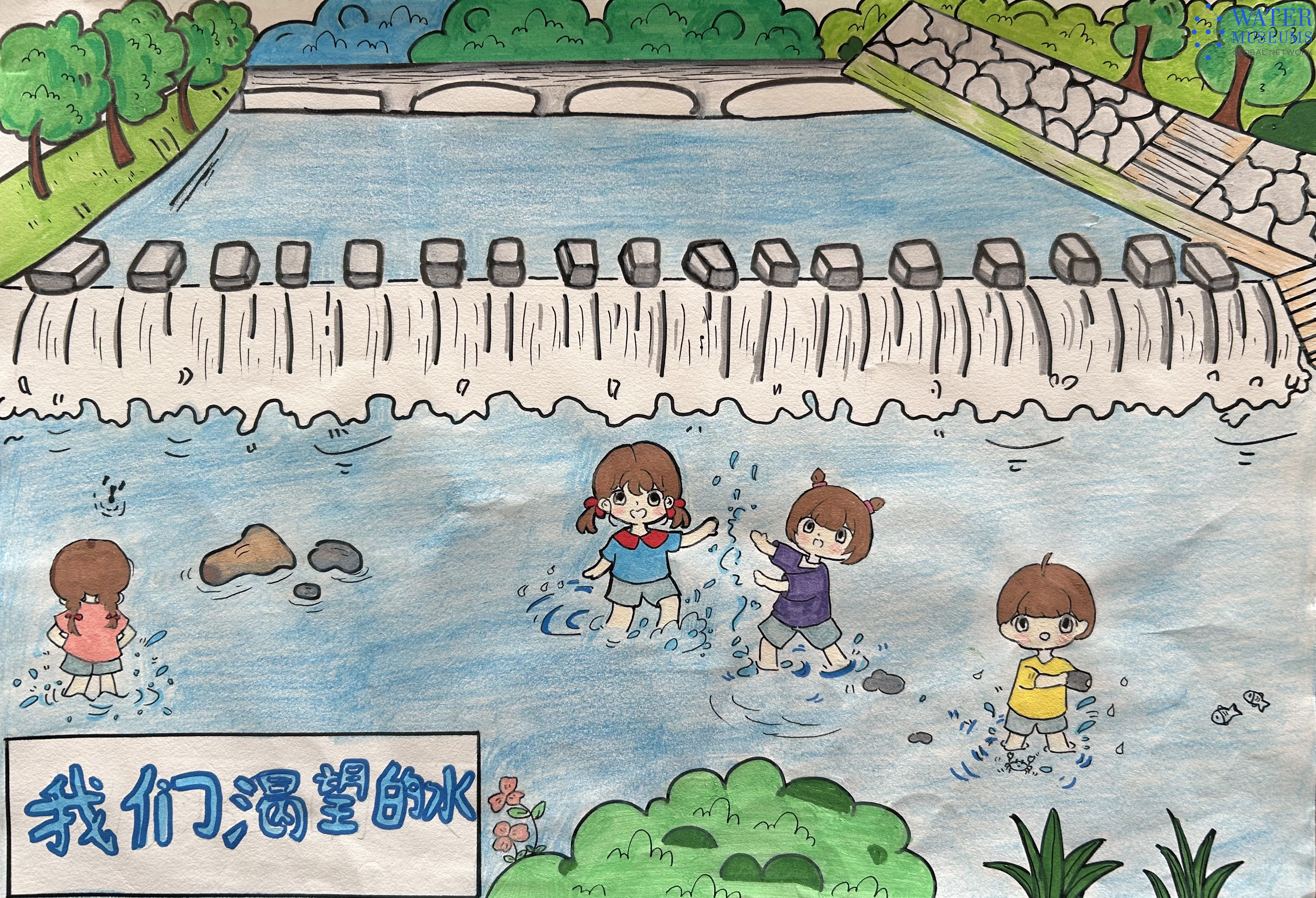
The Lingqu Canal Nourishing Young Hearts
LingquCanalMuseum(LCM). Xing’an County No.4 Primary School, Guilin. Zhang Zhuoxin.
Children play joyfully in the clear waters of the Lingqu Canal, their laughter reflecting a deep love for and longing for water. The living waters of the Lingqu Canal are not only the most precious playmates of childhood but also the very source of life for the land of Xing'an. Through the lens of childlike innocence, this painting conveys a deep appreciation for clean water sources and calls on everyone to jointly protect the water environment of the Lingqu Canal, so that every generation of children can enjoy such a pure and safe place to play.
Identifier: #401
CHINA
Lingqu Canal Museum
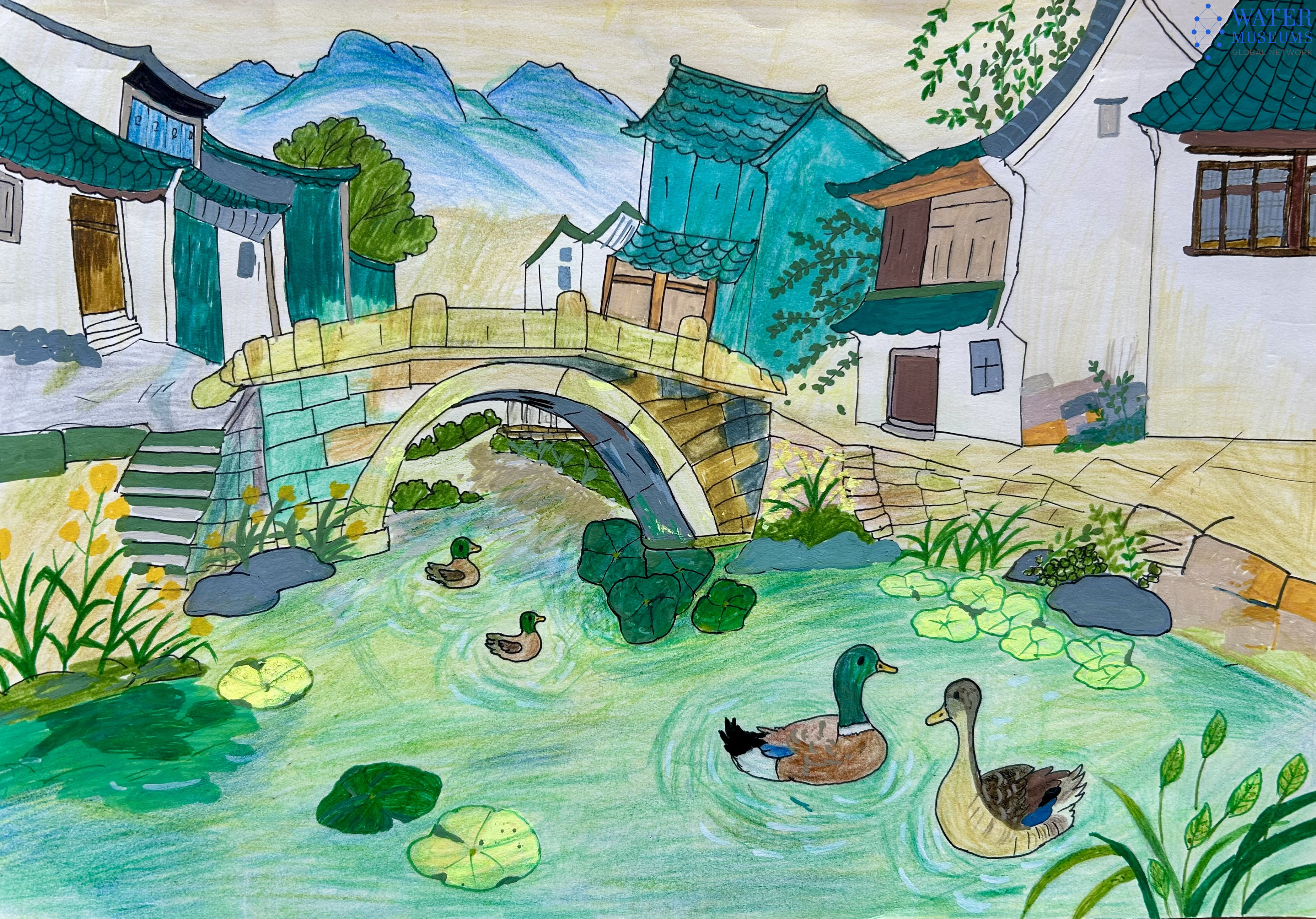
Water Flows, Life Thrives
LingquCanalMuseum(LCM). Xing’an County Experimental Primary School, Guilin. Li XiaoRan
The clear pond water is like a translucent emerald. Lotus leaves spread across the surface like tiny umbrellas, while duckweed curls up lazily in the sun. A few ducks are happily swimming back and forth — the big duck leading the little ducklets, tracing lovely ripples across the water. A curved stone bridge arches gently over the pond, and white-walled, gray-tiled houses stand close by the water’s edge. Even the grass, nourished by the water, grows lush and green. Let us cherish every drop of water, so that such beautiful scenes can remain with us forever.
Identifier: #400
CHINA
Lingqu Canal Museum
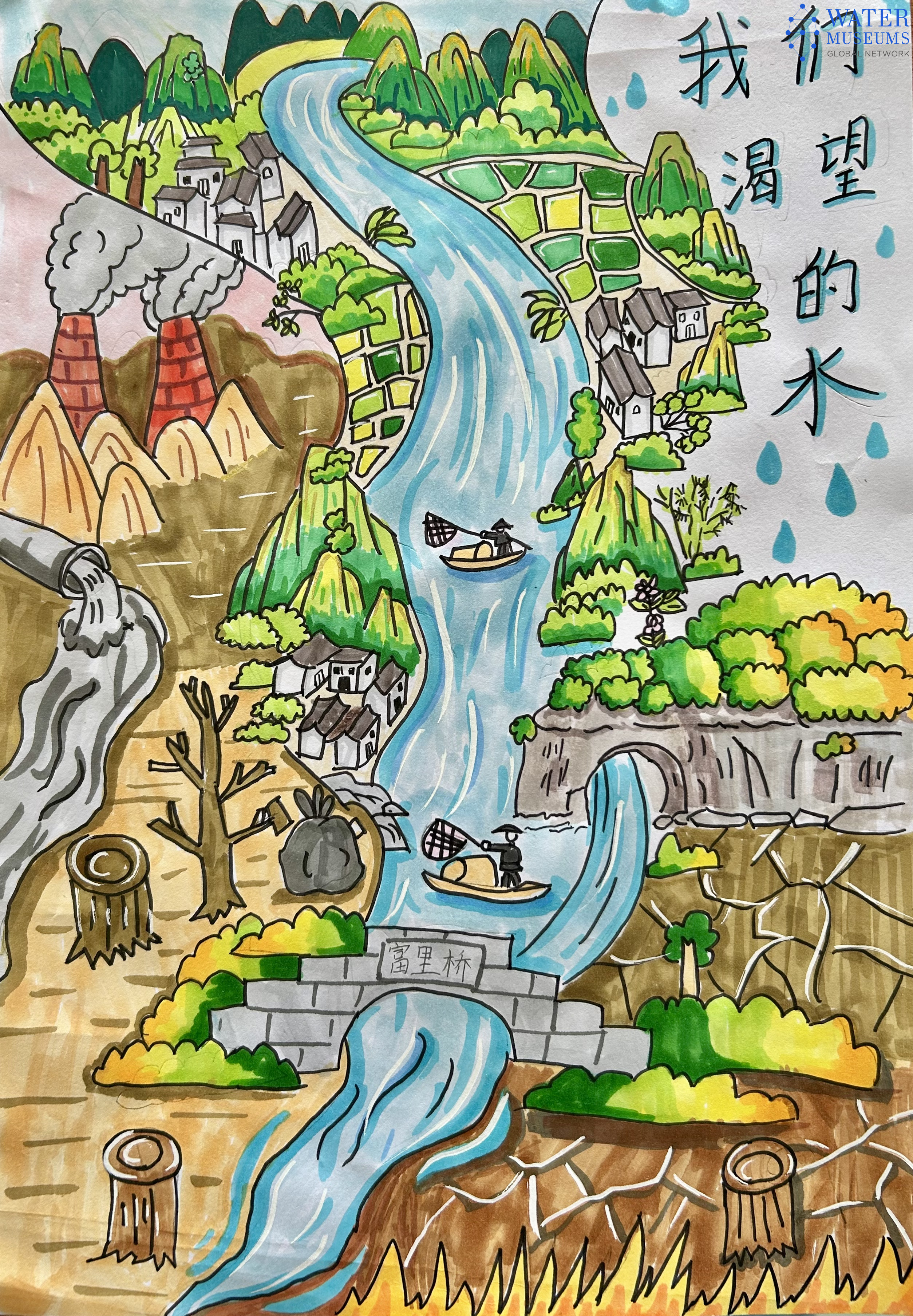
The Li River runs ever clear; the land remains ever green
LingquCanalMuseum(LCM). Xing’an County No. 1 Primary School, Guilin. Ma Yinan.
Guilin’s scenery is the best under heaven. The Li River is the lifeblood of Guilin, nourishing its green mountains, villages and all forms of life. In my painting, on one side lies the clear, vivid and vibrant scenery of the Li River, while on the other stands a stark scene of cracked earth and withered plants. This strong contrast reminds us that the crisis of freshwater scarcity and environmental degradation is closer than we think. The Fuli Bridge in the painting embodies the villagers’ hopes for prosperity and well-being, as well as our shared commitment to protecting our water heritage. Protecting the Li River and cherishing freshwater starts with each of us. May clear waters flow forever, mountains remain green, and this precious source of life continue to nourish the earth!
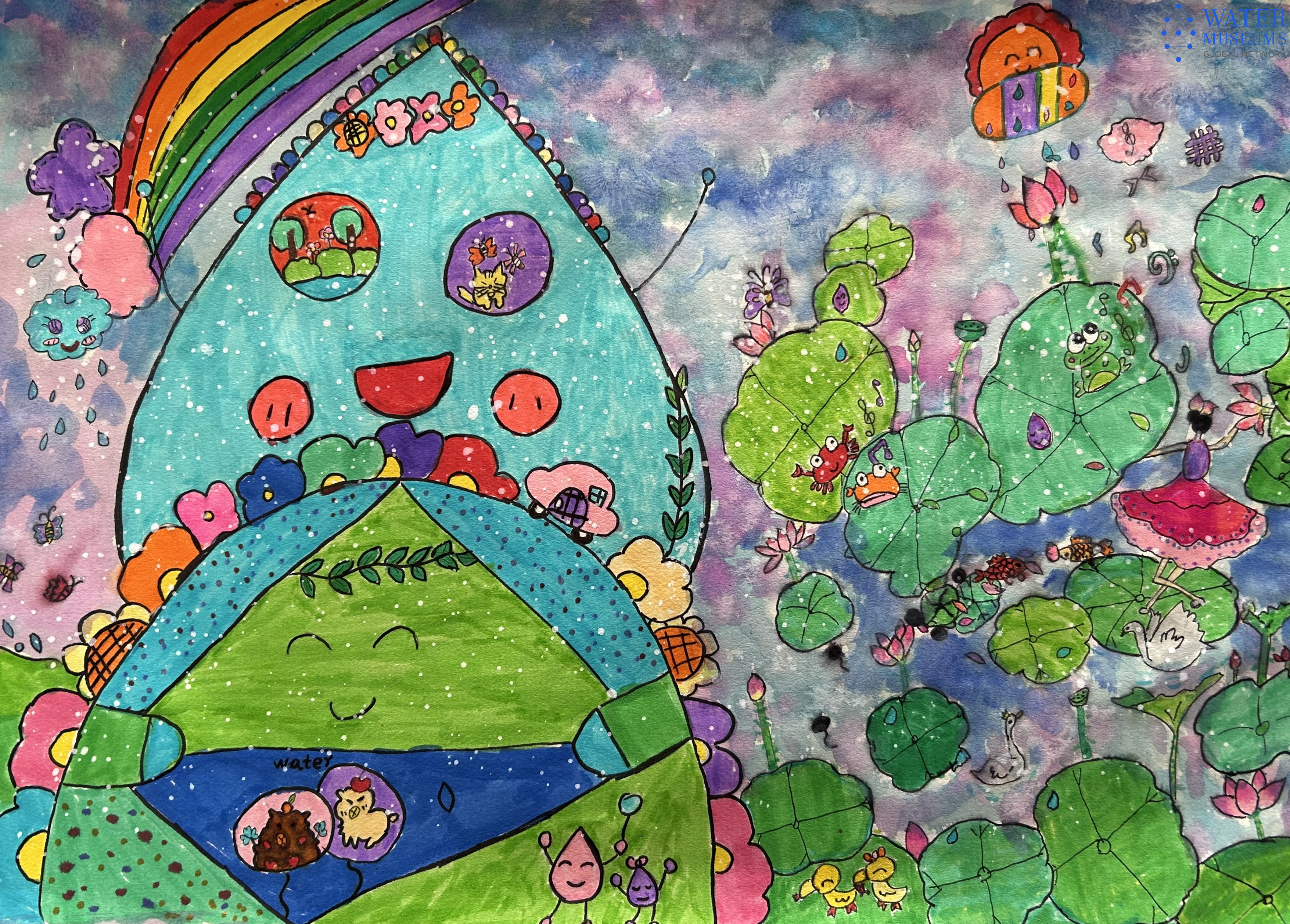
Identifier: #399
CHINA
Lingqu Canal Museum
Afternoon Melody
LingquCanalMuseum(LCM). Xing’an County No. 1 Primary School, Guilin. Lian Maoya.
When the Earth has water, it has life. The afternoon rain, the animals, and the plants all play a beautiful melody. A little girl dances joyfully. Cherish water, and protect the simple happiness.
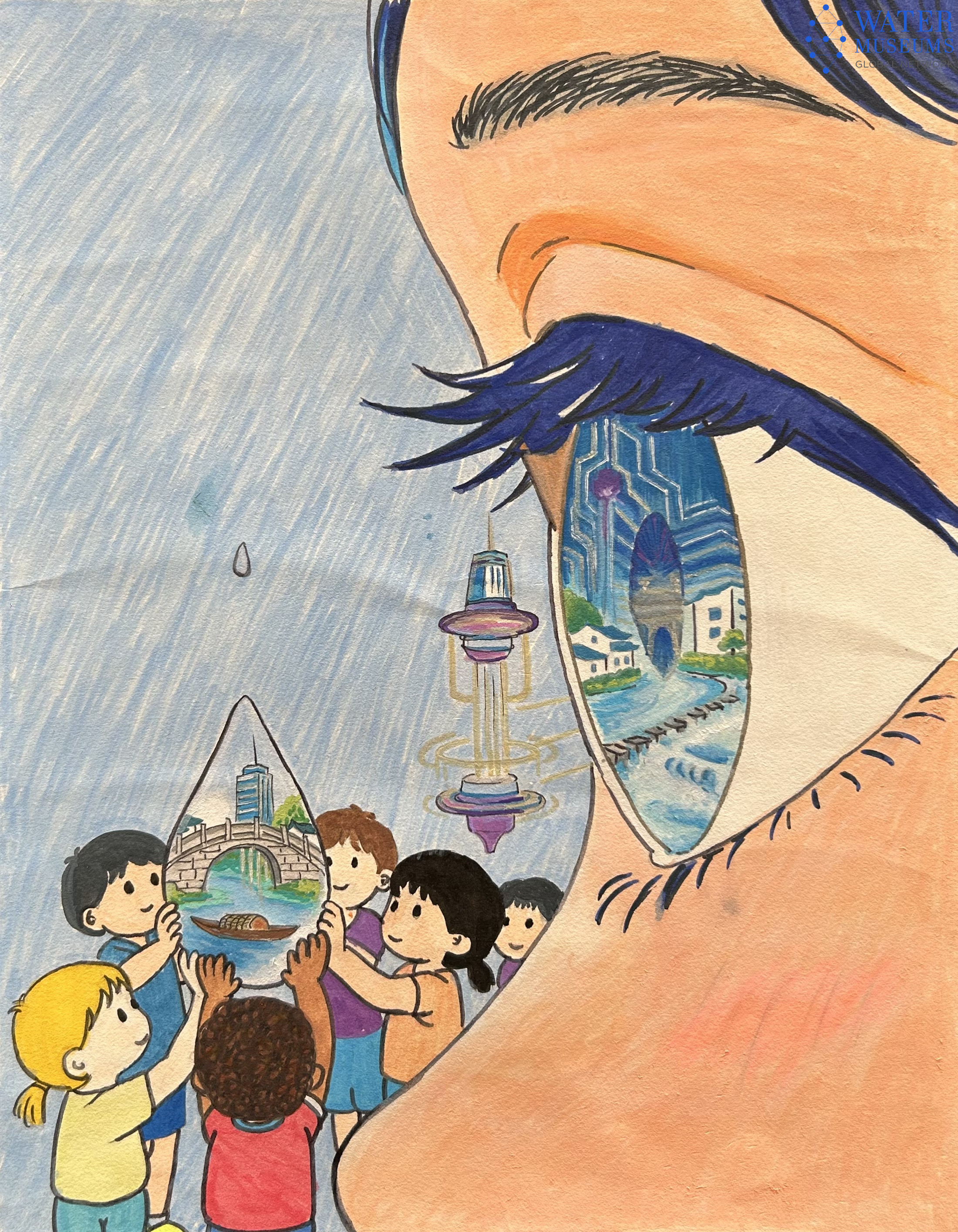
Identifier: #398
CHINA
Lingqu Canal Museum
Eyes Across Time, Waters Bearing Heritage
LingquCanalMuseum(LCM). Xing’an County Experimental Primary School,Guilin. Liu Linxin.
With the eye as a mirror, we glimpse a radiant vision where future technology intertwines with the ancient Qin-era charm of the Lingqu Canal. With light held in our hands, we safeguard the rebirth of its cultural legacy. Innocence embraces innovation, and tradition lives in harmony with the future.
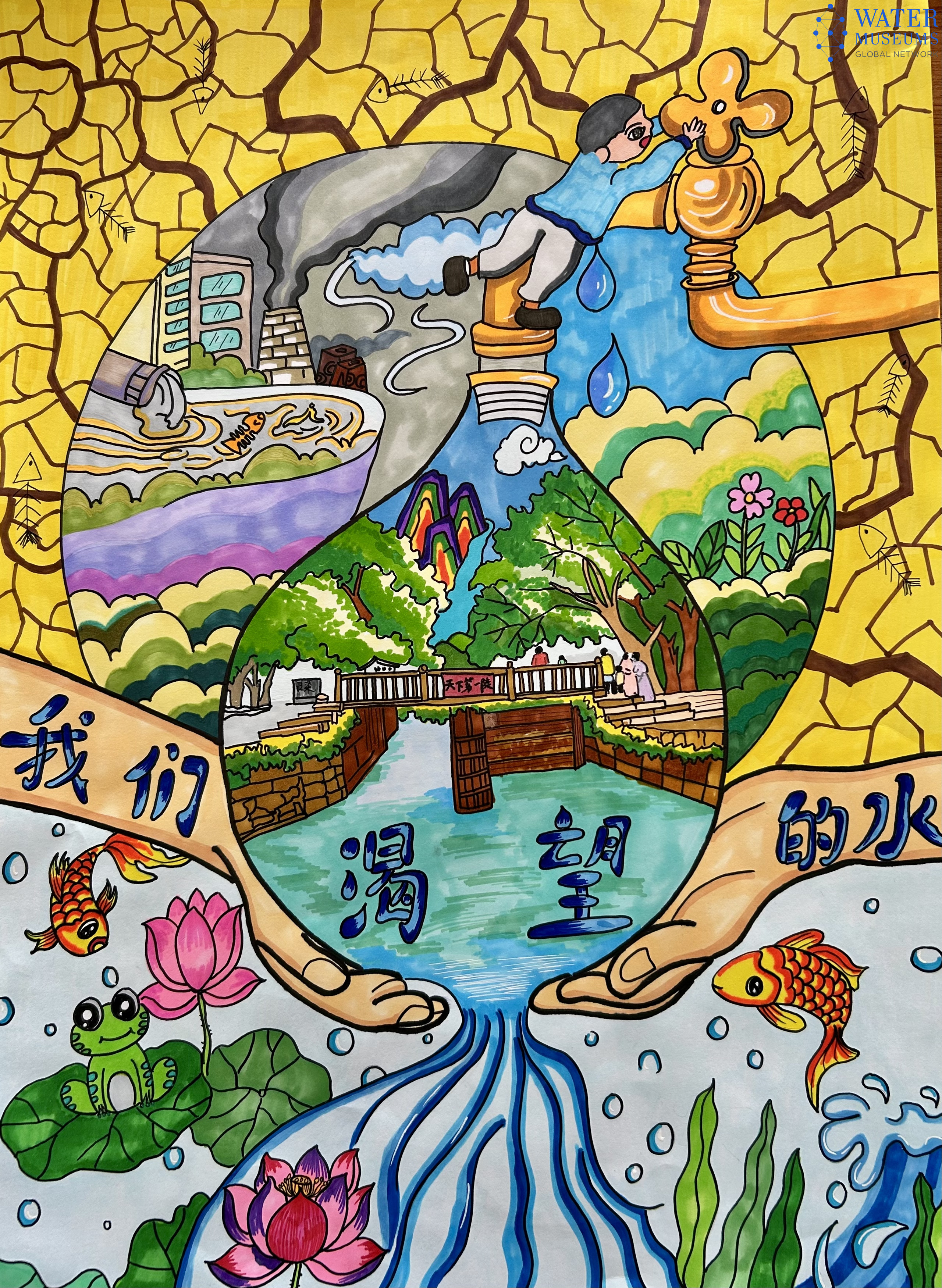
Identifier: #397
CHINA
Lingqu Canal Museum
Water Nourishes the Lingqu Canal
LingquCanalMuseum(LCM). Xing'an County No.1 Primary School, Guilin. Tang Jihong.
With “The Water We Want” as its central theme, the left side of the painting shows a landscape of droughtcracked, polluted, and barren land, while the right side depicts a vibrant scene of shady trees and flowing streams. A pair of large hands hold up the clear water of the Lingqu Canal, symbolizing protection and hope. The painting incorporates elements such as the bridges of the Lingqu Canal in Xing'an, koi fish, and lotus flowers, conveying the harmonious coexistence between humanity and nature. Through the stark contrast of colors and scenes, it calls on people to cherish water resources, allowing the living water to nourish all living things and to safeguard our shared beautiful home.
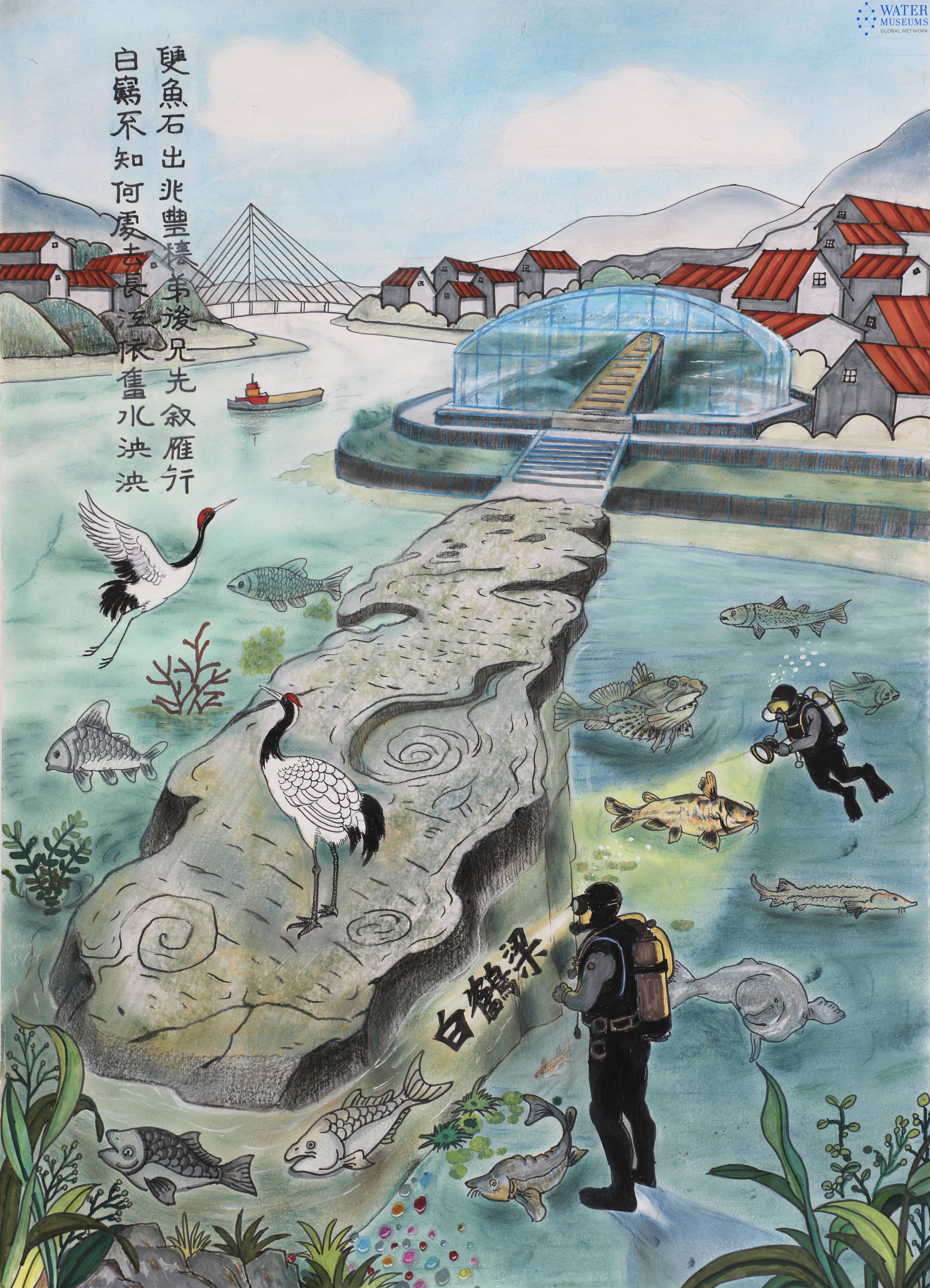
Identifier: #396
CHINA
Baiheliang Underwater Museum, Chongqing
Treasures Beneath the River
Chongqing Baiheliang Underwater Museum, China. Lizhi Hope Primary School, Fuling District, Chongqing. Wu Xinwei.
Dialogue Between Baiheliang and WaterWith paintbrushes reaching into the riverbed, the work depicts the unique features of Baiheliang. The carved stone fish record hydrological marks, and divers guard the millennium cultural heritage. It pays tribute to the water of life and safeguards the beacon of civilization.
Identifier: #395
CHINA
Baiheliang Underwater Museum, Chongqing
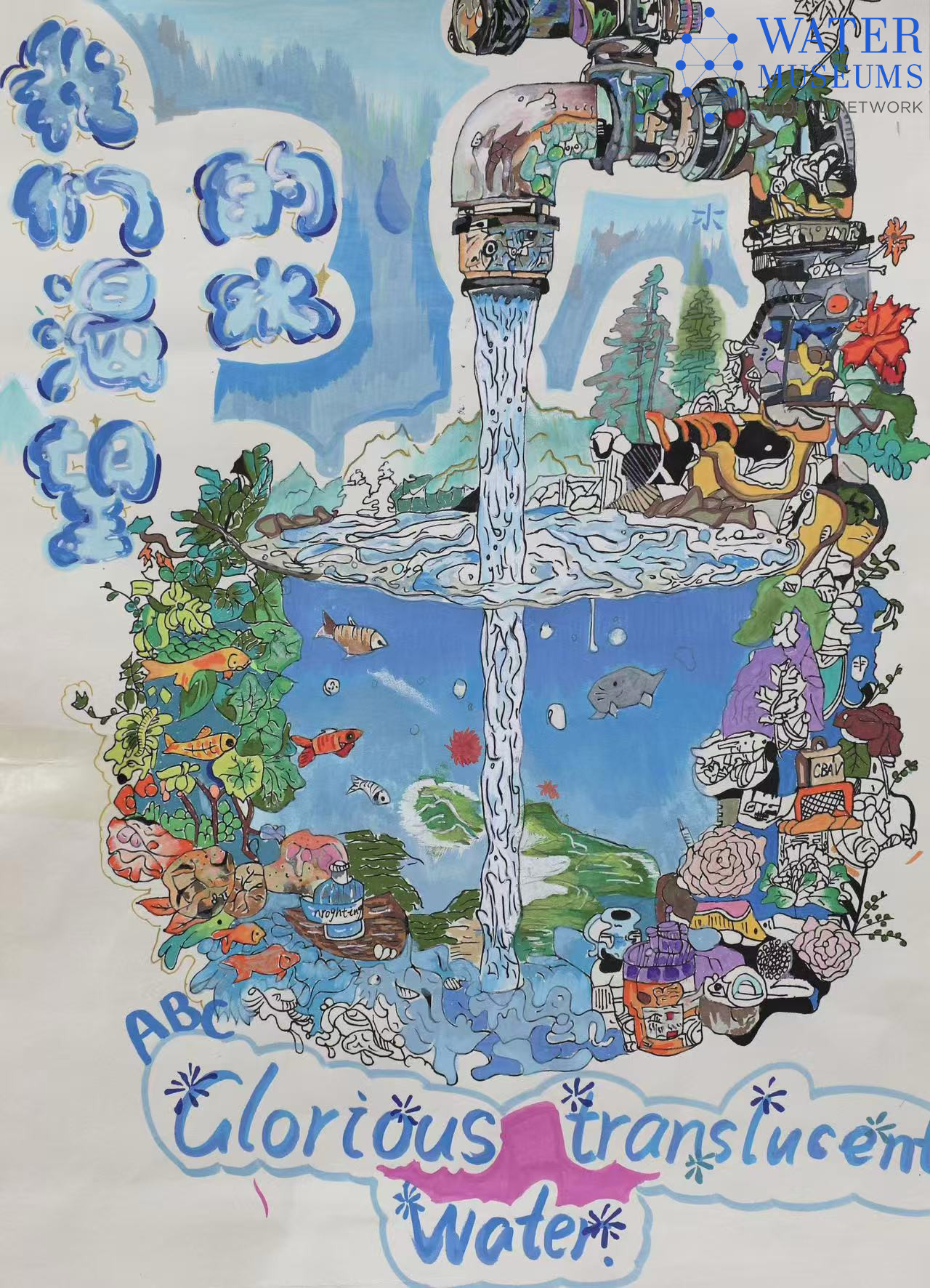
All Forms of Water, Guardianship and Coexistence
Chongqing Baiheliang Underwater Museum, China. Baiheliang Primary School, Fuling District, Chongqing. Ma Ruihan.
Centering on a water faucet, the painting depicts the vitality of all things nourished by water, showing the diversity and beauty of water, and calling on people to cherish every drop of clear water.
Identifier: #393
CHINA
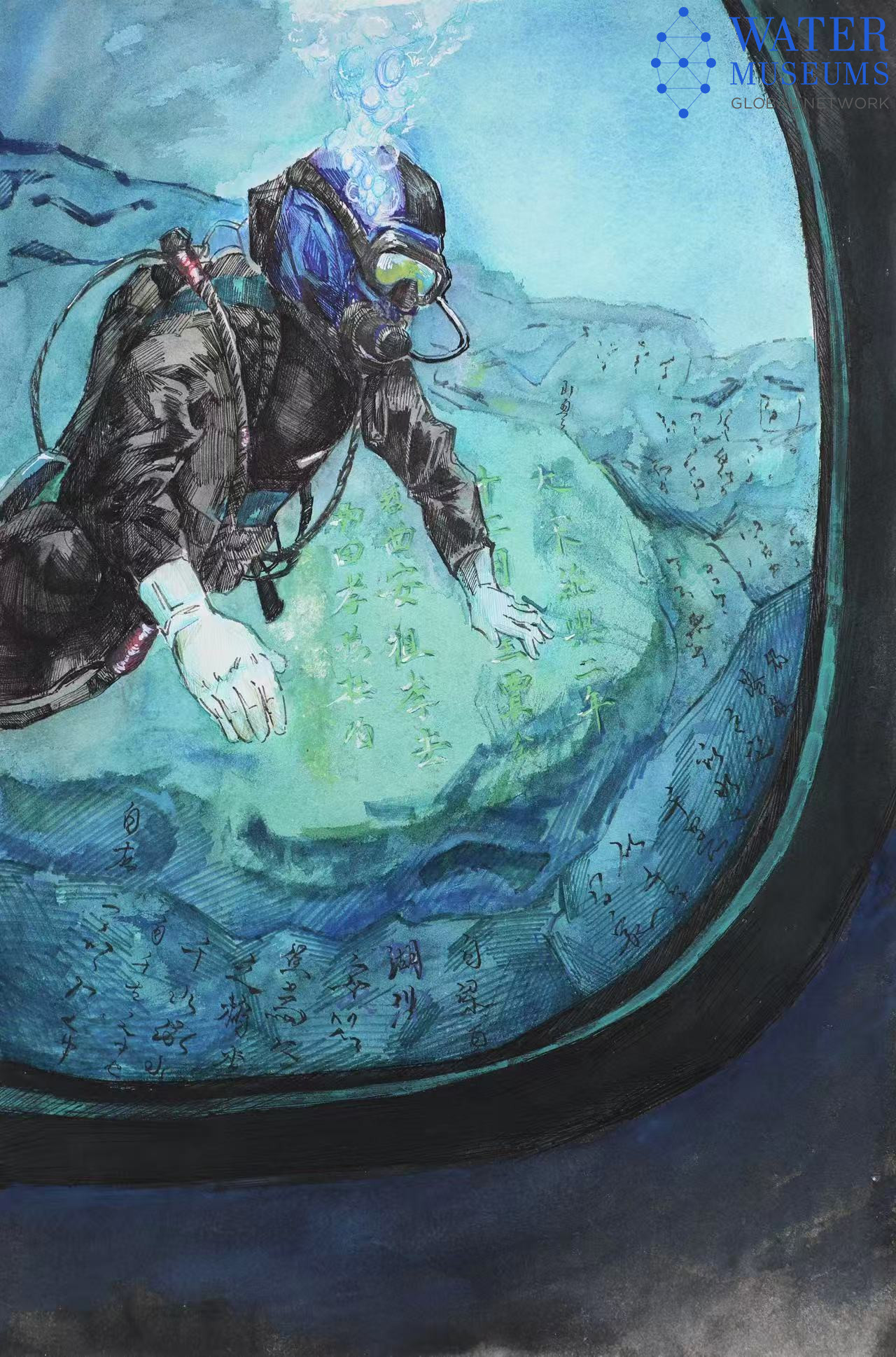
Baiheliang Underwater Museum, Chongqing
Dive into Time · Dialogue with Baiheliang
Chongqing Baiheliang Underwater Museum, China. Chongqing Fuling No.14 Middle School. Liu Junxi.
With the Baiheliang Underwater Museum as the scene, this watercolor depicts a moment where a diver leans over and gently touches the thousand-year-old stone inscriptions, conveying reverence for underwater cultural heritage.
Identifier: #392
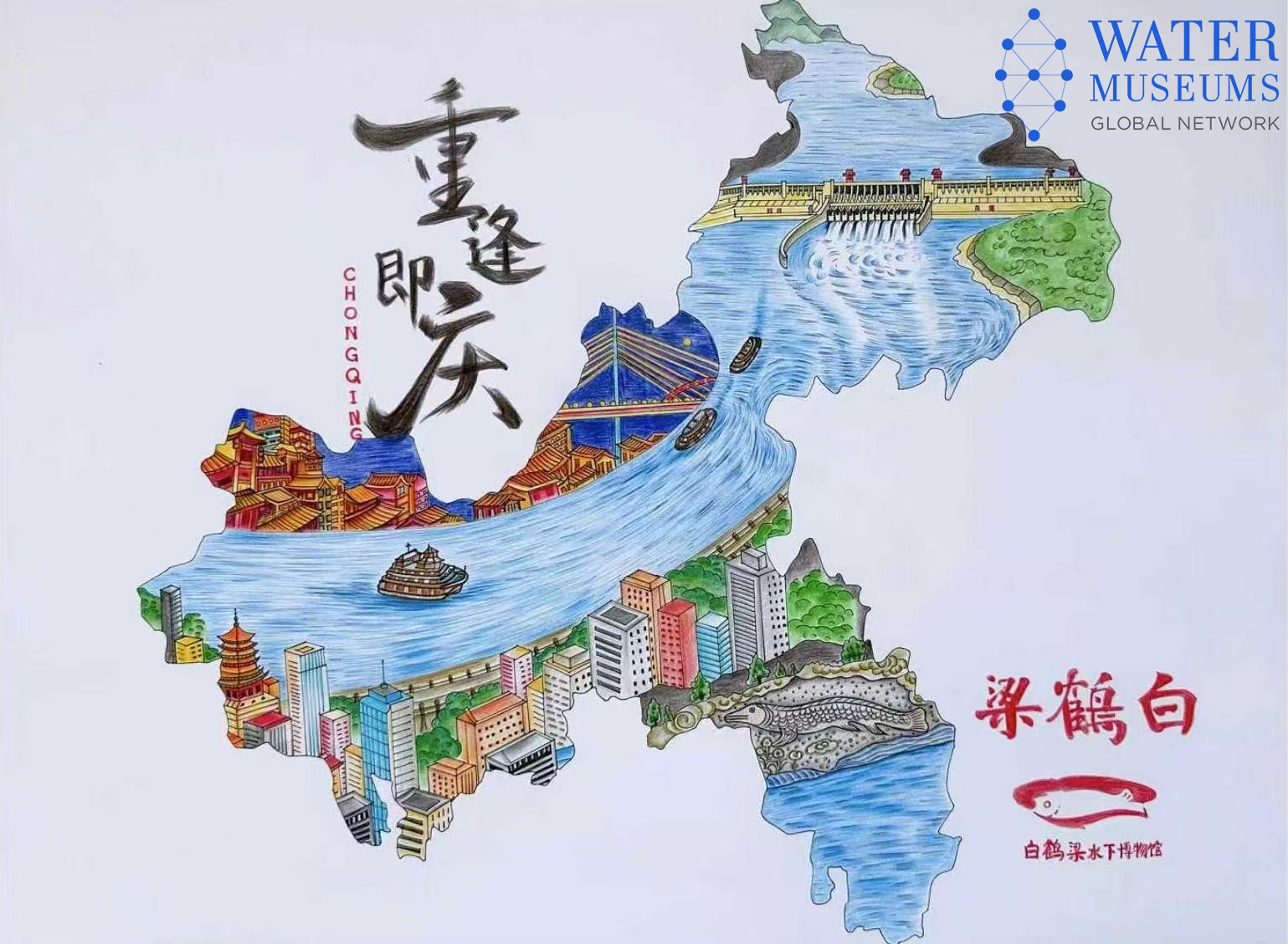
CHINA
Baiheliang Underwater Museum, Chongqing
Reunion Is a Blessing
Chongqing Baiheliang Underwater Museum, China. Shijiazhuang No.2 Foreign Language School, Hebei Province. Yao Yujia.
Taking the map of Chongqing as the scroll and the Yangtze River as the vein, the painting links water heritage and integrates ancient and modern architectures with rivers. The title implies teenagers’ spiritual reunion with local freshwater resources and millennial water civilization. It calls on the younger generation to guard clear waters and inherit water heritage with youthful strength.
Identifier: #391
CROATIA
Aquatika – Freshwater Aquarium Karlovac, Croatia
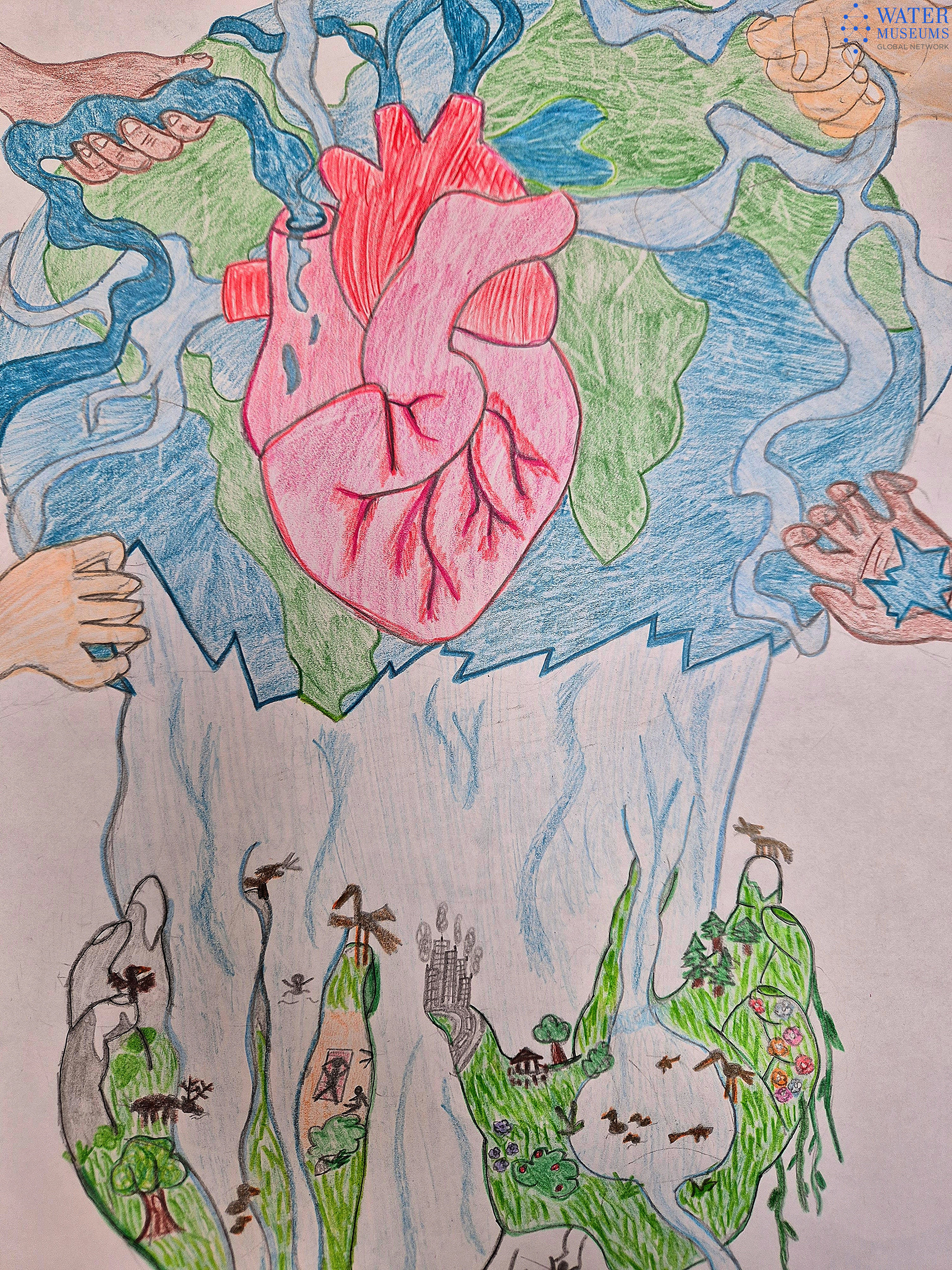
Water is our planet
Aquatika, Croatia. Banija Elementary School, Karlovac. Lana Flanjak
Everyone on the planet Earth are connected through water. Water is lihe our earth and pumps everyday. We can’t live without water so we have to preserve our rivers, oceans, lakes...
Identifier: #390
CROATIA
Aquatika – Freshwater Aquarium Karlovac, Croatia
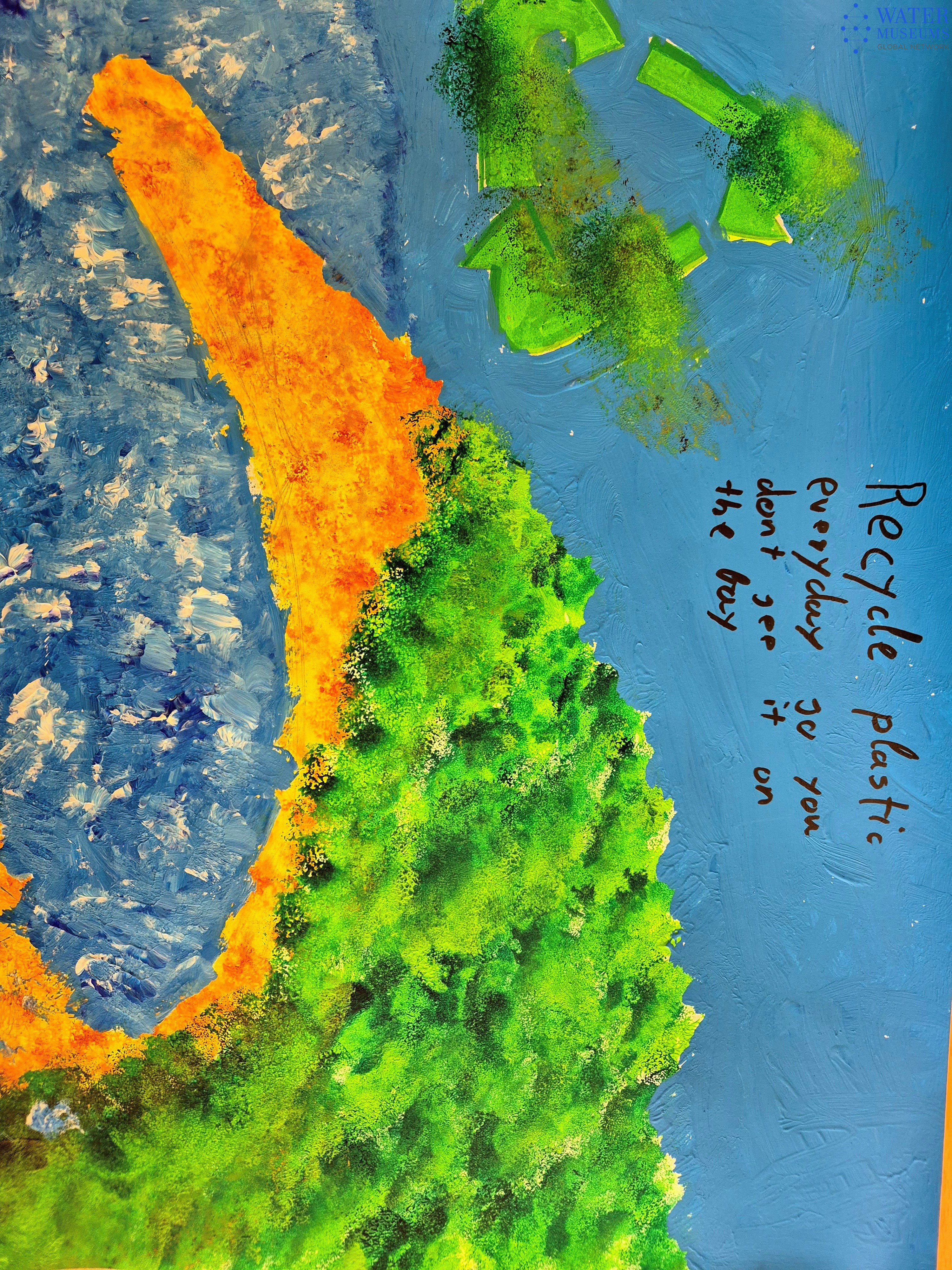
Recycle and reuse
Aquatika, Croatia. Banija Elementary School, Karlovac. Ivan Teufel.
Drawing that represents connection between rivers and oceans. Everything we do with rivers is connected to the rest of the world. Put the waste in trash and not in the rivers, lakes, forest.
MAIN PARTNER YEAR 2026